

The right wall treatment can completely change the character of a bedroom. Modern bedroom wall panels add depth, texture, warmth, and visual interest while creating a more refined backdrop for beds, furniture, lighting, and artwork.
From natural-looking wood finishes to sophisticated leather-effect, marble-inspired, and textured surfaces, today’s wall panels offer flexible options for both residential and commercial interiors. Whether you are designing a contemporary master bedroom, luxury guest suite, hotel room, or high-end apartment, carefully selected panels can create a polished and cohesive interior.
Modern bedroom wall panels provide an effective way to introduce architectural detail without relying on paint or wallpaper alone. They can be used to define a feature wall, frame a bed, add texture to an otherwise plain surface, or create continuity between different elements of a room.
Unlike a single decorative finish, wall panelling allows designers to combine profiles, textures, colours, and patterns to achieve a specific visual effect. This makes modern panels particularly useful when creating bedrooms that need to feel luxurious while remaining practical and comfortable.
For larger residential and commercial projects, panels can also help establish a consistent design language across multiple rooms. The same material family can be adapted to bedrooms, corridors, living areas, and other interior spaces.
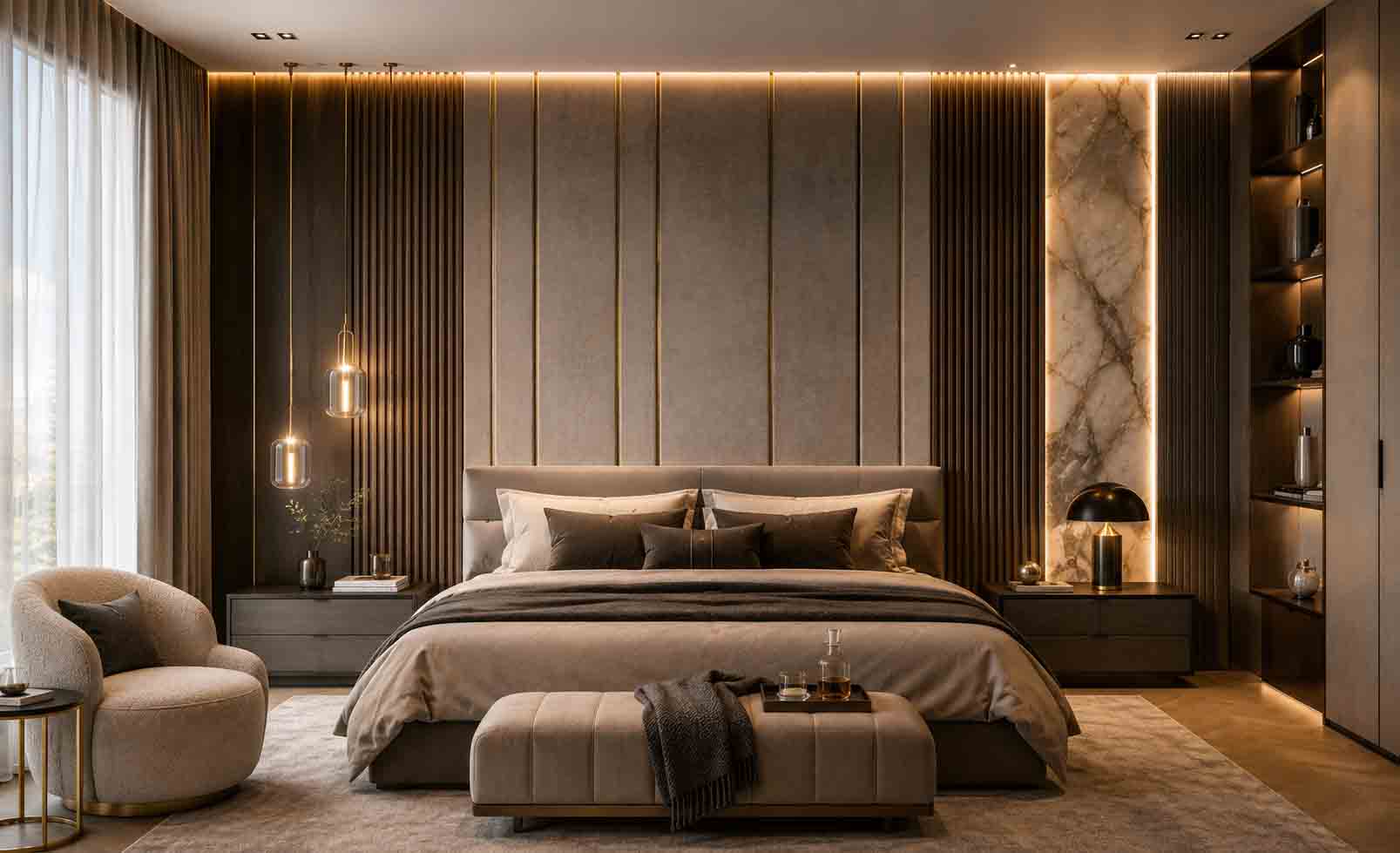
Wood-inspired panels bring warmth and natural character into the bedroom. They work particularly well behind the bed, where the texture can create a strong focal point without overwhelming the rest of the room.
Vertical wood wall panel designs can visually emphasise ceiling height, while horizontal arrangements can create a broader appearance. Pairing wood-effect panels with neutral bedding and understated lighting creates a balanced contemporary bedroom.
Fluted panels use repeated vertical grooves to introduce rhythm and subtle shadowing across a wall. Their clean lines make them suitable for modern, minimalist, and transitional bedrooms.
A fluted feature behind the headboard can provide definition while maintaining a relatively understated appearance. The effect can be enhanced with concealed lighting that highlights the panel’s vertical profile.
Leather-effect panels can create a sophisticated and tactile bedroom environment. Their refined appearance makes them particularly suitable for luxury residential interiors, boutique accommodation, and executive-style bedrooms.
These panels can be used across an entire feature wall or incorporated selectively around the headboard area. Neutral leather-inspired tones can complement timber, metal, glass, and upholstered furniture.
Marble-inspired panels offer the visual character of stone while providing another option for creating an elegant feature wall. Veined patterns can add movement and sophistication to bedrooms with otherwise simple furnishings.
For a contemporary look, marble-inspired panels can be combined with warm timber, brushed metal accents, soft textiles, and minimalist furniture. They are especially effective when used as a controlled focal point rather than covering every surface.
Geometric designs introduce structure and personality through repeating shapes, lines, or dimensional profiles. They can transform an ordinary bedroom wall into an architectural feature without requiring extensive decorative accessories.
Geometric panels are particularly effective in contemporary bedrooms where furniture and lighting are kept simple. The wall becomes the main visual element while the rest of the room provides balance.
Texture can make a bedroom feel more layered and visually interesting. Textured wall panels may feature subtle relief, tactile finishes, or patterns that create changing shadows as natural and artificial light moves across the surface.
For bedrooms that already contain patterned textiles or statement furniture, a restrained texture can add dimension without creating visual competition. More pronounced profiles can work well in minimalist spaces where the wall itself is intended to make a statement.
Full-height panels extend from the floor toward the ceiling to create a strong architectural presence. This approach can make a bedroom feel taller and give the feature wall a more integrated appearance.
Full-height designs are particularly effective behind beds with low or streamlined headboards. Matching the panel proportions to the room’s architectural dimensions helps create a deliberate and cohesive result.
Instead of using a traditional upholstered headboard, panels can be incorporated into the wall to create a built-in visual backdrop. This approach can extend beyond the width of the bed and integrate surrounding bedside furniture and lighting.
A dedicated headboard wall can also provide a natural place to combine materials. For example, wood-effect sections can be paired with textured or leather-effect elements to create contrast while maintaining a unified design.
Combining two complementary panel finishes can add depth without introducing excessive colour. A darker material can anchor the bed area, while a lighter finish can help balance the surrounding walls.
Two-tone designs are useful when creating a luxury bedroom with a modern aesthetic. The combination can be based on texture, material appearance, colour, or panel profile depending on the desired result.
Custom wall panels allow the design to be developed around the dimensions, furniture arrangement, lighting, and architectural character of the room. This can be especially valuable when a standard panel layout does not suit an unusual wall size or design concept.
Customisation may involve panel profiles, proportions, finishes, textures, or combinations of materials. For luxury interior projects, this approach allows the wall treatment to become part of the overall design rather than an afterthought.
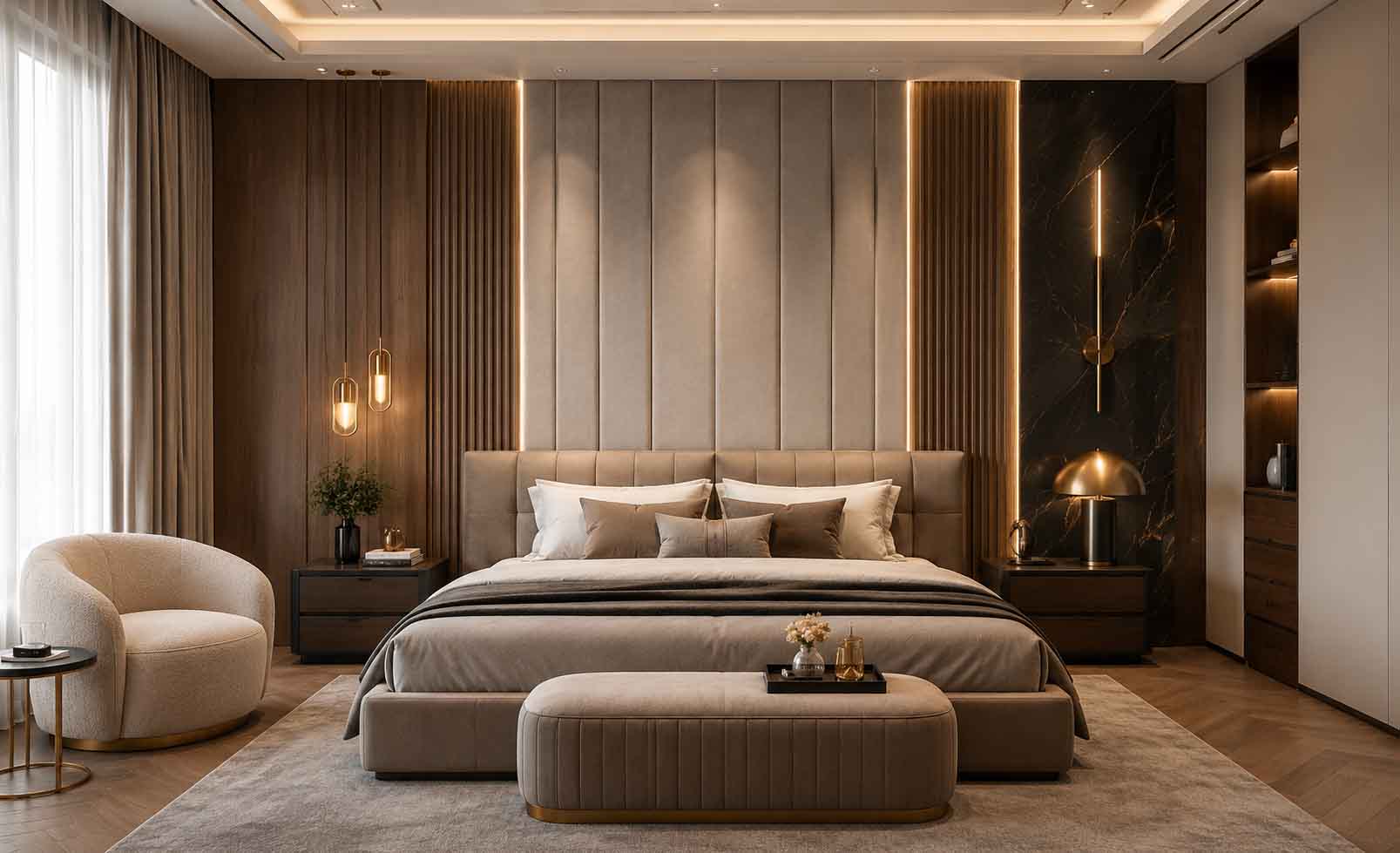
Start by considering the bedroom’s existing materials, lighting, furniture, and architectural proportions. A panel finish should complement these elements rather than compete with them.
In residential bedrooms, wall panels can create a more considered and personalised environment. They are suitable for master bedrooms, guest rooms, children’s rooms, dressing areas, and other private spaces where texture and architectural detail can improve the overall atmosphere.
Luxury bedroom panels can also help visually connect different parts of an interior. For example, a wood-inspired finish used behind the bed can echo cabinetry or flooring elsewhere in the home, creating a consistent material palette.
Homeowners looking for additional inspiration can also explore modern bedroom wall panelling ideas to compare different approaches to feature walls and room design.
Wall panelling is not limited to residential bedrooms. Hotels, serviced apartments, luxury developments, student accommodation, and other hospitality environments can use decorative wall panels to establish a consistent interior identity.
Commercial projects often require materials and designs that balance appearance with practical considerations such as durability, maintenance, installation requirements, and repeatability across multiple rooms. A carefully specified panel system can help designers maintain a consistent aesthetic throughout a larger project.
Lighting plays an important role in how bedroom panels are perceived. Wall-washing, concealed LED strips, bedside lighting, and directional fixtures can emphasise grooves, relief patterns, and changes in surface texture.
Warm lighting can enhance wood-inspired and leather-effect finishes, while controlled illumination can highlight the veining or dimensional character of marble-inspired and textured panels. Planning the panel design alongside the lighting layout usually produces a more cohesive result.
The design principles used for bedroom panelling can also be adapted throughout a property. Coordinated finishes can be introduced into living rooms, dining areas, reception spaces, offices, hospitality interiors, and other feature areas.
Exploring modern interior panels can help identify ways to extend a bedroom’s material palette into other parts of a residential or commercial interior.
Maintenance requirements depend on the panel material and finish. In general, regular dusting and gentle cleaning with suitable products can help preserve the appearance of decorative surfaces.
Avoid harsh cleaning products or abrasive tools unless the manufacturer’s care instructions specifically allow them. For commercial interiors, maintenance requirements should be considered during material selection so the chosen finish is appropriate for the expected level of use.
The strongest bedroom wall designs usually balance statement features with restraint. Instead of treating every wall as a focal point, designers can use one principal panelled surface and allow furniture, lighting, flooring, and textiles to support it.
Material consistency is equally important. Selecting finishes that share complementary tones, textures, or profiles can make the room feel intentional and sophisticated while avoiding a visually fragmented appearance.
Modern bedroom wall panels are decorative surface systems used to add texture, pattern, depth, or architectural detail to bedroom walls. They are available in various profiles and finishes, including wood-inspired, leather-effect, marble-inspired, and textured designs.
Yes. Wooden decorative panels can add warmth and visual texture to bedrooms and can be used for feature walls, headboard areas, and full-height installations. The appropriate finish should be selected according to the room’s design and maintenance requirements.
Yes. Custom wall panels can be developed around specific wall dimensions, design requirements, panel profiles, and finish preferences. Customisation can be particularly useful for rooms with unusual proportions or detailed interior design concepts.
Yes. Modern wall panels can be used in hotels, serviced apartments, luxury developments, offices, and other commercial environments. Material selection should account for durability, maintenance, installation requirements, and the expected level of use.
Maintenance depends on the panel material and finish. Regular dusting and gentle cleaning with appropriate products are generally suitable, while abrasive tools and harsh cleaners should be avoided unless specifically permitted by the manufacturer’s care instructions.
Ready to transform your bedroom with a refined, custom wall treatment? Contact Panneli Interiors to explore modern bedroom wall panels designed around your space and aesthetic.