

A modern hidden door in wall panel design creates a clean, uninterrupted surface by integrating a doorway directly into the surrounding wall treatment. Instead of making the door a separate visual feature, the panel design helps it blend into the architecture, creating a refined look that works particularly well in contemporary and luxury interiors.
From concealed entrances to private rooms and statement feature walls, hidden doors can combine practical functionality with sophisticated design. When paired with carefully selected decorative wall panels, the result is a seamless interior that feels intentional, balanced, and visually uncluttered.
A modern hidden door in wall panel is a doorway designed to visually disappear within a panelled wall. The door is typically aligned with the surrounding panels, with carefully considered seams, proportions, colours, and finishes helping reduce the visual distinction between the door and the wall.
This approach is often called a concealed door, flush door, or secret door. It can be incorporated into residential interiors as well as commercial spaces where a streamlined architectural appearance is important.
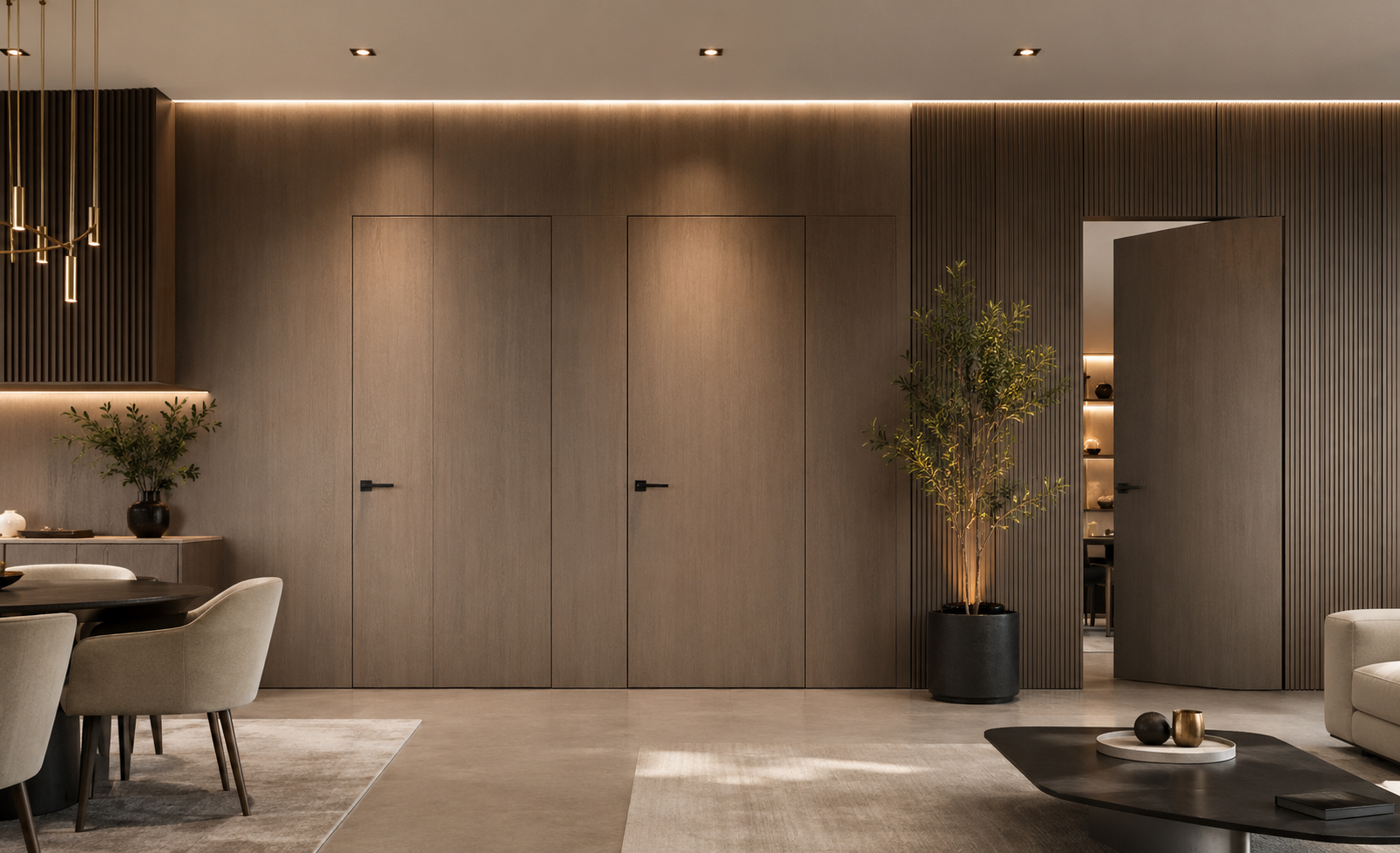
A floor-to-ceiling wood panel hidden door can make an entrance almost disappear within a continuous feature wall. Vertical wood wall panel designs create a strong sense of height while allowing the door to follow the same pattern as the surrounding surface.
This style works particularly well in living rooms, bedrooms, libraries, and luxury home offices where a warm yet contemporary aesthetic is desired.
Slatted panels are an effective choice for creating visual continuity across a hidden doorway. Repeating vertical lines can extend over the door surface, making the opening much less noticeable when the door is closed.
The linear texture also adds depth to a feature wall without making the space feel excessively decorative. For broader design inspiration, explore this modern panelling guide for ideas on incorporating wall treatments into contemporary interiors.
Dark finishes can give a concealed doorway a sophisticated and dramatic appearance. Charcoal, deep brown, black, and other darker tones can be used across both the door and surrounding panels to create a unified architectural surface.
This approach is especially effective in entertainment rooms, executive spaces, contemporary lounges, and other interiors where a stronger visual statement is appropriate.
A marble-inspired panelled wall can turn a concealed door into an almost invisible part of a luxury feature surface. When the veining and panel layout continue consistently across the doorway, the entrance can become difficult to distinguish from the surrounding wall.
This design can work beautifully behind a television, within a hotel-style bedroom, or across an elegant hallway where uninterrupted surfaces are a priority.
For minimalist interiors, a flush hidden door can provide functionality without interrupting the simplicity of the room. The door sits level with the wall, while a matching finish helps reduce visual breaks.
Neutral colours, subtle textures, and simple panel arrangements are particularly effective when the goal is a calm and uncluttered environment. Contemporary interiors can also benefit from combining this approach with modern interior panels to create a consistent design language throughout the space.
Integrating a concealed doorway into a TV feature wall is a practical way to combine entertainment and architectural design. The television, surrounding panels, shelving, lighting, and hidden door can be planned as one cohesive composition.
When the panel lines continue across the doorway, the entrance becomes part of the feature wall rather than appearing as a separate architectural element.
A full-wall decorative panel system can conceal an entrance while creating a strong focal point. Instead of treating the door as an isolated component, the entire wall becomes a unified design surface.
This approach is suitable for large residential spaces, boutique hospitality interiors, reception areas, and premium commercial environments where visual consistency is important.
Woodgrain finishes provide a softer alternative to highly minimal concealed doors. Natural-looking textures can introduce warmth and character while maintaining the clean appearance associated with modern architecture.
Wood-inspired panels can be particularly effective in bedrooms, dining areas, home offices, and living spaces where the design needs to feel sophisticated without becoming overly formal.
A custom profile allows the hidden door and surrounding panels to be designed around the proportions and architectural details of a specific interior. Panel widths, patterns, textures, and finishes can be coordinated to create a more precise visual transition.
Customisation is particularly useful when a standard door arrangement would interrupt an existing wall composition. It also provides greater flexibility for luxury residential projects and commercial interiors with distinctive architectural requirements.
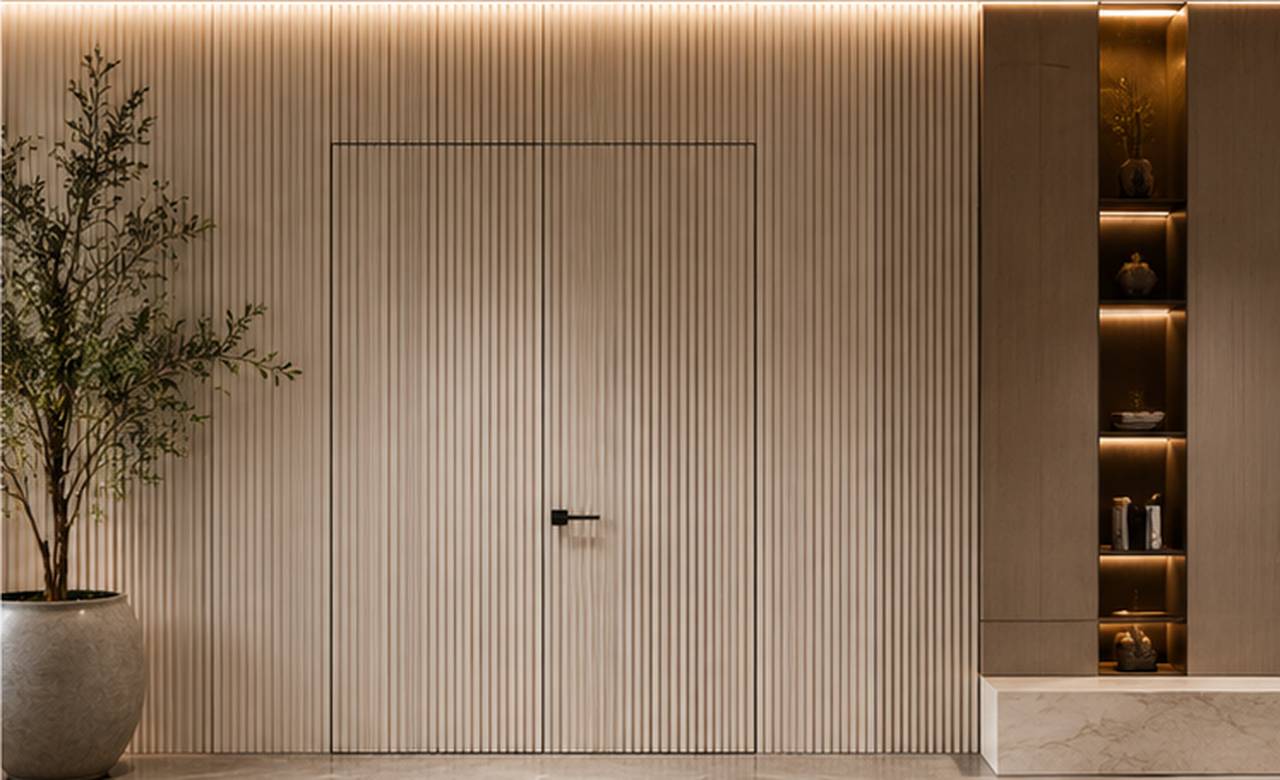
Concealed doors are more than a visual trend. They can help designers create cleaner wall compositions while providing access to functional areas without introducing another prominent architectural element.
A hidden door can be incorporated into many areas of a home or commercial property. The ideal placement depends on the room layout, desired level of privacy, wall dimensions, and overall interior design.
The finish should complement the room rather than simply conceal the doorway. Wood-inspired finishes can introduce warmth, while marble-inspired surfaces can create a more luxurious appearance and darker finishes can deliver a dramatic contemporary effect.
Consider the existing flooring, furniture, lighting, wall colours, and architectural details before selecting the panel finish. The best result usually comes from treating the hidden door as part of the overall interior composition rather than designing it separately.
Achieving a convincing concealed-door effect requires careful attention to alignment. Panel seams, grain direction, proportions, hardware, and surrounding architectural elements should work together so the doorway does not become visually obvious.
Installation should also account for the movement and operation of the door. A visually seamless design still needs appropriate clearance, reliable hardware, and a practical opening mechanism.
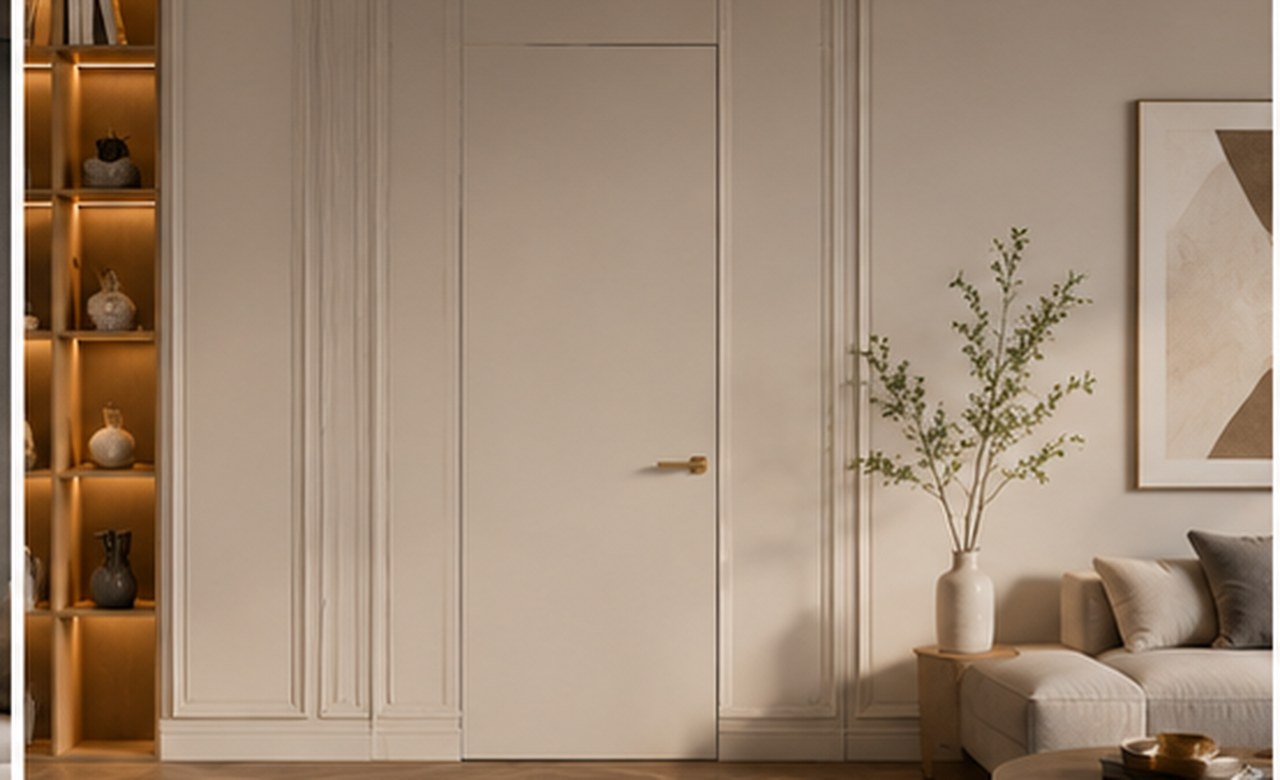
In luxury residential interiors, concealed doors can be used to create private transitions between living areas, offices, bedrooms, wardrobes, and entertainment spaces. The approach is particularly effective when the surrounding wall treatment already forms an important part of the interior design.
For commercial interiors, hidden doors can help maintain a polished appearance in reception areas, hospitality spaces, showrooms, offices, and other high-visibility environments. In Lakewood, NJ, and throughout New Jersey, panelled architectural features can be tailored to suit both residential interiors and commercial interiors.
A modern hidden door in wall panel is a doorway integrated into a panelled wall so the door visually blends with the surrounding surface. Matching panel patterns, finishes, and alignment help create a seamless appearance.
Yes. Hidden doors can be used in living rooms, bedrooms, home offices, libraries, entertainment areas, and other residential spaces. They are particularly useful where a clean, uninterrupted wall design is preferred.
Yes. Hidden doors can be coordinated with different decorative finishes, including wood-inspired, marble-inspired, metallic, and other contemporary panel surfaces. The appropriate finish depends on the surrounding interior design.
Yes. Concealed doors can be incorporated into offices, hotels, showrooms, reception areas, and other commercial interiors. They can help maintain a consistent architectural appearance while providing practical access between spaces.
Maintenance depends on the panel material and finish. In general, surfaces should be cleaned according to the manufacturer’s care recommendations, while hinges, hardware, and door alignment should be checked periodically to maintain smooth operation.
For a refined hidden door in wall panel design tailored to your interior, contact Panneli Interiors to discuss your project and explore suitable panel solutions.