

Modern interior panels have become a defining feature of contemporary residential and commercial design. They add depth, texture, warmth, and visual structure to walls while creating a more refined alternative to traditional painted surfaces.
From sophisticated wood-inspired finishes to dramatic feature walls, the right interior wall panels can transform an ordinary room into a carefully designed space. Whether you are updating a living room, bedroom, office, hospitality venue, or retail environment, modern panels offer flexible design possibilities without overwhelming the overall interior.
Modern interior panels are decorative wall systems designed to enhance the appearance and character of interior spaces. They can feature wood textures, geometric patterns, metallic effects, leather-inspired finishes, marble-inspired surfaces, and other contemporary profiles.
Unlike a simple painted wall, paneling introduces architectural detail and dimension. Designers can use individual panels to create subtle texture or combine multiple profiles to form a distinctive feature wall that complements furniture, lighting, flooring, and other finishes.
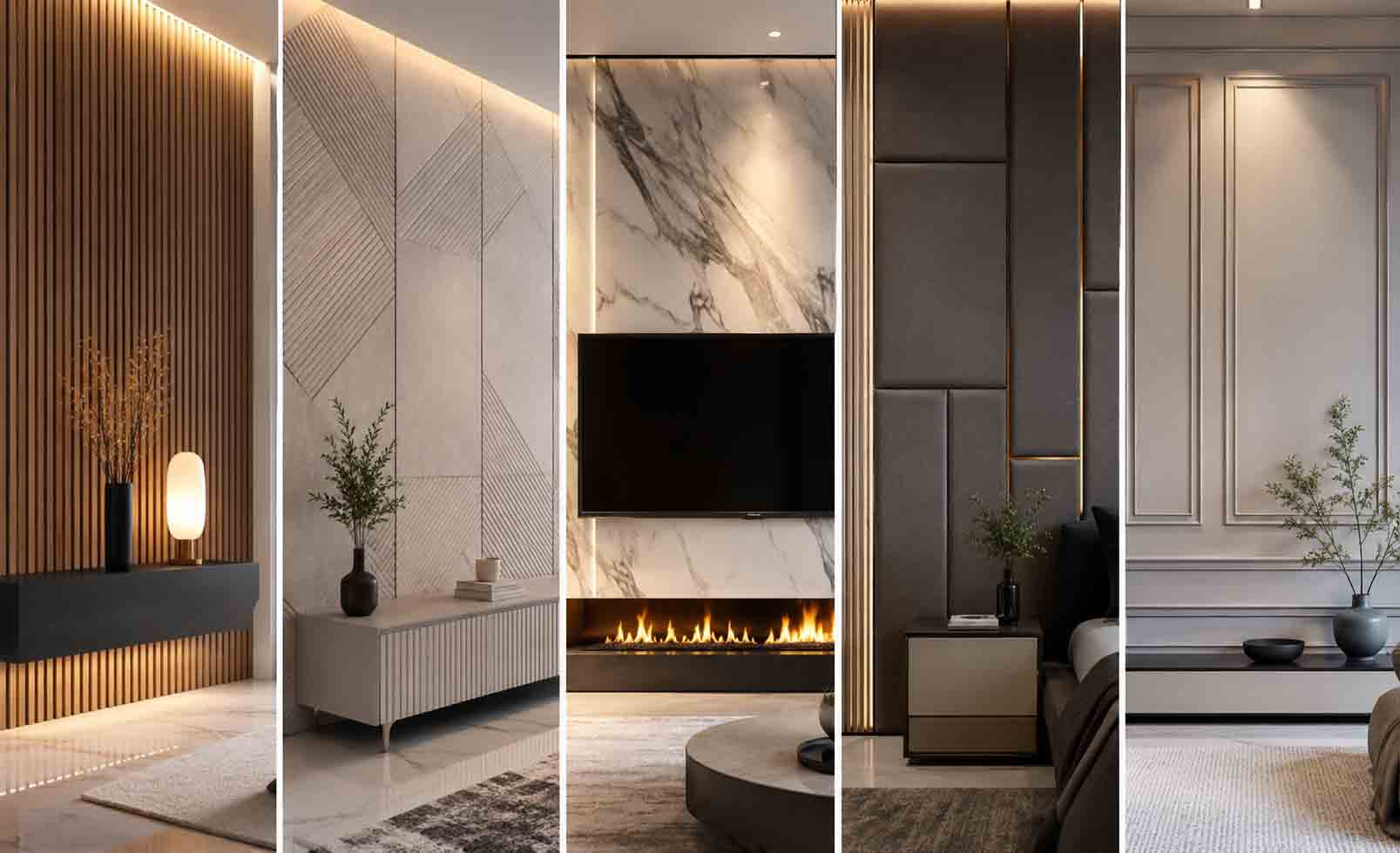
Floor-to-ceiling wood-inspired panels create a strong sense of height while bringing natural warmth into contemporary interiors. They work particularly well behind beds, sofas, reception desks, or dining areas where a large uninterrupted wall needs visual interest.
The vertical orientation can make ceilings appear taller, while the wood-inspired texture provides an organic contrast against glass, stone, metal, or minimalist furniture. For additional inspiration, explore this modern paneling for walls guide.
Geometric panels use lines, angles, repetition, and carefully balanced proportions to create an architectural focal point. They are suitable for modern living rooms, entryways, offices, lounges, and other spaces where the wall itself becomes part of the interior composition.
Geometric designs can range from understated linear patterns to more dramatic arrangements. Choosing a pattern that follows the proportions of the room helps maintain a sophisticated rather than cluttered appearance.
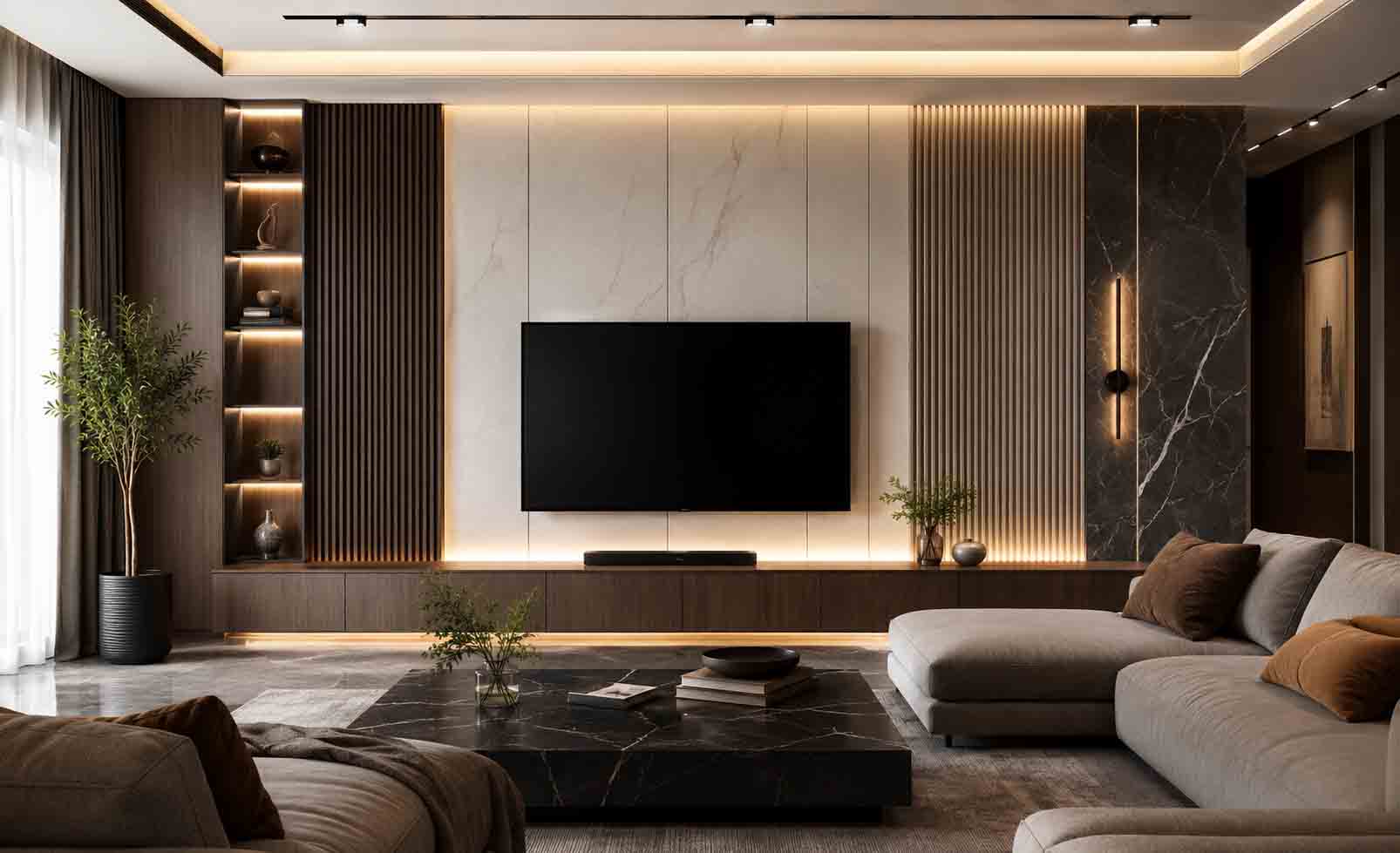
A television wall is often one of the most visible areas in a living room, making it an ideal location for decorative paneling. A carefully designed TV feature wall can frame the screen while adding texture and architectural character to the entertainment area.
Wood-inspired finishes can create warmth, while darker or stone-inspired surfaces can produce a more dramatic contemporary look. Cable management, lighting, shelving, and storage should be considered as part of the overall composition.
Linear panels are a strong choice for minimalist interiors because they add detail without relying on complex patterns. Narrow vertical or horizontal profiles can introduce rhythm and texture while maintaining clean visual lines.
This style works particularly well in modern apartments, bedrooms, corridors, reception spaces, and professional offices where simplicity is an important part of the design language.
Marble-inspired panels provide the visual character of stone while supporting a contemporary decorative wall concept. Their refined appearance makes them suitable for feature walls, entry areas, dining spaces, bathrooms where appropriate, and high-end commercial interiors.
When paired with understated furniture and carefully positioned lighting, marble-inspired surfaces can become an elegant focal point without requiring the entire room to use the same finish.
Metallic finishes introduce a sophisticated reflective quality that can change depending on lighting and viewing angle. They are especially effective in hospitality environments, entertainment areas, luxury offices, retail spaces, and contemporary residential interiors.
Because metallic surfaces naturally attract attention, they are often most effective when used selectively. A single accent wall or carefully defined architectural section can provide enough contrast without making the space feel visually busy.
Leather-effect panels bring a soft, sophisticated visual character to interiors. Their textured appearance can complement executive offices, bedrooms, lounges, entertainment spaces, and other environments where a more luxurious atmosphere is desired.
They can also provide an interesting contrast against hard materials such as glass, polished metal, stone, and concrete-inspired finishes.
Combining two complementary finishes can create depth and definition without relying on elaborate patterns. For example, a wood-inspired panel can be paired with a darker decorative finish to distinguish different areas of a feature wall.
Two-tone designs are particularly useful when a wall needs to perform multiple visual functions, such as framing a television, defining a dining area, or separating a workspace from a living area.
A hidden door can be integrated into a paneled wall so that the doorway becomes less visually prominent. Continuing the same panel profile across the door and surrounding wall creates a more seamless architectural appearance.
This approach works especially well in minimalist homes, entertainment rooms, offices, dressing areas, and contemporary commercial environments. See more ideas in this guide to modern hidden door panels.
A bedroom feature wall does not need elaborate decoration to make an impact. Panels positioned behind the bed can establish a visual focal point while introducing texture and proportion to the room.
Floor-to-ceiling profiles can emphasise vertical space, while horizontal designs can make a wall feel broader. Neutral finishes generally provide flexibility when changing bedding, artwork, lighting, or other furnishings.
Reception areas create an immediate impression for visitors, making decorative wall panels a practical design tool for commercial interiors. Textured surfaces behind reception desks can establish a professional backdrop while reinforcing the character of a workplace, hotel, clinic, showroom, or retail environment.
The most effective commercial applications consider durability, cleaning requirements, lighting, branding, and the amount of daily traffic before selecting a panel finish.
Dining spaces benefit from wall treatments that add warmth and visual depth without competing with the table, lighting, and surrounding furniture. Wood-inspired and subtly textured panels can create an inviting backdrop for both residential dining rooms and hospitality settings.
Panel proportions should be considered in relation to the dining table and room dimensions. A well-scaled installation can make the space feel intentionally designed rather than simply decorated.
Interior panels can give modern offices a more polished architectural appearance while helping distinguish meeting rooms, reception zones, executive areas, and collaborative spaces. Neutral textures and refined profiles can support a professional environment without creating unnecessary visual distraction.
Commercial wall panels can also be incorporated into broader interior schemes alongside glass partitions, built-in storage, acoustic considerations, lighting, and furniture.
Custom wall panels provide greater freedom when standard designs do not fully suit the proportions or aesthetic requirements of a project. Different profiles, finishes, orientations, and panel arrangements can be considered to create a wall treatment tailored to the space.
For luxury residential and commercial projects, customisation can help coordinate the wall treatment with existing architectural features and interior materials. The result can feel integrated into the architecture rather than added as an afterthought.
Selecting the right panel design involves more than choosing a finish that looks attractive. Consider the room’s size, natural light, furniture, ceiling height, architectural style, maintenance requirements, and the purpose of the wall.
In residential interiors, paneling can be used to establish focal points in living rooms, bedrooms, dining rooms, hallways, home offices, and entertainment areas. A carefully selected finish can introduce warmth and texture while keeping the overall design cohesive.
Luxury wall panels are particularly effective when they complement rather than compete with the rest of the room. Combining restrained colours, quality materials, and thoughtful lighting can create a sophisticated environment that remains visually relevant over time.
Commercial interiors often require a balance between appearance, functionality, maintenance, and long-term design appeal. Decorative panels can be incorporated into reception areas, offices, hospitality venues, showrooms, retail spaces, and other professional environments.
For projects in Lakewood, New Jersey, and throughout New Jersey, panel selection should reflect the intended use of the space as well as its architectural character. High-traffic environments may require different material and maintenance considerations than private residential rooms.
A successful wall panel installation begins with accurate planning. Wall dimensions, electrical outlets, doors, windows, lighting, televisions, cabinetry, and other fixed elements should be considered before the final layout is established.
Pattern alignment is equally important. Consistent spacing and carefully planned transitions can make a panel installation appear integrated with the architecture, while poorly considered proportions can reduce the visual impact of even a premium finish.
Contemporary interiors increasingly favour materials and wall treatments that provide depth without excessive ornamentation. Clean lines, natural-looking textures, muted tones, custom profiles, and combinations of contrasting finishes are versatile approaches for modern spaces.
The strongest designs are not necessarily the most complicated. Instead, they use proportion, texture, lighting, and material contrast to create a distinctive environment that remains functional and comfortable.
Modern interior panels are decorative wall systems used to add texture, depth, pattern, or architectural character to interior spaces. They are available in various profiles and finishes for residential and commercial applications.
Yes. Modern panels can be used in small rooms when the profile, colour, and pattern are appropriately scaled. Simple linear designs and lighter finishes can help maintain an open and balanced appearance.
Many panel systems can be customised through different profiles, finishes, orientations, and layouts. Customisation allows the design to better accommodate room dimensions, architectural features, and individual aesthetic requirements.
Yes. Interior panels can be used in offices, reception areas, retail environments, hospitality spaces, showrooms, and other commercial settings. Material selection should account for traffic levels, cleaning requirements, and the specific use of the space.
Maintenance depends on the panel material and finish. In general, surfaces should be cleaned according to the manufacturer’s care instructions using suitable cleaning methods and avoiding products that could damage the finish.
Ready to transform your space with modern interior panels? Explore Panneli Interiors’ luxury wall panel solutions and find a design that fits your residential or commercial project.