

The front exterior is the first part of a home that visitors see, making it an important opportunity to establish character, style, and visual appeal. The right modern front wall tile design can transform an ordinary facade into a distinctive architectural feature while complementing the roof, windows, doors, landscaping, and surrounding environment.
Today, homeowners have more options than traditional ceramic or porcelain tiles. Stone-inspired surfaces, marble-look finishes, wood-effect panels, metallic accents, and contemporary exterior wall systems can create the appearance of a high-end facade with greater flexibility in design.
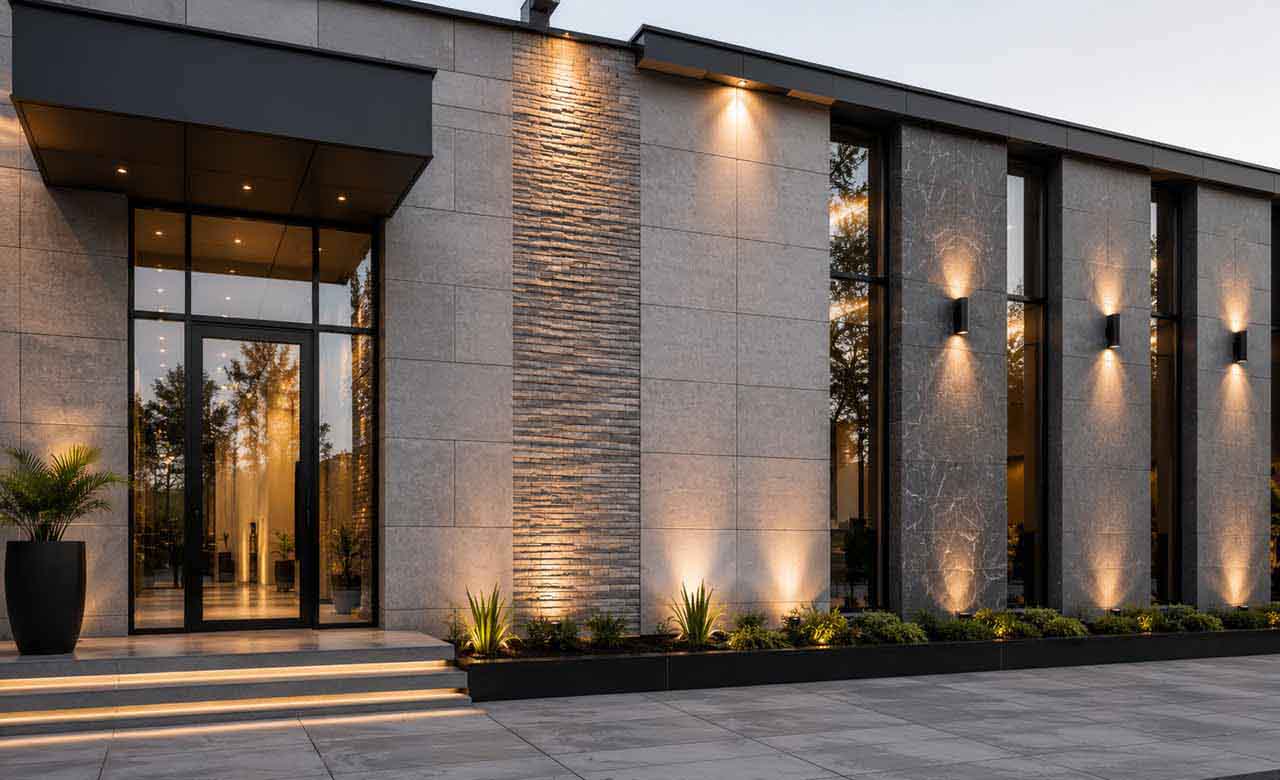
In this guide, we explore 17 modern front wall tiles design ideas and explain how different textures, colours, patterns, and materials can be used to create stylish exterior walls. For additional inspiration, explore these wall design ideas to see how different decorative surfaces can influence an overall architectural scheme.
A natural stone-look finish brings texture and architectural depth to a home’s front elevation. It works particularly well on feature walls around the entrance, garage, or porch where a stronger visual focal point is desirable.
Neutral shades such as beige, grey, taupe, and charcoal can create a sophisticated exterior without overpowering the rest of the property. Stone-inspired surfaces also pair naturally with timber doors, black-framed windows, concrete, and minimalist landscaping.
Marble-look surfaces can introduce a refined appearance to contemporary exterior walls. Veined patterns create movement across large surfaces while maintaining a clean and upscale aesthetic.
For modern homes, white or light marble-inspired finishes can make an entrance feel brighter and more open. Dark marble-look designs with contrasting veins can instead create a dramatic statement around the main doorway.
Wood-look finishes are an effective way to introduce warmth into a contemporary facade. They can soften the harder appearance of concrete, glass, and metal while maintaining a structured architectural appearance.
Vertical wood wall designs are especially useful for emphasising height, while horizontal arrangements can make a wall appear wider. Combining wood-effect surfaces with stone or neutral wall finishes can create a balanced modern exterior.
Dark grey and charcoal finishes are popular choices for modern front elevations because they create strong contrast without relying on bright colours. They can give a property a bold architectural identity while working with black window frames and contemporary lighting.
Dark exterior walls can also be used selectively rather than across the entire facade. A charcoal feature section around the entrance or garage can define while keeping the overall design visually balanced.
Geometric patterns can add architectural interest to otherwise simple exterior surfaces. Linear layouts, rectangular arrangements, and carefully repeated shapes can create a contemporary appearance without excessive ornamentation.
The key is consistency. Repeating a geometric pattern across a defined feature area generally produces a more sophisticated result than combining too many unrelated shapes.
Large-format surfaces can create a cleaner visual effect because fewer visible joints interrupt the wall. This approach works particularly well with minimalist architecture where simplicity and uninterrupted lines are important.
Large surfaces are suitable for broad entrance walls, boundary features, and sections of the front elevation. Installation requirements should be considered carefully because exterior applications need appropriate substrate preparation and fixing methods.
Concrete-inspired finishes are well suited to industrial and minimalist homes. Their understated texture provides a modern backdrop for architectural elements such as timber, glass, metal, and greenery.
A concrete-look wall does not have to appear cold. Pairing it with warm wood-effect accents, natural landscaping, and soft exterior lighting can create a more welcoming entrance.
Texture can make a front wall more visually interesting by creating highlights and shadows as natural light moves across the surface. A textured stone-inspired finish can therefore provide depth without requiring elaborate architectural detailing.
This design works particularly well around covered entrances, porch walls, and sections of the facade that are naturally visible from the street.
Vertical slat-inspired patterns create a strong sense of height and rhythm. They are particularly effective on narrow facade sections or around entrance areas where homeowners want to emphasise vertical architectural lines.
Wood-inspired finishes can make this look warmer, while darker contemporary finishes can produce a sharper architectural appearance. Vertical designs can also be combined with horizontal cladding elsewhere on the facade for contrast.
A black-and-white palette provides a timeless foundation for a contemporary front wall. White or light surfaces can keep the facade bright, while black or charcoal accents add definition around entrances, windows, or architectural projections.
The contrast can be introduced through wall surfaces, trim, doors, lighting, or landscaping rather than relying entirely on tiles. This makes it easier to create a coordinated exterior design.
Warm neutral tones are ideal for homeowners who want a modern facade that still feels welcoming. Beige, sand, cream, and light brown finishes can complement both traditional and contemporary architectural styles.
These colours are also versatile when selecting complementary doors, roofing materials, paving, and landscaping. A warm neutral palette can help an exterior maintain a cohesive appearance over time.
Combining different surface finishes can create a more layered front elevation. For example, a facade may combine stone-look surfaces with wood-inspired panels, smooth render, glass, or metal accents.
The most successful mixed-material designs usually have one dominant finish supported by one or two complementary materials. This prevents the exterior from appearing visually crowded.
A monochrome exterior uses variations of one colour family to create a restrained and contemporary appearance. Grey, white, beige, or charcoal can each form the basis of a sophisticated minimalist facade.
Instead of relying on multiple colours, visual interest comes from differences in texture, panel direction, surface depth, and lighting. This approach works particularly well for modern architectural homes.
The main entrance is a natural focal point, making it an ideal location for a distinctive wall finish. A feature wall can frame the front door and visually separate the entry area from the rest of the facade.
Wood-look, marble-inspired, stone-look, and textured finishes can all work effectively in this application. The chosen material should complement the door, exterior lighting, flooring, and surrounding architectural details.
Exterior wall panels provide another option for homeowners seeking a modern alternative to conventional tiled surfaces. Depending on the product and application, panels can introduce consistent patterns, textures, and finishes across an exterior feature area.
For larger architectural projects, exterior wall panels can be considered as part of a broader facade concept. Material suitability, weather exposure, substrate conditions, and installation requirements should always be assessed before selecting a system.
Exterior lighting can significantly change how a wall finish looks after sunset. Up-and-down lights, recessed fixtures, pathway lighting, and concealed illumination can highlight textures and architectural details.
Textured surfaces are particularly effective with directional lighting because shadows emphasise the natural variation across the wall. When planning a modern front wall, lighting should therefore be considered alongside the surface material rather than as an afterthought.
A luxury front elevation often combines several of the design principles above into one cohesive composition. A refined scheme might feature a stone-look or marble-inspired focal wall, warm wood-effect accents, dark architectural framing, and carefully positioned lighting.
The objective is not simply to use expensive-looking materials but to create proportion, balance, texture, and continuity throughout the facade. Premium finishes can be particularly effective when they are selected to complement the property’s architectural style rather than used independently.
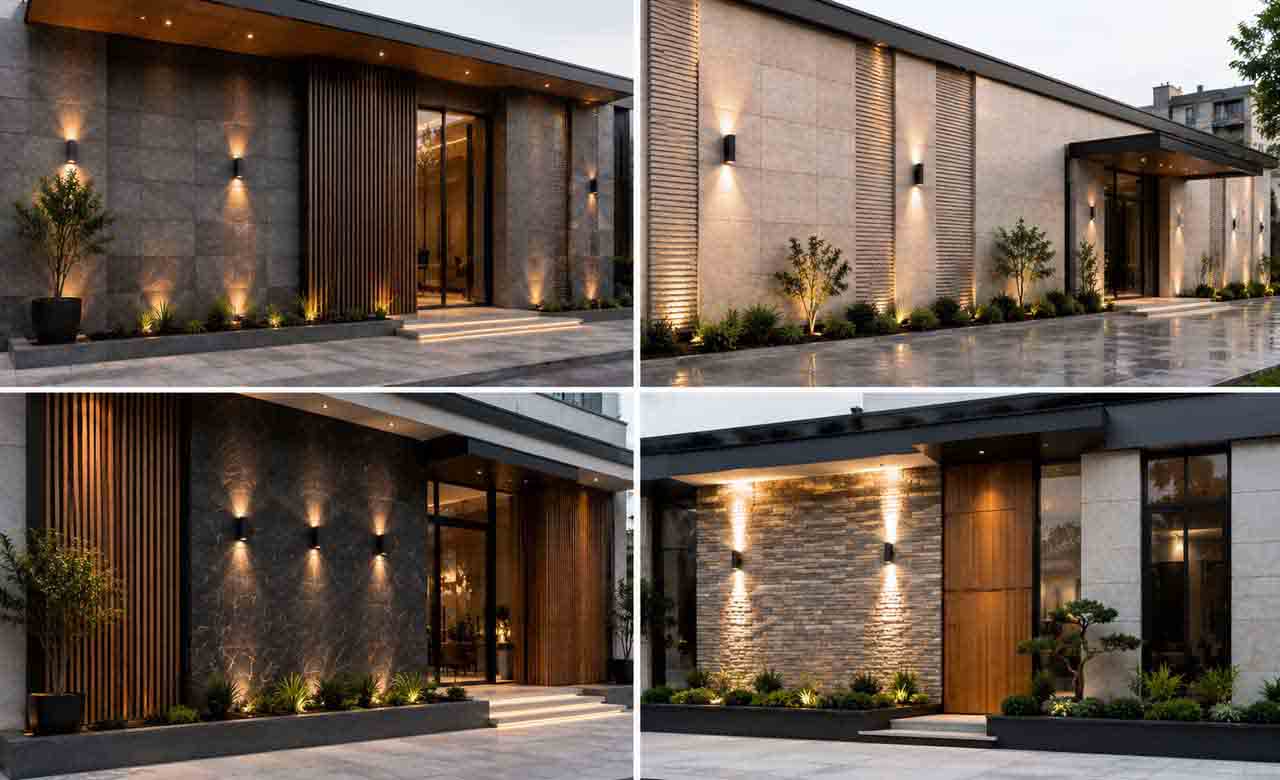
Choosing an exterior wall finish involves more than selecting a colour or pattern from a catalogue. Consider the architectural style of the property, the amount of sunlight the wall receives, surrounding materials, maintenance expectations, and the scale of the surface being covered.
Traditional exterior wall tiles can be an effective solution, but modern wall panels provide another design direction for homeowners interested in larger visual surfaces and contemporary finishes. Panels can offer consistent patterns and can be used to create feature areas that visually connect different architectural elements.
The right choice depends on the project requirements, substrate, location, exposure, installation method, and desired appearance. Homeowners in New Jersey should also consider the local climate and ensure that any selected exterior product is appropriate for its intended application.
Modern exterior wall treatments are not limited to private homes. Contemporary finishes can also be incorporated into commercial entrances, hospitality properties, retail environments, offices, and other architectural projects where the exterior contributes to the first impression.
For residential and commercial interiors, Panneli Interiors develops luxury surface solutions that include wood-inspired, marble-inspired, metallic, leather-effect, and other decorative finishes. Its Lakewood, New Jersey location provides a local connection for projects requiring premium decorative wall solutions.
A modern front wall tiles design uses contemporary tile patterns, textures, colours, and finishes to enhance the exterior facade of a home or building. Popular options include stone-look, marble-look, concrete-inspired, geometric, and wood-effect designs.
Exterior wall tiles can suit many architectural styles, but the selected product must be appropriate for outdoor exposure and the specific installation surface. Climate, moisture, substrate condition, and installation requirements should be evaluated before installation.
Modern wall panels can be an alternative design solution for suitable exterior applications. Their suitability depends on the specific panel system, installation requirements, substrate, environmental exposure, and manufacturer specifications.
Neutral colours such as white, beige, grey, taupe, charcoal, and black are commonly used for modern front walls. The best colour depends on the home’s architecture, surrounding materials, lighting, and desired visual contrast.
A luxury appearance can be created through coordinated materials, refined textures, balanced proportions, and carefully planned lighting. Marble-inspired, stone-look, wood-effect, and other premium decorative finishes can be combined selectively to create visual depth.
Explore premium exterior wall finishes with Panneli Interiors to find a modern front wall solution that complements your property’s architecture and design vision.