

A well-designed media wall can turn an ordinary television area into a refined focal point for the entire room. The best custom media wall designs balance the screen with architectural detail, storage, lighting, materials, and the overall character of the interior.
For luxury homes and premium commercial interiors, a custom TV wall can do more than hold a television. It can conceal cables, integrate shelving, create visual symmetry, introduce texture, and provide a sophisticated backdrop that complements the surrounding furniture and finishes.
Whether you are planning a dedicated media room, living room, lounge, or entertainment area, these 21 media wall ideas can help you choose the right combination of materials, proportions, lighting, and functionality.
A custom media wall is designed around the room rather than selected as a standard piece of furniture. This allows the television, cabinetry, shelving, lighting, wall finishes, and decorative elements to work together as one composition.
Customisation is particularly useful when the wall has unusual dimensions, architectural features, multiple functions, or specific storage requirements. It also provides greater freedom when selecting finishes that coordinate with the rest of a luxury interior.
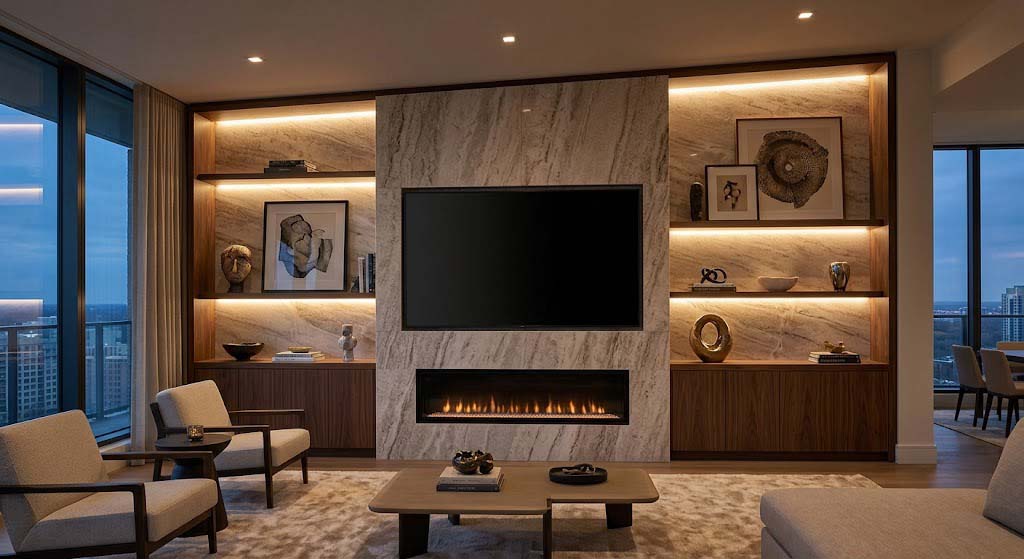
A floor-to-ceiling media wall creates a strong architectural presence and gives the television area a sense of scale. Use a continuous decorative finish behind the screen to make the entire wall feel intentional rather than treating the television as an isolated object.
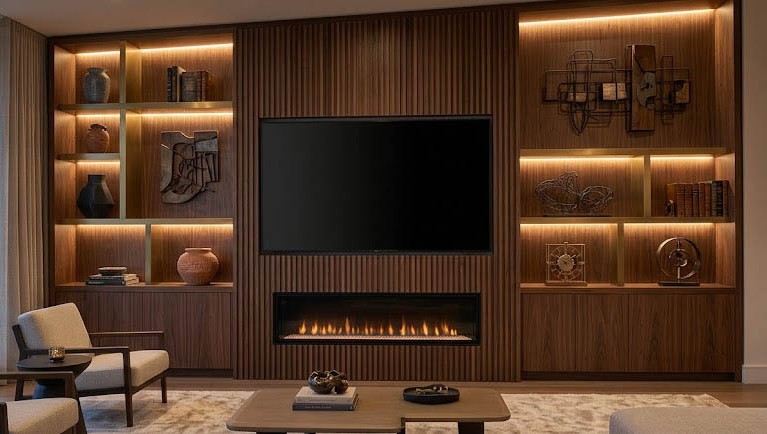
Wood-inspired finishes bring warmth and natural visual texture to an entertainment space. Pair decorative wooden panels with minimalist cabinetry and neutral furnishings for a contemporary luxury look.
A marble-inspired finish can create an elegant backdrop for a large television without requiring natural stone throughout the room. Veining, colour, and panel placement can be selected to complement the surrounding flooring, cabinetry, and furniture.
Integrated lighting can add depth to a TV feature wall while creating a softer atmosphere for evening viewing. Concealed LED illumination behind panels or shelving can highlight textures without competing with the screen.
Floating cabinetry keeps the floor visually open and creates a clean contemporary appearance. It can also provide practical storage for gaming equipment, remote controls, speakers, media accessories, and other entertainment components.
Vertical slatted detailing introduces rhythm and dimension to a large wall. A wood-inspired slatted design works particularly well when the objective is to create warmth while maintaining a modern architectural aesthetic.
A dark media wall can help the television blend into its surroundings while giving the room a dramatic character. Matte finishes, clean lines, and discreet storage can create a sophisticated appearance without excessive decoration.
Texture can make a television wall more visually interesting without relying on strong colours. Three-dimensional patterns, subtle grooves, leather-effect surfaces, or other decorative finishes can provide depth and tactile character.
Symmetry is an effective approach when designing a formal luxury living room. Positioning the television centrally and balancing it with matching shelving, cabinetry, lighting, or decorative elements can produce a calm and organised composition.
Open shelving allows the media wall to become part entertainment centre and part display feature. Books, artwork, ceramics, photographs, and carefully selected accessories can soften the technology and personalise the space.
Combining contrasting materials can give a media wall greater visual depth. A warm wood-inspired finish paired with a stone or marble-inspired surface creates a balance between organic warmth and refined architectural character.
For a cleaner appearance, storage can be integrated behind discreet cabinetry. This approach keeps entertainment equipment organised while allowing the primary focus to remain on the television and surrounding wall design.
Extending the design across the entire width of a wall can make a room feel more cohesive. Instead of focusing only on the screen, the full composition can incorporate panels, shelving, cabinetry, lighting, and decorative details.
A leather-effect finish can introduce a sophisticated tactile quality to a television wall. It can be particularly effective in executive lounges, contemporary living spaces, and entertainment rooms where a more distinctive finish is desired.
Vertical panel layouts can visually emphasise ceiling height and make a room feel taller. This is a useful design strategy for spaces where the media wall needs to provide architectural interest without becoming visually heavy.
Horizontal lines can create a wider visual impression and work well on broad walls. They can also complement low-profile furniture and long floating cabinets, producing a balanced contemporary arrangement.
A fireplace and television can be combined into one carefully planned focal point when the installation requirements are properly considered. The surrounding materials should be selected with heat, ventilation, clearances, and manufacturer requirements in mind.
A dedicated media room provides an opportunity to use more dramatic finishes and controlled lighting. Acoustic considerations, comfortable seating, concealed equipment, and layered illumination can be incorporated into the wider design.
Small rooms do not necessarily require a plain television installation. A compact custom media wall can combine a television panel, shallow storage, vertical detailing, and integrated lighting without overwhelming the available space.
Using several complementary finishes can create a highly individual entertainment wall. For example, a designer might combine wood-inspired panels, metallic accents, textured surfaces, and concealed lighting to establish different visual zones.
For a truly distinctive interior, the media wall can become a major architectural feature rather than simply a television surround. Bespoke proportions, custom profiles, premium finishes, integrated storage, and carefully positioned lighting can create a design that feels purpose-built for the home.
The best design begins with the room itself. Consider the wall dimensions, ceiling height, viewing distance, furniture arrangement, natural light, existing finishes, and the amount of equipment that needs to be accommodated.
It is also important to decide whether the television should stand out or visually disappear into the design. Darker finishes can make a screen feel less prominent, while contrasting materials can deliberately turn the television area into the room’s main focal point.
Material selection influences the character, maintenance, and visual weight of the media wall. Wood-inspired panels can create warmth, marble-inspired surfaces can provide elegance, metallic finishes can introduce contemporary detail, and textured panels can add dimension.
Exploring different wall design ideas can help establish which finish and layout best suit the existing interior.
Lighting should enhance the wall without creating distracting reflections on the television. Concealed LED strips, shelf lighting, and carefully positioned architectural illumination can add depth while maintaining a comfortable viewing environment.
Entertainment systems often require more storage than initially expected. Consider where gaming consoles, speakers, streaming devices, remotes, cables, and other equipment will be located before finalising the design.
A successful media wall should look considered while remaining practical. Decorative details should support the room’s architecture rather than obstruct access to equipment, create unnecessary maintenance, or interfere with television viewing.
Television wall panels provide a practical way to establish a defined focal area around the screen. They can introduce texture and architectural character while helping the television become part of the wider interior composition.
When comparing television wall panels, consider the size of the screen, panel orientation, viewing distance, surrounding furniture, lighting conditions, and the visual relationship between the television and other elements on the wall.
For projects requiring a more individual result, custom wall panels allow the design to be developed around the dimensions and aesthetic requirements of the space.
In residential interiors, a media wall often becomes one of the most visible features in a living room or family entertainment area. The design should therefore work with the room when the television is switched off as well as when it is being used.
Homes can benefit from integrated storage, concealed wiring, decorative lighting, and finishes that coordinate with flooring, cabinetry, furniture, and other architectural surfaces.
Media walls can also be used in commercial interiors such as hospitality spaces, executive lounges, reception areas, showrooms, and premium residential developments. In these environments, durability, maintenance, branding requirements, and consistent visual presentation become especially important.
In New Jersey projects, thoughtful material selection can help a media wall complement both contemporary and traditional architectural settings. For projects in Lakewood, NJ, the surrounding interior style should guide the choice of finish, colour, proportions, and detailing.
Luxury design is often defined by how well individual elements work together rather than by how many decorative features are added. A custom media wall can be developed to reflect the proportions, materials, lighting strategy, and functional requirements of a particular interior.
This approach also makes it easier to coordinate the television wall with other luxury interior wall designs throughout the property. The result is a more cohesive environment where the media wall feels integrated into the architecture instead of appearing as an afterthought.
A custom media wall is a purpose-designed feature wall built around a television and entertainment area. It can incorporate decorative panels, storage, shelving, lighting, cabinetry, and concealed wiring.
Luxury media walls can use a range of finishes, including wood-inspired, marble-inspired, metallic, textured, and leather-effect surfaces. The appropriate material depends on the desired appearance, room conditions, maintenance requirements, and overall interior design.
Yes. Custom media walls can be designed with integrated lighting, shelving, and cabinetry. These features can improve functionality while adding depth and visual structure to the entertainment area.
Yes. A compact media wall can combine a television panel with shallow storage, vertical detailing, or concealed lighting. Careful proportions are important so the design adds interest without making the room feel crowded.
Start with the room dimensions, television size, viewing position, storage requirements, existing finishes, and lighting conditions. The final design should balance aesthetics, functionality, accessibility, and the overall character of the interior.
Ready to create a bespoke entertainment feature that suits your space? Explore Panneli Interiors’ custom wall panel solutions and start planning your luxury media wall.