

A well-designed media wall can transform an ordinary living room into a sophisticated focal point. The latest media wall designs combine practical entertainment storage with carefully selected materials, textures, lighting, and architectural details to create a space that feels intentional and contemporary.
From minimalist TV feature walls to luxurious marble-look finishes and warm wood-inspired surfaces, today’s designs offer plenty of ways to personalise a living space. Whether you are planning a compact apartment renovation or a spacious luxury interior in Lakewood, NJ, these 23 modern media wall ideas can help you find the right direction.
A modern media wall is a feature wall designed around a television and related entertainment equipment. It can incorporate decorative wall panels, shelving, cabinetry, concealed storage, lighting, and architectural features to create a cohesive entertainment area.
Unlike a conventional TV mounted directly on a painted wall, a media wall gives the television a stronger visual relationship with the rest of the room. The right combination of materials and proportions can make the screen feel integrated into the interior rather than simply attached to it.
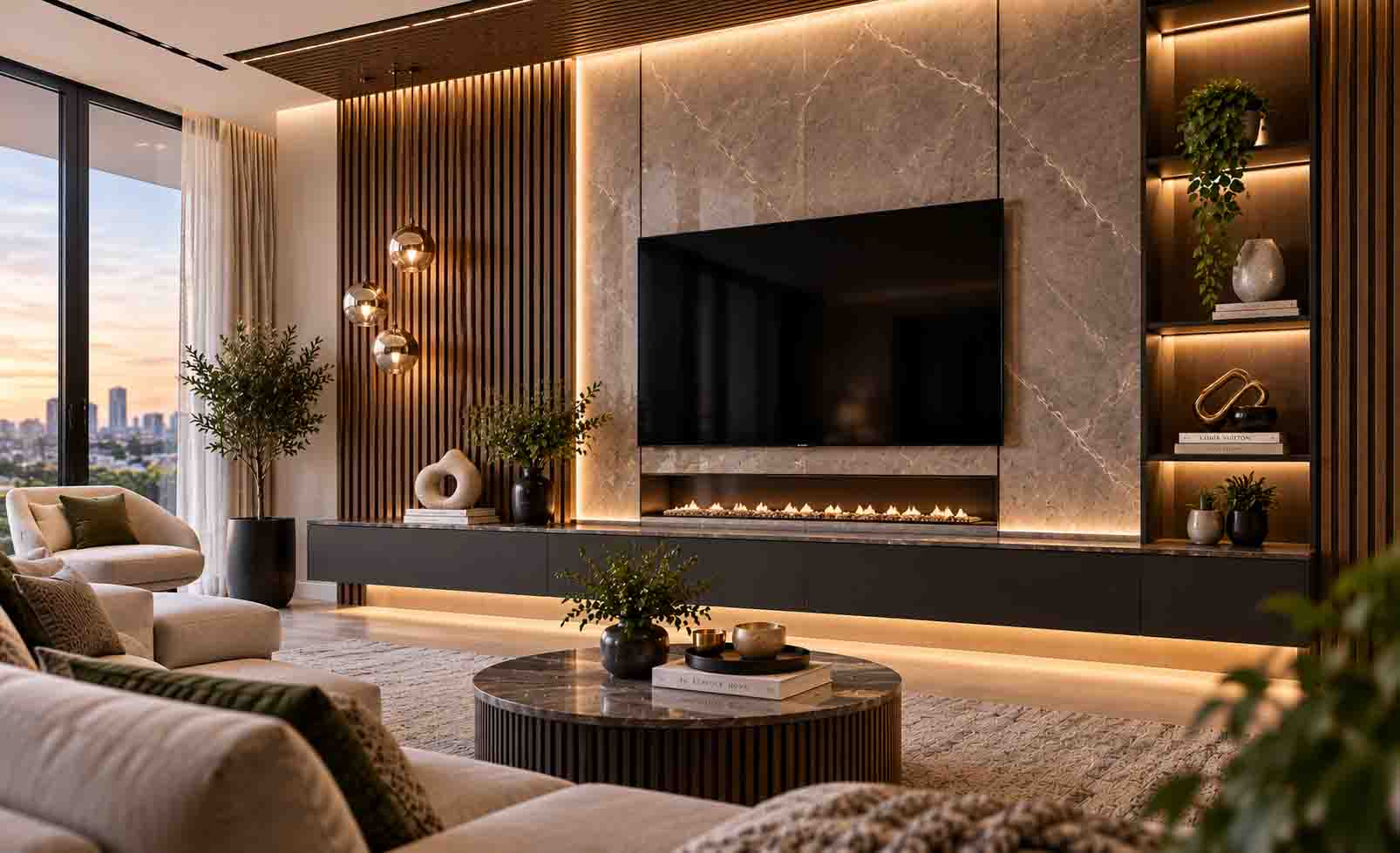
A minimalist media wall keeps the design clean by combining a wall-mounted television with streamlined cabinetry and limited decorative detailing. A neutral panel finish can provide texture without making the room feel visually crowded.
Floating cabinets beneath the television create a lighter appearance while providing useful storage for consoles, remotes and other entertainment equipment.
Marble-look panels create an elegant backdrop for a television while introducing natural-looking veining and visual movement. This approach works particularly well in luxury living rooms where the media wall needs to function as a major design feature.
For a sophisticated finish, pair a marble-inspired surface with restrained cabinetry and warm ambient lighting. Explore more marble wall panels for inspiration when selecting a refined finish.
Wood-look media walls bring warmth and depth to contemporary interiors. Vertical or horizontal panel profiles can create rhythm behind the television while complementing timber furniture and natural flooring.
This style is particularly effective when you want a modern media wall that feels welcoming rather than overly formal.
Integrated LED lighting can add depth to a media wall and highlight architectural details after dark. Backlighting around the television or beneath floating cabinetry can create a subtle glow without overpowering the room.
Warm lighting is generally well suited to living rooms because it creates a comfortable atmosphere while drawing attention to the feature wall.
Textured panels can turn a simple television wall into a tactile architectural feature. Ribbed, fluted, grooved, or three-dimensional profiles introduce shadow lines that change throughout the day as natural light moves across the surface.
A restrained colour palette allows the texture to remain the main visual element without competing with furniture and accessories.
A full-height media wall extends the feature treatment from floor to ceiling, creating a stronger architectural presence. This design can make the television area feel more integrated with the room rather than appearing as a separate installation.
Full-height panels are especially effective on large feature walls where a shorter installation could leave the composition feeling incomplete.
A dark media wall can create a dramatic, sophisticated setting for a television. Black or charcoal finishes work well with modern furniture, metallic accents, and carefully positioned lighting.
To prevent the room from feeling too heavy, balance darker wall treatments with lighter flooring, upholstery, or decorative elements.
Neutral beige and warm taupe finishes provide a softer alternative to stark white or dark feature walls. They create an understated background that works with a wide range of furniture styles and colour palettes.
This approach is useful for homeowners who want a contemporary TV wall without making the television area excessively bold.
Slatted wood-look panels remain a popular choice for contemporary living rooms because they add vertical definition and warmth. The repeated lines can visually emphasise ceiling height while creating a refined backdrop for the screen.
Slatted detailing can also be combined with concealed storage or contrasting solid panels to create a more customised composition.
Floating shelves provide an opportunity to display books, artwork, plants and decorative objects around the television. The shelves can break up a large wall surface while giving the media area a more personalised appearance.
Keep the number of displayed objects controlled so the shelving enhances rather than distracts from the main focal point.
A built-in media wall combines entertainment equipment with practical storage. Closed cabinetry can conceal cables, gaming equipment, and accessories, while open shelving can be used for selected decorative pieces.
This design is particularly useful for busy living rooms where functionality is just as important as appearance.
Combining two finishes can give a media wall greater depth and visual structure. For example, a wood-inspired panel can be paired with a smooth neutral surface to create contrast around the television.
Using two complementary finishes also makes it easier to define separate areas for the screen, storage and decorative elements.
Vertical panel profiles create a strong sense of height and can give a living room a more architectural appearance. They are particularly effective when the television is centred within a carefully proportioned panel layout.
For a sophisticated result, maintain consistent spacing and align the panel lines with surrounding cabinetry or architectural details.
Horizontal panel arrangements can visually widen a wall and create a calmer, more linear appearance. This makes them useful for long living rooms where the media wall needs to complement the proportions of the space.
Pairing horizontal detailing with low-profile cabinetry can reinforce the clean, contemporary character.
Leather-effect finishes introduce a sophisticated texture that can make a television wall feel more refined. The material-inspired surface works particularly well in luxury interiors with premium furniture and understated decorative accents.
A restrained colour such as deep brown, charcoal, or warm neutral can create a sophisticated backdrop without excessive visual contrast.
Metallic finishes can introduce subtle glamour to a contemporary media wall. Brushed or muted metallic details are generally easier to integrate than highly reflective surfaces because they add interest without creating excessive glare.
Use metallic elements selectively around the television or within adjoining cabinetry for a balanced luxury aesthetic.
Combining a television with a fireplace creates a strong central focal point in a living room. The surrounding wall treatment can visually connect both elements while helping the overall composition feel cohesive.
Material selection is particularly important for this design because the wall must complement both the entertainment technology and the architectural character of the fireplace.
A media wall does not need to occupy an entire room to make an impact. In smaller spaces, a compact panelled section with a wall-mounted television and streamlined storage can provide a clear focal point without overwhelming the room.
Light colours, simple profiles and floating cabinetry can help maintain a sense of openness.
Combining marble-look and wood-inspired finishes creates a sophisticated balance between cool elegance and natural warmth. The marble-inspired surface can frame the television while wood-look detailing adds texture to surrounding areas.
This combination works well when the goal is to create a statement wall with multiple layers of visual interest.
A visually clean media wall should account for cables and entertainment equipment during the planning stage. Concealing wiring within suitable cabinetry or the wall construction can prevent loose cables from disrupting an otherwise polished design.
Planning the location of power points, connections, and equipment before installation helps achieve a cleaner finished result.
A gallery-inspired media wall treats the television as part of a larger composition rather than the only focal point. Artwork, decorative objects and carefully positioned lighting can be arranged around the screen to create a curated appearance.
The key is to maintain visual balance so the additional elements support the television area instead of competing with it.
Geometric panel layouts can create a distinctive contemporary feature wall. Angled sections, framed panels, and contrasting profiles can be used to introduce architectural character while maintaining a clear position for the television.
Custom designs are especially useful when a standard rectangular media wall does not suit the dimensions or architectural features of the room.
A seamless luxury TV feature wall uses coordinated materials, cabinetry, and detailing to create a unified composition. The television, storage and decorative surfaces appear to belong to the same architectural design rather than being assembled separately.
This approach works particularly well in premium residential and commercial interiors where consistency, proportion and material quality are central to the overall design.
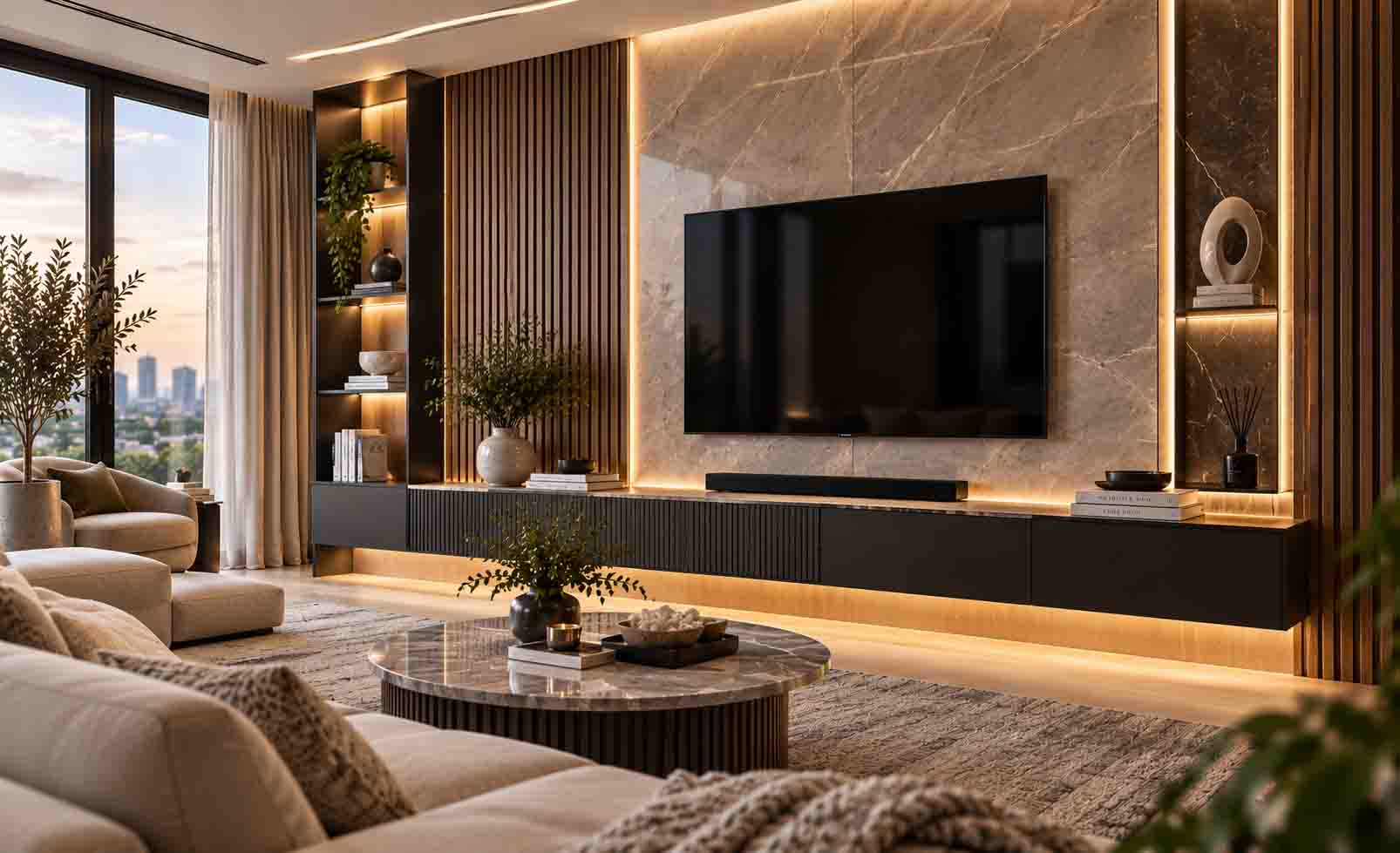
The best media wall design should reflect the proportions of the room, the position of the television and the interior style already established throughout the property. Before selecting a finish, consider viewing distance, natural light, available storage and how much visual attention you want the feature wall to attract.
Material choice is equally important. Wood-inspired panels can introduce warmth, marble-look surfaces can create a more luxurious appearance, while textured or metallic finishes can add contemporary character.
A large living room can accommodate a full-height or wide media wall, while smaller rooms often benefit from a more compact composition. The television should remain proportionate to the wall and seating arrangement rather than becoming visually dominant.
Consider where consoles, sound systems, remote controls and other equipment will be stored before finalising the design. Integrating these requirements into the media wall from the beginning can produce a cleaner and more functional result.
The finish should complement existing flooring, furniture, cabinetry and lighting. If the room already contains strong patterns or colours, a restrained panel finish may create better balance than another highly decorative surface.
Television wall panels provide a practical way to create a defined focal point while adding texture and architectural character. They can be used across residential living rooms, entertainment spaces and selected commercial interiors where a polished visual presentation is required.
Panel profiles also provide flexibility in design because different textures, colours and finishes can be combined to suit a specific interior concept. Explore television wall panels for additional ideas on creating a sophisticated TV feature wall.
Every room has different dimensions, architectural constraints and design requirements, which is why custom media wall solutions can be useful for premium interiors. A tailored design can account for television dimensions, storage requirements, lighting, wall proportions and the desired material combination.
For more inspiration, explore these custom media wall designs to see how different layouts can be adapted to modern entertainment spaces.
When planning a wider renovation, browsing wall design ideas can also help you coordinate the media wall with other feature surfaces throughout the home.
Media walls are commonly associated with residential living rooms, but the same design principles can be applied to hospitality spaces, offices, showrooms, and other commercial interiors. The appropriate finish depends on the property’s function, expected traffic, maintenance requirements, and overall design concept.
In luxury residential projects across New Jersey, a carefully planned media wall can become an architectural focal point that connects entertainment technology with the wider interior design. In commercial environments, a well-integrated feature wall can also reinforce a polished and contemporary visual identity.
The latest media wall designs demonstrate how a television area can become much more than a place to mount a screen. From marble-look and wood-inspired finishes to illuminated, textured and fully customised installations, the right combination of materials and proportions can create a functional feature that complements the entire living room.
Whether your preference is minimalist, warm and natural, dramatic or distinctly luxurious, thoughtful planning will help ensure the media wall works with the room rather than against it. For a tailored luxury media wall concept, explore Panneli Interiors’ design solutions and start planning your ideal feature wall today.
The latest media wall designs include minimalist, marble-look, wood-inspired, textured, illuminated, full-height, and customised TV feature walls. Many designs combine decorative panels with floating cabinetry and integrated lighting.
Yes. Compact media walls can be designed with streamlined panels, wall-mounted televisions and floating storage to create a focal point without overwhelming a smaller room.
Marble-inspired, wood-look, leather-effect, metallic, and textured finishes can all work well for luxury media walls. The best option depends on the room’s existing materials, lighting, and overall interior style.
Yes. Media walls can incorporate cabinetry, shelving and dedicated spaces for entertainment equipment. Cable management can also be planned during installation to create a cleaner finished appearance.
Yes. Custom media wall panels can be planned around the television size, wall dimensions, storage requirements and preferred materials. Customisation can also help coordinate the media wall with the wider interior design.