

Wall design tiles for living room spaces can transform an ordinary wall into a striking architectural feature. From marble-inspired surfaces and geometric patterns to textured finishes and wood-look designs, the right wall treatment adds depth, character, and sophistication to your interior.
At Panneli Interiors, we believe a beautiful living room starts with thoughtful material selection and a clear design vision. While traditional tiles offer timeless appeal, modern wall panels provide another way to achieve a refined, seamless look for residential interiors. In this guide, we explore 17 stylish ideas, practical design considerations, and ways to combine different wall finishes for a cohesive, luxurious space.
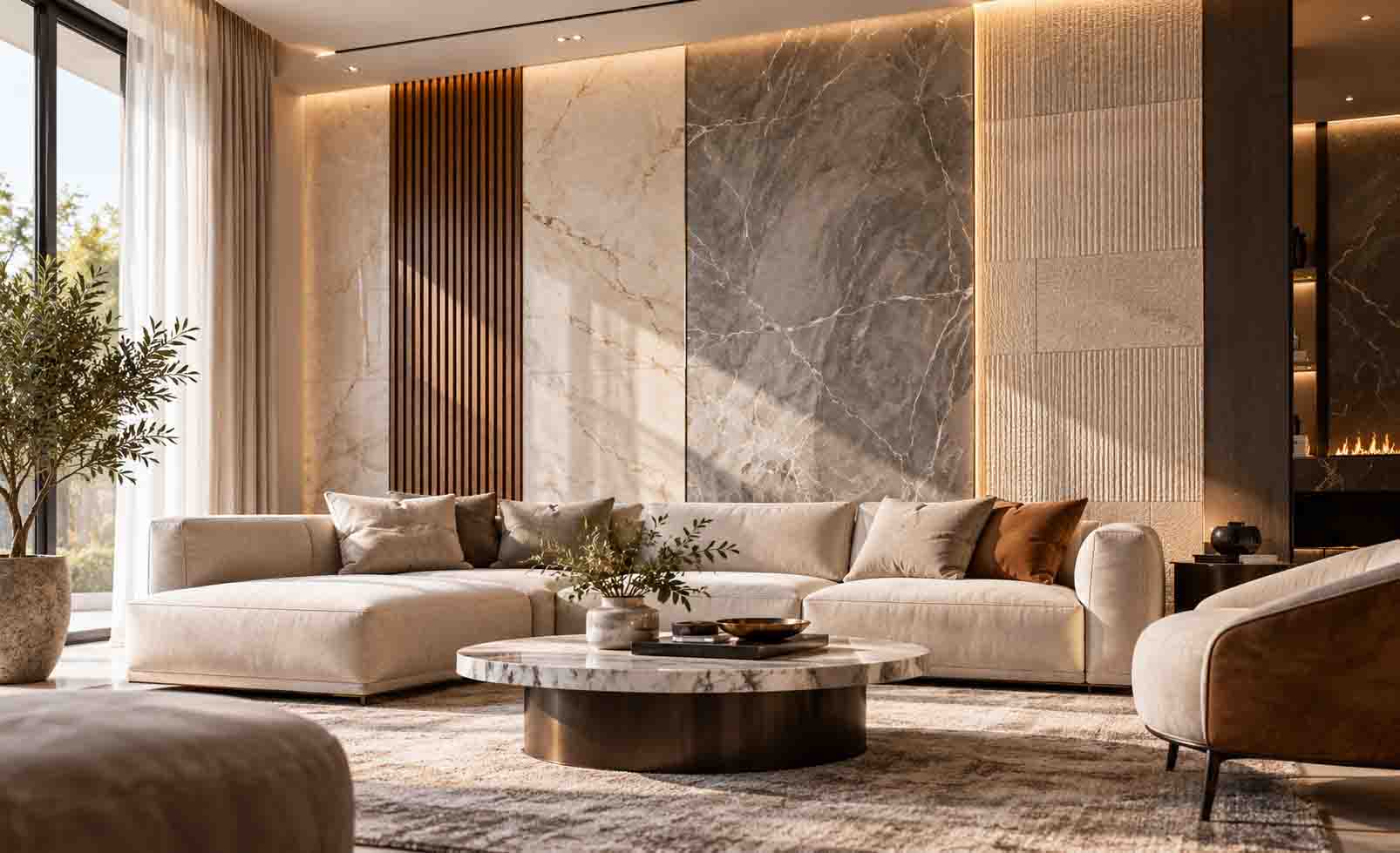
Marble-look wall tiles create an elegant focal point with natural-looking veining and sophisticated colour variations. White marble with grey veins works beautifully in bright, contemporary living rooms, while darker marble-inspired finishes add drama to more intimate spaces.
Consider using a marble-look surface behind your sofa or television to establish a clear visual centre. For a coordinated architectural finish, explore our luxury wall panels as an alternative to conventional tile arrangements.
Large-format tiles reduce the number of visible grout lines, helping a living room wall appear more continuous and spacious. They are particularly effective in open-plan interiors where visual simplicity supports a clean, modern aesthetic.
Choose a finish that complements the flooring, furniture, and natural light. Before installation, check the wall’s condition and ensure the chosen tiles are suitable for the intended application.
Geometric tiles introduce movement through hexagons, diamonds, chevrons, and repeating angular patterns. They work well on accent walls where the design can stand out without competing with other decorative elements.
For a balanced result, pair bold geometric patterns with simple furniture and understated accessories. If the room already contains patterned upholstery or decorative flooring, a restrained tile design can maintain visual harmony.
Textured tiles add dimension through raised patterns, ridges, grooves, and tactile surfaces. These finishes can make a neutral living room feel more layered without relying on bright colours or elaborate decoration.
Lighting plays an important role in this design. Wall-mounted lights or carefully positioned spotlights can highlight the texture and create subtle shadows that change throughout the day.
Wood-look tiles combine the appearance of timber with the characteristics of a tile surface. They can introduce warmth into minimalist living rooms and complement neutral upholstery, natural fabrics, and contemporary furniture.
Use horizontal arrangements to emphasise width or vertical layouts to draw attention upward. If you prefer an architectural timber-inspired feature, decorative wooden wall panels offer another design direction worth considering.
Charcoal, black, and deep brown tiles can create a sophisticated focal point in a living room. They pair particularly well with warm lighting, metallic accents, and furniture in lighter shades.
Dark surfaces are often most effective when balanced with natural light or contrasting materials. In smaller rooms, consider limiting the dark finish to one feature wall rather than covering every surface.
Glossy tiles reflect light and can make a living room feel brighter, particularly when natural daylight is limited. White, cream, and pale grey finishes are useful for interiors that need a lighter visual atmosphere.
However, reflective surfaces can also reveal glare, fingerprints, and imperfections more readily than matte finishes. Test samples under your actual lighting conditions before choosing a finish for a large wall.
Matte tiles offer a softer appearance with less reflection than glossy alternatives. They are suitable for contemporary, minimalist, and understated luxury interiors where texture and material quality matter more than shine.
Combine matte surfaces with warm wood tones, soft textiles, and layered lighting. This approach creates contrast while maintaining a calm and cohesive design.
Stone-look tiles reproduce the appearance of materials such as limestone, slate, and travertine. Their earthy colours and organic patterns work well in living rooms inspired by natural materials and relaxed luxury.
Use stone-look finishes alongside timber furniture, linen curtains, and muted colour palettes. For visual balance, avoid introducing too many competing stone patterns in the same space.
Three-dimensional tiles create depth through sculpted shapes, layered forms, and repeating relief patterns. They are especially effective on a feature wall where light can emphasise the contours.
Because these designs attract attention, keep surrounding surfaces relatively simple. A restrained colour palette helps the three-dimensional finish remain the centrepiece rather than making the room feel visually crowded.
Mosaic tiles introduce intricate patterns through small pieces of glass, ceramic, stone, or other suitable materials. They can add colour and craftsmanship to a niche, a decorative strip, or a carefully selected living room feature.
For larger walls, use mosaics selectively to avoid an overly busy appearance. A mosaic accent paired with larger, simpler surfaces can create a more balanced composition.
Concrete-look tiles create an urban aesthetic with understated colour variations and a slightly industrial character. They work particularly well with black metal details, minimalist furniture, and warm wood accents.
To prevent the room from feeling cold, introduce softer materials such as rugs, cushions, curtains, and upholstered seating. Warm lighting can also soften the appearance of grey surfaces.
Metallic-effect tiles add a subtle shimmer through finishes inspired by bronze, copper, silver, or brushed metal. Depending on the colour and pattern, they can create anything from understated sophistication to a bold decorative statement.
Use metallic surfaces as accents rather than automatically applying them across every wall. Pair them with neutral materials and carefully selected lighting to keep the room elegant.
Herringbone layouts create movement through rectangular pieces arranged in an interlocking pattern. This classic arrangement can suit both contemporary and transitional living rooms, depending on the tile colour and finish.
A herringbone feature works well behind a sofa or within a defined architectural section. Before installation, review a layout sample to confirm the pattern’s scale and alignment with the surrounding furniture.
Vertically arranged rectangular tiles can draw the eye upward, making the wall feel taller. This approach is particularly useful in rooms with low ceilings or narrow architectural proportions.
Pair vertical lines with simple furnishings and avoid excessive horizontal decoration on the same wall. The aim is to create a clear visual direction without overwhelming the space.
Beige, ivory, taupe, and soft grey tiles provide a versatile foundation for living room design. Neutral surfaces work with many furniture styles and allow artwork, lighting, and decorative accessories to introduce personality.
To prevent a neutral scheme from feeling flat, combine different textures and subtle tonal variations. For example, a matte tile surface can complement a textured rug, warm timber furniture, and soft upholstered seating.
If you want the visual character of tiles with a more continuous architectural appearance, consider decorative wall panels. Depending on the selected product, panels can recreate marble-inspired patterns, wood textures, metallic effects, or other contemporary finishes.
At Panneli Interiors, we specialise in luxury decorative wall solutions designed to complement distinctive residential and commercial interiors. When selecting panels, consider the substrate, room conditions, product specifications, installation requirements, and desired visual effect.
Explore our residential and commercial project inspiration to see how considered wall finishes can elevate interior design.
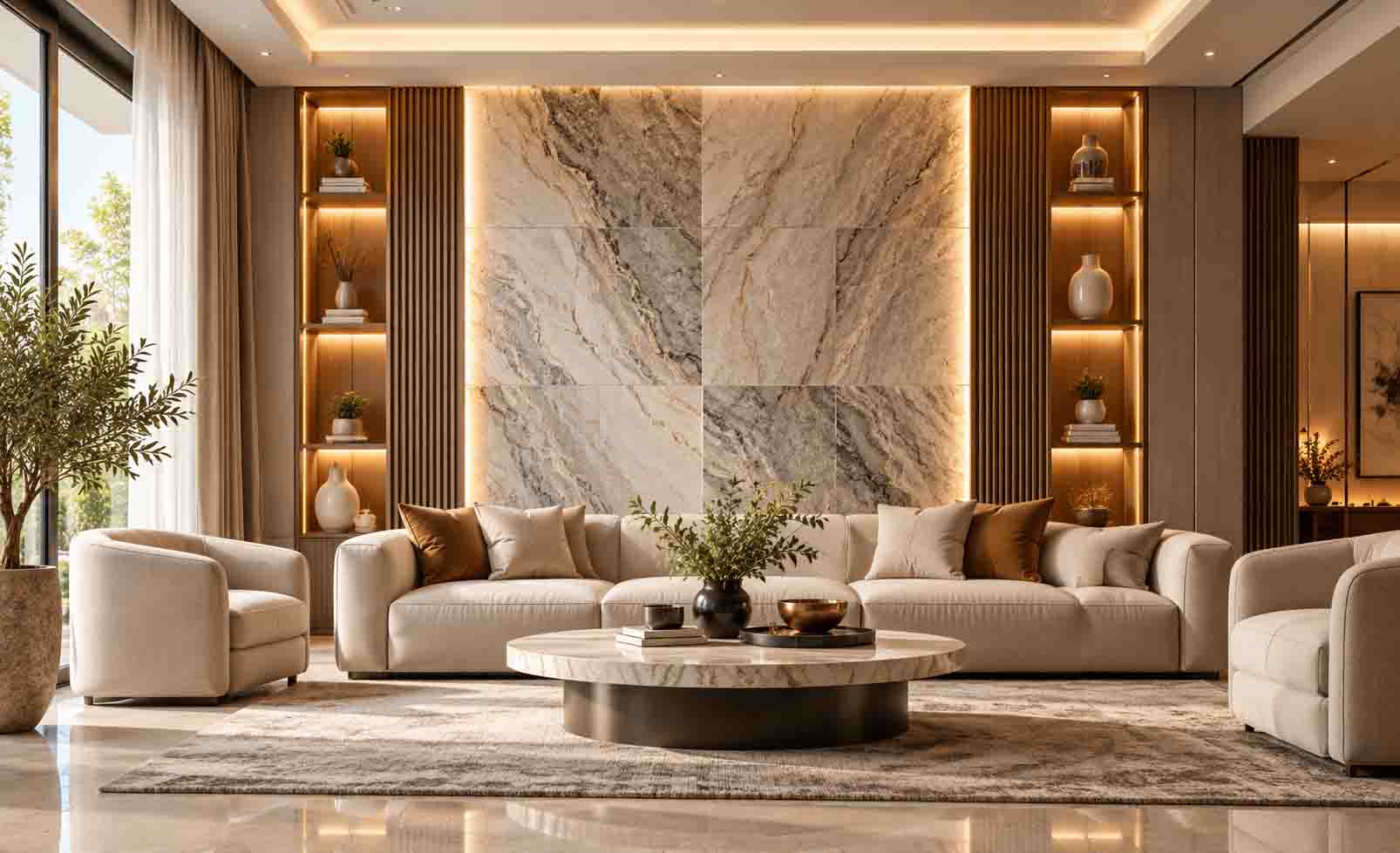
The best wall design tiles for living room spaces depend on the room’s proportions, lighting, existing materials, and intended atmosphere. A design that looks impressive in a large, naturally lit room may feel overpowering in a compact space.
Consider these practical factors before making your selection:
Request samples where possible and view them in the room at different times of day. This simple step can help you evaluate colour, texture, and reflection before committing to the final design.
Wall tiles and decorative wall panels can both create attractive feature walls, but they differ in construction, appearance, and installation requirements. Tiles are individual pieces generally installed with adhesive and grout, while panels are larger elements that may create a more continuous surface with fewer visible joints.
Tiles can be useful when a specific modular pattern, mosaic, or traditional tiled appearance is the priority. Decorative panels may be preferable when the design calls for a large-scale marble effect, a coordinated feature wall, or a contemporary architectural finish.
Neither option is automatically better for every project. The right choice depends on the product’s intended application, room conditions, installation method, maintenance requirements, and overall design goals.
A successful living room design balances the feature wall with the rest of the space. Rather than treating wall tiles as an isolated decoration, consider how they relate to the flooring, ceiling, furniture, lighting, and adjoining walls.
For example, marble-look tiles can complement warm timber furniture, while concrete-look finishes can soften when paired with textured fabrics and natural wood. Metallic accents can introduce contrast, but using them sparingly usually creates a more cohesive result.
In larger residential interiors and commercial reception areas, consistent material choices can help connect separate zones. Review the wider design scheme before selecting the final finish, particularly when the living room forms part of an open-plan layout.
The right wall design tiles for living room interiors can introduce texture, depth, warmth, and a distinctive focal point. Whether you prefer marble-inspired elegance, geometric patterns, natural stone effects, or modern architectural surfaces, the most successful design is one that complements the room’s proportions and everyday use.
At Panneli Interiors, we understand that wall finishes are an important part of creating a considered interior. If you’re planning a residential or commercial feature wall, contact Panneli Interiors to discuss your design goals and explore wall panel solutions that suit your space.
The best option depends on your interior style, room size, lighting, and maintenance preferences. Marble-look, stone-look, wood-look, geometric, and textured tiles are popular choices for living room feature walls.
Large-format tiles, light colours, and restrained patterns can help a small living room feel more open. The overall effect also depends on lighting, furniture placement, and the amount of visual contrast in the room.
Neither is universally better. Tiles offer individual modular pieces and traditional tiled patterns, while decorative panels can create larger, more continuous visual surfaces. The choice depends on the product, installation requirements, room conditions, and desired appearance.
Clean the surface using a method and cleaning products suitable for the tile material. Follow the manufacturer’s guidance, address spills promptly, and inspect grout lines periodically where applicable.
Yes. Some decorative wall panels feature marble-inspired patterns, textured finishes, and other designs that can complement tile-inspired interiors. Check the product specifications to confirm its appearance, suitability, and installation requirements.