

Concrete-inspired walls have become a popular choice for modern interiors because they combine understated elegance with architectural character. At Panneli Interiors, we see concrete-inspired wall finishes as a versatile way to add texture, depth, and a contemporary aesthetic to residential and commercial spaces.
From minimalist living rooms to sophisticated entertainment areas, concrete-inspired surfaces can create a striking backdrop without overwhelming the rest of the interior. With the right combination of materials, lighting, and decorative panels, this approach can feel warm, refined, and timeless.
Concrete-inspired wall designs balance industrial character and modern luxury. Subtle variations in colour and texture can add visual interest while complementing materials such as wood, metal, glass, and stone.
We recommend considering the overall purpose before choosing a finish. A softly textured grey wall may work well in a calm living area, while a darker concrete effect can create a dramatic focal point behind a television or in a commercial reception space.
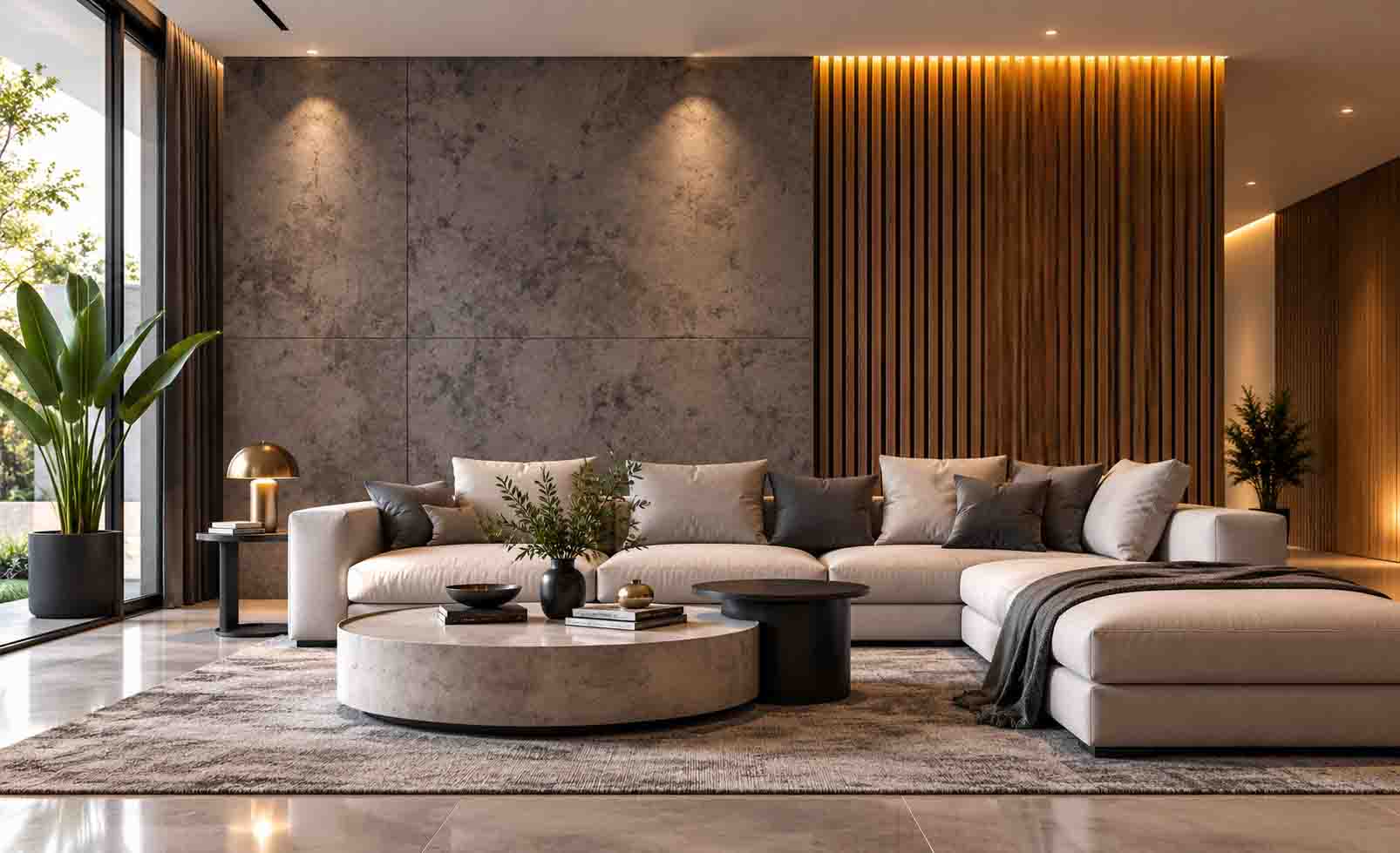
A smooth grey concrete-inspired wall creates a clean, understated foundation for a contemporary interior. Pair it with neutral furniture, simple silhouettes, and carefully positioned lighting to maintain a balanced appearance.
We suggest using variations in grey rather than relying on a single flat tone. This creates subtle depth without making the room feel visually busy.
A television wall is an excellent place to introduce concrete-inspired finishes. The muted texture can frame the screen and establish a clear focal point in the living room.
At Panneli Interiors, we recommend considering decorative wall panels alongside the television unit, shelving, and lighting. A coordinated design can bring these elements together while keeping visible cables and accessories as discreet as possible.
Concrete-inspired finishes and wood-look surfaces create an appealing contrast between cool, industrial textures and warm, natural-looking tones. This combination works particularly well in living rooms, bedrooms, and open-plan interiors.
Consider placing wood-look panels beside a concrete-effect feature wall or using timber-inspired cabinetry beneath it. The contrast can soften the overall appearance and help the room feel more inviting.
A textured concrete wall adds dimension through subtle variations, layered finishes, or a stone-like appearance. It can become a focal point without requiring bold colours or elaborate decoration.
We recommend using this approach on a single feature wall when the room already contains patterned furniture or decorative accessories. Keeping surrounding surfaces relatively simple allows the texture to stand out.
Concrete-inspired finishes can bring a sophisticated, contemporary character to a bedroom. Behind the bed, a softly textured wall can provide a distinctive backdrop for upholstered furniture, bedside lighting, and neutral bedding.
For a more luxurious result, combine the finish with warm lighting, soft fabrics and wood accents. These elements help balance the cooler visual character often associated with concrete.
A floor-to-ceiling feature wall can emphasise vertical proportions and create a strong architectural statement. This approach is particularly effective in rooms with high ceilings or expansive open-plan layouts.
Before choosing the finish, consider the room’s natural light and existing colour palette. Lighter concrete-inspired tones may help maintain an airy appearance, while darker finishes can create a more intimate atmosphere.
Lighting can transform the appearance of a concrete-effect surface by highlighting texture and creating subtle shadows. Wall washers, concealed LED strips and carefully positioned accent lights can add depth to a feature wall.
We recommend testing the lighting direction before finalising the installation. Grazing light may emphasise surface irregularities, so the effect should suit the finish and the atmosphere you want to create.
In open-plan homes, a concrete-inspired feature wall can help define a living zone without adding a physical partition. It can visually connect the television area, seating arrangement, and adjacent dining space.
Use complementary finishes throughout the room to maintain continuity. Repeating a similar grey tone in accessories, cabinetry or flooring can create a cohesive design without making every surface identical.
A concrete-inspired reception wall can communicate a contemporary, architectural aesthetic in offices, showrooms and hospitality settings. Its restrained appearance allows reception desks, signage and furniture to remain prominent.
For commercial interiors, we recommend evaluating expected foot traffic, cleaning requirements and the durability of the selected material. The best finish should support the design concept as well as the practical demands of the space.
Combining concrete-inspired and marble-inspired surfaces can introduce contrast through differences in texture and pattern. The concrete effect provides a restrained foundation, while marble-inspired details add movement and visual refinement.
This combination can work in a feature wall, an entertainment area or a commercial lounge. To avoid a crowded appearance, choose one finish as the main feature and use the other more selectively.
Charcoal and deep-grey concrete-inspired walls can create a bold, dramatic atmosphere. They are particularly suitable for entertainment rooms, contemporary lounges and interiors with strong accent lighting.
We suggest balancing darker finishes with lighter furniture, reflective details, or warm wood tones. This helps prevent the feature wall from making the entire room feel too heavy.
Concrete-inspired wall designs can work in smaller rooms when the finish, scale, and lighting are chosen carefully. Light grey tones and subtle textures can introduce character without creating excessive visual contrast.
For compact living rooms or apartments, consider concentrating the finish on one wall rather than covering every surface. A well-planned feature wall can establish a focal point while preserving a sense of openness.
Metallic details can complement concrete-inspired finishes by introducing a controlled amount of contrast and sophistication. Black metal frames, brushed metal lighting, and decorative hardware can reinforce a modern design direction.
The key is to use these details consistently rather than adding too many competing finishes. A small number of well-chosen accents can make the overall design feel intentional.
Decorative wall panels provide another way to achieve a contemporary, concrete-inspired appearance. Depending on the product, panels may offer distinctive surface patterns, consistent finishes, or a more structured architectural look.
At Panneli Interiors, we focus on decorative wall solutions that help designers and property owners explore different interior styles. When evaluating a panel, we recommend checking its actual finish, dimensions, installation requirements, and suitability for the intended location rather than assuming every panel offers the same performance.
Explore our luxury wall panels to discover decorative solutions for modern interior projects.
Concrete-inspired wall designs can suit a wide range of environments, from private living rooms to offices, retail spaces, and hospitality interiors. The most suitable finish depends on the room’s purpose, existing materials, and maintenance expectations.
For residential projects, comfort and visual balance may be the main priorities. In commercial spaces, designers may also need to consider cleaning routines, impact resistance, installation time, and the requirements of the building.
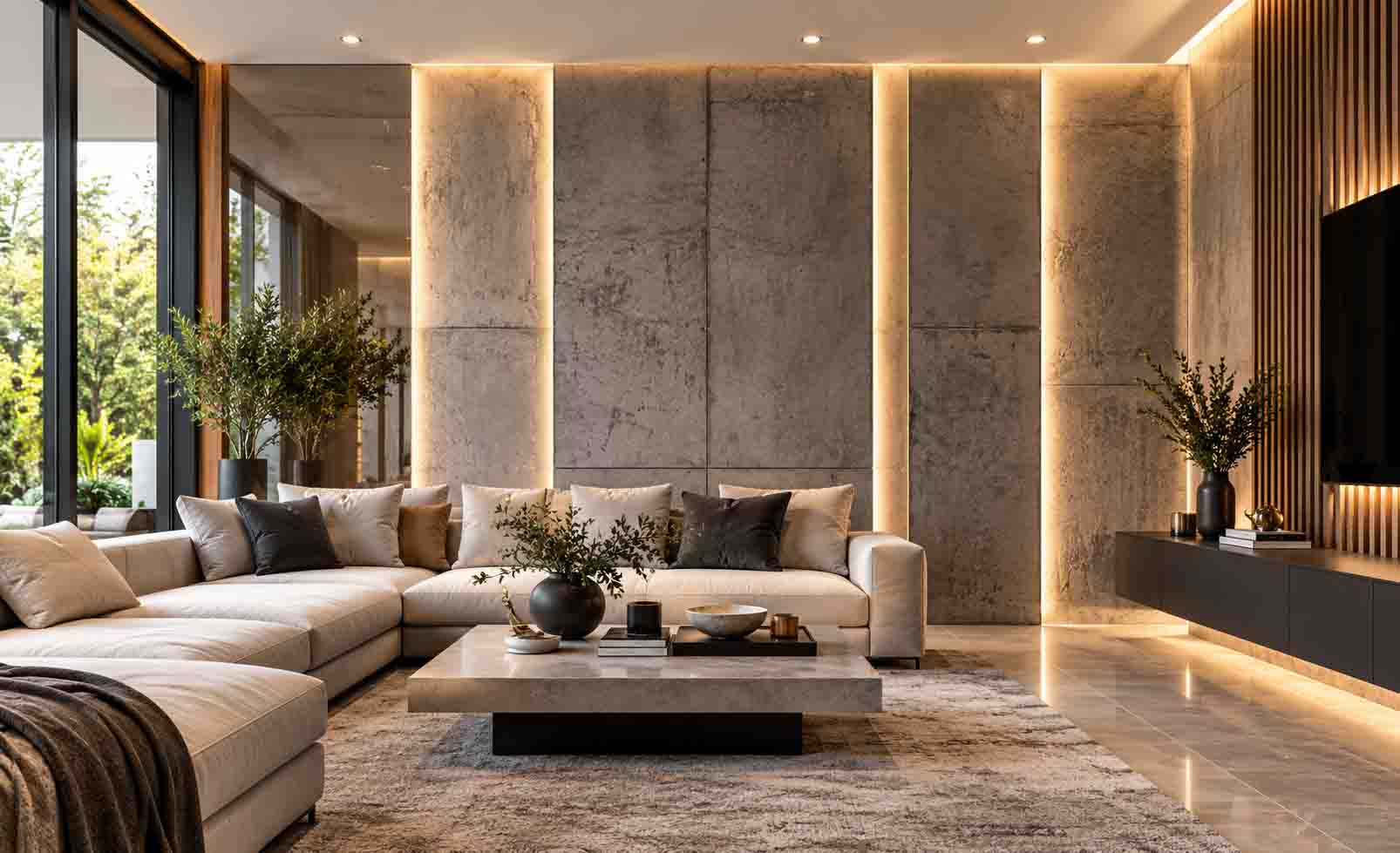
Choosing a concrete-inspired finish involves more than selecting a shade of grey. The material, surface texture, lighting conditions, and intended use all influence the final result.
We recommend assessing the following considerations before making a decision:
For projects involving decorative panels, reviewing the product specifications before installation helps avoid mismatches between the design concept and the practical requirements.
The right choice depends on the intended appearance, project conditions, and installation requirements. A traditional concrete finish may suit projects that require the character of an actual cement-based surface, while decorative panels or concrete-effect finishes may provide other options for achieving a similar visual style.
These solutions are not interchangeable in every situation. Their weight, surface characteristics, installation methods, moisture suitability and maintenance requirements can differ considerably, so we recommend checking the specifications of each material before choosing one.
A successful concrete-inspired wall design balances texture, colour, lighting and the surrounding materials. Whether you prefer a minimalist grey feature wall, a dramatic television backdrop or a combination of concrete and wood-look finishes, thoughtful planning helps create a cohesive interior.
At Panneli Interiors, we believe decorative wall solutions should complement the architecture and function of each space rather than simply follow a trend. Reviewing the available finishes and considering how they work with the rest of your design can help you make a more informed choice.
A concrete-inspired wall design recreates the understated colour, texture or industrial appearance of concrete. It can be achieved using actual concrete, specialist coatings, decorative finishes or suitable wall panels.
Yes, suitable concrete-effect panels can be used in living rooms, including television feature walls. The panel’s specifications, installation requirements and suitability for the intended location should be checked before installation.
Grey, white, black, beige and natural wood tones commonly complement concrete-inspired finishes. The best combination depends on the room’s lighting, furniture, flooring and overall design style.
Yes, lighter tones and subtle textures can work well in small rooms. Applying the finish to a single feature wall and maintaining adequate lighting can help preserve a sense of openness.
Maintenance depends on the panel material and its finish. Follow the manufacturer’s instructions, use recommended cleaning products and avoid abrasive methods unless the product specifications permit them.
Ready to explore concrete-inspired finishes for your next interior project? Visit Panneli Interiors or contact our team to discuss wall panel options for your space.