

Metal wall design brings a distinctive combination of texture, depth, and contemporary elegance to modern interiors. Whether used as a statement feature behind a television, a decorative accent in a living room, or a refined finish in a commercial setting, metal can transform an ordinary wall into an architectural focal point.
At Panneli Interiors, we believe exceptional interior design starts with materials that complement the space, reflect personal style, and create a lasting visual impression. Our approach to luxury wall panels combines thoughtful design with sophisticated finishes for residential and commercial interiors.
From subtle metallic accents to dramatic feature walls, there are many ways to introduce metal into an interior. In this guide, we explore 13 metal wall design ideas, along with practical advice on materials, lighting, styling, and applications to help you plan a modern and elegant space.
Metal wall design uses metal surfaces, metallic finishes, decorative panels, or metal-inspired materials to enhance interior walls. Depending on the chosen finish and installation, these designs can create a sleek contemporary appearance, a warm decorative accent, or a bold architectural statement.
Metallic wall treatments can work alongside wood, stone, glass, leather-effect finishes, and other decorative materials. At Panneli Interiors, we recognise the value of combining different textures to create interiors that feel balanced, considered, and visually interesting.
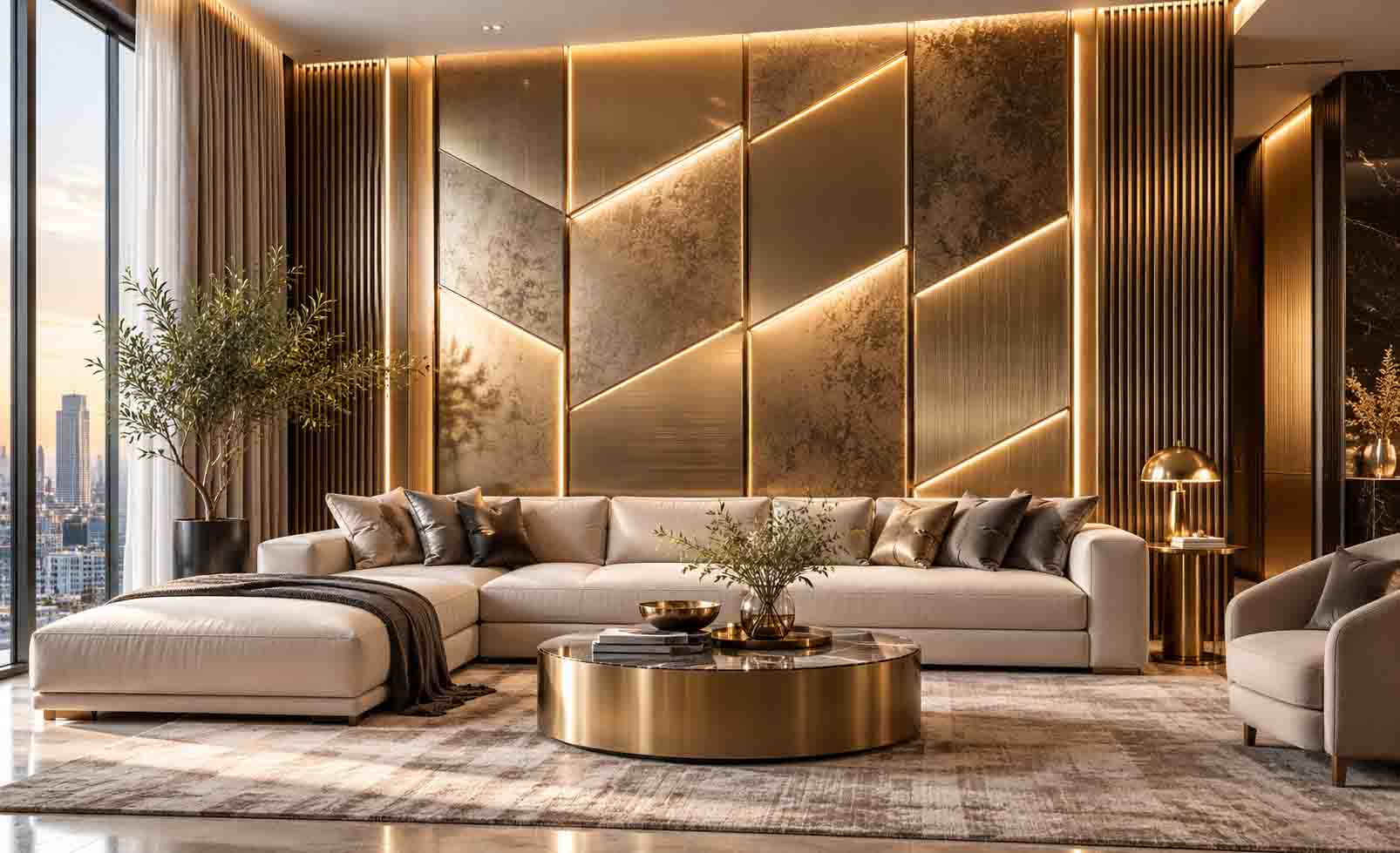
Brushed metal wall panels offer a sophisticated finish without relying on excessive shine. Their fine directional texture creates subtle visual movement, making them suitable for contemporary living rooms, reception areas, and executive offices.
We recommend pairing brushed metal finishes with neutral colours, natural wood, or understated furnishings. This combination allows the wall to become a design feature while maintaining a calm and cohesive interior.
Gold metallic finishes can introduce warmth and elegance into a carefully designed interior. They work particularly well as accent surfaces in formal living rooms, boutique-style spaces, hotel-inspired bedrooms, and sophisticated reception areas.
For a balanced result, combine gold tones with cream, charcoal, warm white, or dark wood. Using metallic finishes on a selected wall rather than throughout the entire room can help maintain a refined appearance.
Black metal wall design creates strong contrast and a confident architectural presence. It can complement minimalist interiors, industrial-inspired spaces, modern entertainment rooms, and commercial environments where clean lines are important.
To prevent a black feature wall from overwhelming the room, consider combining it with lighter wall surfaces, warm timber, soft furnishings, or carefully positioned lighting. The contrast helps define the wall while preserving visual balance.
A television wall is an opportunity to combine practical entertainment needs with decorative design. Metallic wall panels can frame a television, create a visual backdrop, and help distinguish the entertainment area from the rest of the living room.
When planning television wall panels, consider screen placement, cable access, ventilation requirements, and the location of electrical outlets. We also recommend selecting a finish that minimises distracting reflections from windows and interior lighting.
Explore our luxury wall panels for inspiration when planning a sophisticated television feature wall that complements your interior style.
Geometric metal wall patterns introduce structure through repeated shapes, angular lines, and carefully arranged decorative elements. Depending on the pattern and finish, the result can feel minimalist, futuristic, or boldly architectural.
These designs work well in entrance halls, modern living rooms, meeting spaces, and reception areas. For smaller rooms, we suggest choosing a simpler pattern that creates interest without making the wall appear overly busy.
Vertical panel arrangements can draw the eye upward, creating the impression of greater height. Metallic finishes add another layer of interest by introducing highlights and shadows along the wall.
This approach can suit apartments, compact living rooms, corridors, and contemporary office interiors. Pair vertical lines with restrained furnishings and consistent colour choices to maintain a clean visual direction.
Horizontal lines can help a wall appear broader, making this arrangement useful in narrow rooms or spaces with limited visual width. Metal panels installed in a horizontal composition can also create a sleek, streamlined appearance.
Consider this design for entertainment walls, office feature areas, and contemporary living spaces. Before installation, check the wall dimensions and panel proportions to ensure that the horizontal arrangement looks intentional rather than crowded.
Copper-inspired metallic finishes bring warmth and character to modern interiors. Their earthy colour can complement timber furniture, textured fabrics, neutral walls, and selected stone finishes.
We suggest using copper tones as a feature rather than introducing too many competing metallic colours. A consistent palette allows the finish to stand out while keeping the overall design coordinated.
Combining metal with wood creates an appealing contrast between cool metallic surfaces and the warmth of timber-inspired textures. This approach works particularly well in contemporary homes, hospitality interiors, and professional spaces that need a welcoming yet polished appearance.
Wooden decorative panels for walls can provide visual warmth, while metallic details introduce definition and contrast. Explore our metal wall design ideas for further inspiration when planning a feature wall that combines different materials and finishes.
Textured metal wall finishes create a more tactile appearance than completely smooth surfaces. Depending on the design, they may feature brushed patterns, embossed details, linear textures, or other decorative effects.
Texture can be especially effective on a feature wall where natural or artificial light changes throughout the day. Before choosing a finish, consider how its surface will interact with the room’s lighting and nearby materials.
Minimalist interiors benefit from carefully selected details rather than excessive decoration. A metallic accent wall can provide visual interest while preserving the simplicity of the surrounding space.
Choose one dominant finish and coordinate it with neutral walls, uncluttered furniture, and simple architectural lines. This makes the metallic surface an intentional focal point instead of another competing element.
Metal wall design can add a polished appearance to offices, retail environments, hospitality venues, and reception areas. A well-planned feature wall can help establish the atmosphere of a space while reinforcing a consistent interior design scheme.
For commercial interiors in Lakewood, New Jersey, and across the wider New Jersey area, the design should consider both appearance and day-to-day use. Select materials and finishes appropriate for the location, expected traffic, cleaning requirements, and relevant building regulations.
For high-traffic environments, also consider how easily the surface can be cleaned, whether it shows fingerprints, and how it may respond to scratches or regular contact. These practical details help ensure that the chosen finish remains suitable for its intended application.
Sculptural metal wall designs use dimensional forms, layered surfaces, or distinctive arrangements to create a strong visual focal point. They can turn an otherwise plain wall into an expressive architectural feature.
This approach is particularly suitable for spacious living rooms, entrance areas, statement dining spaces, and commercial reception interiors. Keep the surrounding decoration relatively restrained so the sculptural wall remains the main visual attraction.
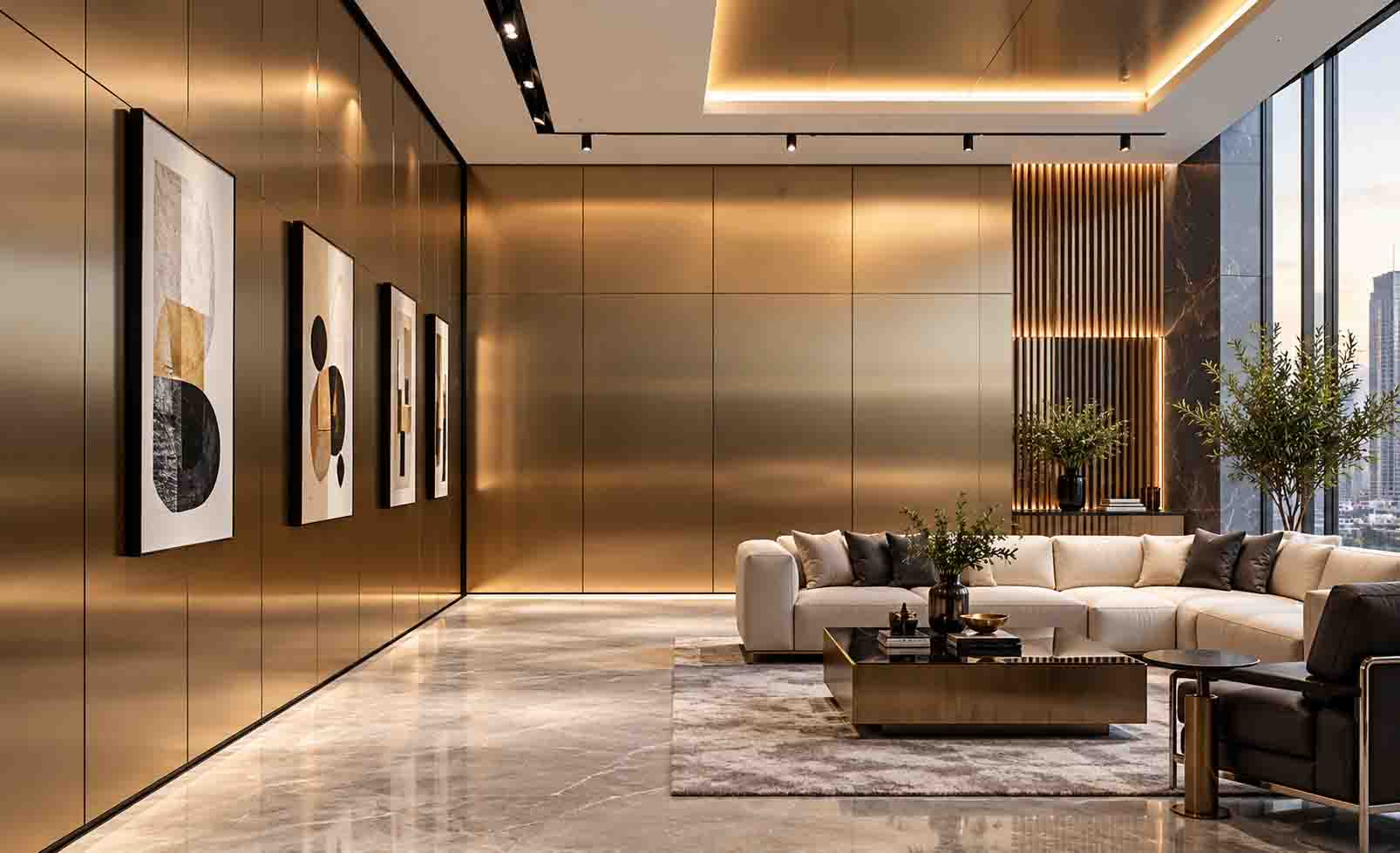
The best metal wall design depends on the room’s purpose, existing colour palette, lighting conditions, and desired atmosphere. A finish that works beautifully in a large reception area may feel too dominant in a compact bedroom, so it is important to consider the entire space before making a decision.
We recommend comparing samples with your flooring, furniture, wall colours, and lighting wherever possible. This makes it easier to understand how a metallic finish will look in the actual environment rather than relying on photographs alone.
Gold and copper tones can create warmth, while black and darker metallic finishes provide contrast. Silver and brushed steel-inspired appearances can suit cool, contemporary palettes, depending on the surrounding materials.
Reflective surfaces can make a room feel brighter, but they may also create glare when positioned opposite windows or strong light sources. Matte, brushed, or textured finishes can offer a more understated alternative where reflection is a concern.
Living rooms often benefit from feature walls that complement the main seating area, while bedrooms may call for softer finishes that work with the bed, textiles, and ambient lighting. Offices and commercial spaces may require more durable, easy-to-maintain materials suited to frequent use.
Consider the wall’s role before choosing a decorative treatment. A feature wall should support the room’s function as well as its visual style.
Metallic finishes can appear striking when combined with contrasting materials. Wood adds warmth, stone introduces natural variation, glass can maintain an open feeling, and textured fabrics help soften a modern interior.
Rather than mixing many finishes without a clear direction, choose two or three complementary materials and repeat them thoughtfully throughout the space. This creates a more consistent design language.
Lighting plays an important role in how metallic wall finishes appear. Direct light can emphasise texture and create bright highlights, while softer indirect lighting can produce a more subtle and relaxed effect.
For a television feature wall, avoid placing strong light sources where they create distracting reflections on the screen. Wall-mounted fixtures, concealed lighting, and carefully positioned spotlights may be suitable options, depending on the finish and room layout.
Directional lighting can reveal the depth of textured or dimensional panels by creating shadows across the surface. This technique can make decorative walls more visually engaging without requiring additional colours or accessories.
Before installation, test the proposed lighting angle where possible. The same panel can look noticeably different under daylight, warm interior lighting, and cool artificial light.
Metal wall panels and metallic decorative finishes can suit a range of residential and commercial applications. The appropriate choice depends on the material specification, installation method, environmental conditions, and intended use.
For each application, check whether the selected product is appropriate for the location. Areas exposed to moisture, heat, impact, or intensive cleaning may require materials with specific performance characteristics.
A successful metal wall design starts with careful planning. Wall dimensions, substrate condition, panel weight, fixing requirements, electrical fittings, and the alignment of adjoining surfaces should all be assessed before installation begins.
For large panels or complex arrangements, professional installation can help achieve accurate alignment and a consistent finish. Electrical, structural, fire-safety, and other building requirements should also be considered where relevant.
Maintenance requirements vary according to the material, coating, and surface texture. Always follow the manufacturer’s cleaning instructions rather than assuming that every metallic finish can be maintained in the same way.
Regular, suitable care can help preserve the appearance of decorative wall surfaces. Choosing a finish that matches the room’s cleaning needs and daily use is equally important.
At Panneli Interiors, we focus on luxury wall panels and decorative wall solutions designed to complement a variety of interior styles. Our range includes custom profiles and finishes inspired by leather, wood, metallic surfaces, marble, and other contemporary decorative treatments.
We understand that every interior has different requirements. Material appearance, wall dimensions, colour coordination, lighting, and the intended use of a room all influence which wall treatment will work best.
Our goal is to help homeowners, designers, and commercial property professionals explore wall finishes that reflect their preferred aesthetic while considering the practical demands of the space. Whether you are planning a television feature wall, a modern living room, or a sophisticated commercial interior, thoughtful material selection can make a meaningful difference.
Based in Lakewood, New Jersey, we serve as a resource for exploring luxury wall panel styles and decorative possibilities for residential and commercial projects. We encourage a considered approach that balances visual impact, suitability, and the character of the surrounding interior.
Metal wall design uses metal panels, metallic finishes, or metal-inspired decorative materials to add texture, contrast, and visual interest to interior walls. It can be used in residential and commercial spaces, including living rooms, offices, and reception areas.
Yes, metal wall panels can be used in living rooms as feature walls, television backdrops, or decorative accents. The most suitable finish depends on the room’s size, lighting, furniture, and overall interior style.
Yes, metallic finishes can complement wooden decorative wall panels by balancing cool surfaces with natural-looking warmth. Choosing coordinated colours, textures, and proportions helps create a cohesive design.
Maintenance depends on the panel material and finish. Generally, use a soft cloth and follow the manufacturer’s cleaning instructions, avoiding abrasive materials or unsuitable chemicals that could damage the surface.
Yes, suitable metal wall panels can be used in offices, retail spaces, hospitality venues, and reception areas. Before selecting a product, check its durability, cleaning requirements, installation specifications, and compliance with applicable building and fire-safety requirements.
Ready to explore metal wall design for your next interior project? Contact Panneli Interiors to discuss your design requirements and explore decorative wall panel solutions for your space.