

A beautifully designed bathtub area can transform an ordinary bathroom into a relaxing and elegant retreat. The right bathtub tile wall designs bring together colour, texture, pattern, and visual balance, creating a space that feels both functional and inviting. Whether you prefer timeless marble-inspired finishes, contemporary geometric patterns, or warm natural textures, your bathtub surround can become one of the most attractive features in your bathroom.
At Panneli Interiors, we appreciate how carefully selected wall finishes can influence the overall appearance of an interior. Although bathroom tiles are a practical choice for wet areas, decorative wall treatments and luxury wall panels can also complement the surrounding design when used in suitable locations. In this guide, we explore 13 bathtub tile wall designs, along with practical considerations for tile placement, moisture protection, visual continuity, and maintenance.
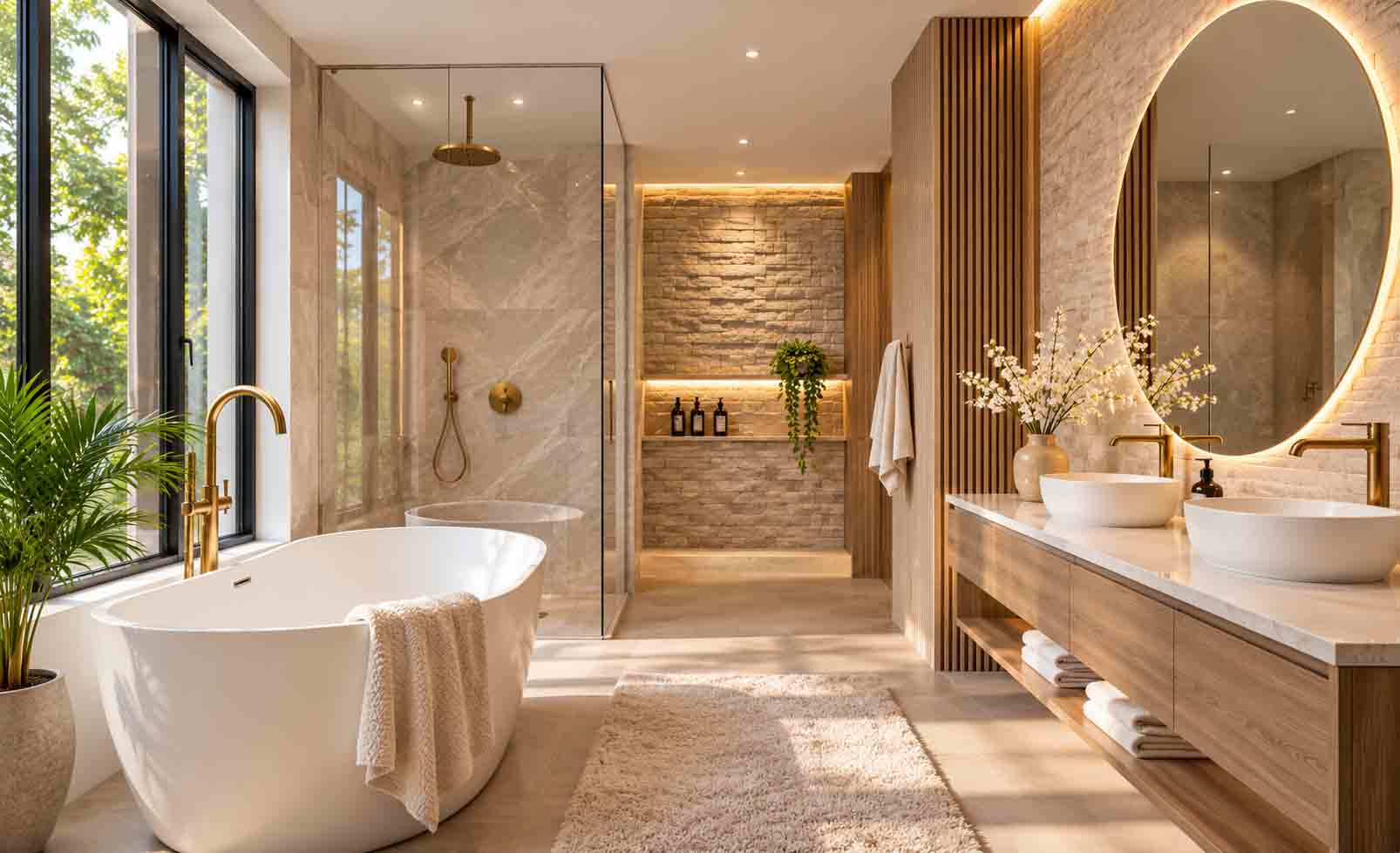
Choosing the right tile design involves more than selecting an attractive colour or pattern. Consider the bathroom’s dimensions, lighting, existing fixtures, and the atmosphere you want to create. Here are 13 inspiring ideas to help you design a bathtub surround that balances beauty and everyday practicality.
White subway tiles remain a popular choice for homeowners who appreciate clean, timeless bathroom interiors. Their simple rectangular shape creates a neat appearance, while the traditional running-bond layout introduces subtle movement across the bathtub wall.
We recommend pairing white subway tiles with contrasting grout for a more defined pattern or matching grout for a seamless appearance. Chrome fixtures, frameless glass screens, and light-coloured vanities can complete this classic bathroom design without making the space feel overly complicated.
Marble-look tiles introduce a luxurious appearance through their natural-looking veining and sophisticated colour variations. White backgrounds with grey or beige veins work particularly well in contemporary bathrooms, creating the visual character of natural stone without requiring the same level of maintenance as some natural marble surfaces.
For a more cohesive result, extend the marble-look finish across the bathtub surround and selected adjoining walls. Pairing these tiles with brushed gold, matte black, or polished chrome fixtures can create an elegant focal point.
Large-format tiles are an excellent option for creating a clean and contemporary bathtub surround. Because they require fewer grout joints than smaller tiles across the same surface area, they can produce a more uninterrupted visual appearance.
Choose neutral colours such as soft grey, warm beige, or ivory to create a sophisticated backdrop. Proper substrate preparation, suitable tile adhesives, and professional installation are essential, particularly when working with large and heavy wall tiles.
Stone-look tiles bring natural character and depth to bathroom interiors. Their organic patterns, earthy tones, and textured appearances can make a bathtub surround feel warmer and more connected to nature.
Consider slate-inspired finishes, limestone effects, or travertine-look porcelain tiles for a spa-inspired atmosphere. For bathtub walls, select products specifically suitable for wet-area installation and check whether the surface texture is practical to clean.
Vertical stack tiles offer a fresh alternative to traditional horizontal arrangements. By positioning rectangular tiles vertically, you can create a sense of height and make the bathtub area appear more structured and modern.
This layout works particularly well with narrow rectangular tiles in white, sage green, charcoal, or soft beige. Matching grout can help maintain a streamlined appearance, while contrasting grout highlights the geometric arrangement.
Geometric tiles introduce personality and visual interest into bathrooms. Hexagons, diamonds, chevrons, and other angular patterns can turn a simple bathtub surround into a distinctive design feature.
To maintain visual balance, we suggest using bold patterns on the bathtub wall while keeping surrounding surfaces relatively understated. This approach allows the tile design to stand out without overwhelming the entire room.
Beige bathtub tiles are ideal for creating a warm, calming, and welcoming bathroom. Their understated colour works beautifully with natural wood cabinetry, cream countertops, and warm metallic bathroom fixtures.
Consider combining different beige tones or subtle stone-inspired patterns to add depth without introducing strong contrasts. This colour palette is particularly suitable for bathrooms designed around relaxation and understated luxury.
Black tiles create a sophisticated and dramatic backdrop for modern bathtub areas. Whether you choose glossy black ceramic, matte porcelain, or dark stone-look finishes, deeper colours can introduce a strong sense of character.
For a balanced design, combine black tiles with lighter flooring, carefully positioned lighting, and reflective fixtures. In smaller bathrooms, consider using dark tiles as an accent rather than covering every wall, helping the space maintain an open appearance.
Green bathtub wall tiles bring a refreshing natural element into bathroom interiors. Sage, olive, emerald, and muted forest green can create different moods, ranging from soft and calming to bold and sophisticated.
Pair green tiles with light wood finishes, stone-inspired flooring, and simple bathroom fixtures for a nature-inspired atmosphere. Glossy green tiles can reflect light beautifully, while matte finishes create a more understated appearance.
Mosaic tiles are perfect for introducing intricate patterns, decorative details, and subtle colour variations. Their smaller dimensions allow designers to create attractive borders, accent sections, and curved arrangements around selected bathroom features.
Glass, porcelain, and ceramic mosaics are available in different finishes and colour combinations. Since mosaics contain more grout joints, choosing suitable grout and maintaining regular cleaning routines are important for keeping the bathtub surround looking fresh.
Herringbone patterns create movement and visual sophistication through their distinctive zigzag arrangement. This timeless layout works especially well with rectangular tiles, adding interest to bathtub walls without relying on multiple colours or complicated decorative elements.
White, grey, beige, and marble-look tiles are all suitable options for this pattern. For a contemporary appearance, use narrow grout lines and a consistent colour palette that complements the bathroom’s other finishes.
Wood-look porcelain tiles combine the visual warmth of timber with the practical properties of porcelain. Their realistic grain patterns and natural brown tones can create a welcoming bathtub surround inspired by modern spa interiors.
We recommend pairing wood-look tiles with white sanitaryware, neutral stone finishes, and simple fixtures. Make sure the selected product is approved for the intended wet-area application, as not every wood-look wall covering is suitable for direct water exposure.
Combining different tile finishes can create a distinctive and layered bathroom interior. For example, polished marble-look tiles can be paired with matte ceramic surfaces, textured accents, or contrasting decorative borders to introduce depth and visual variety.
The key is to maintain a consistent design direction. Choose finishes that complement one another in colour, texture, and scale, ensuring the bathtub surround feels intentionally designed rather than visually cluttered.
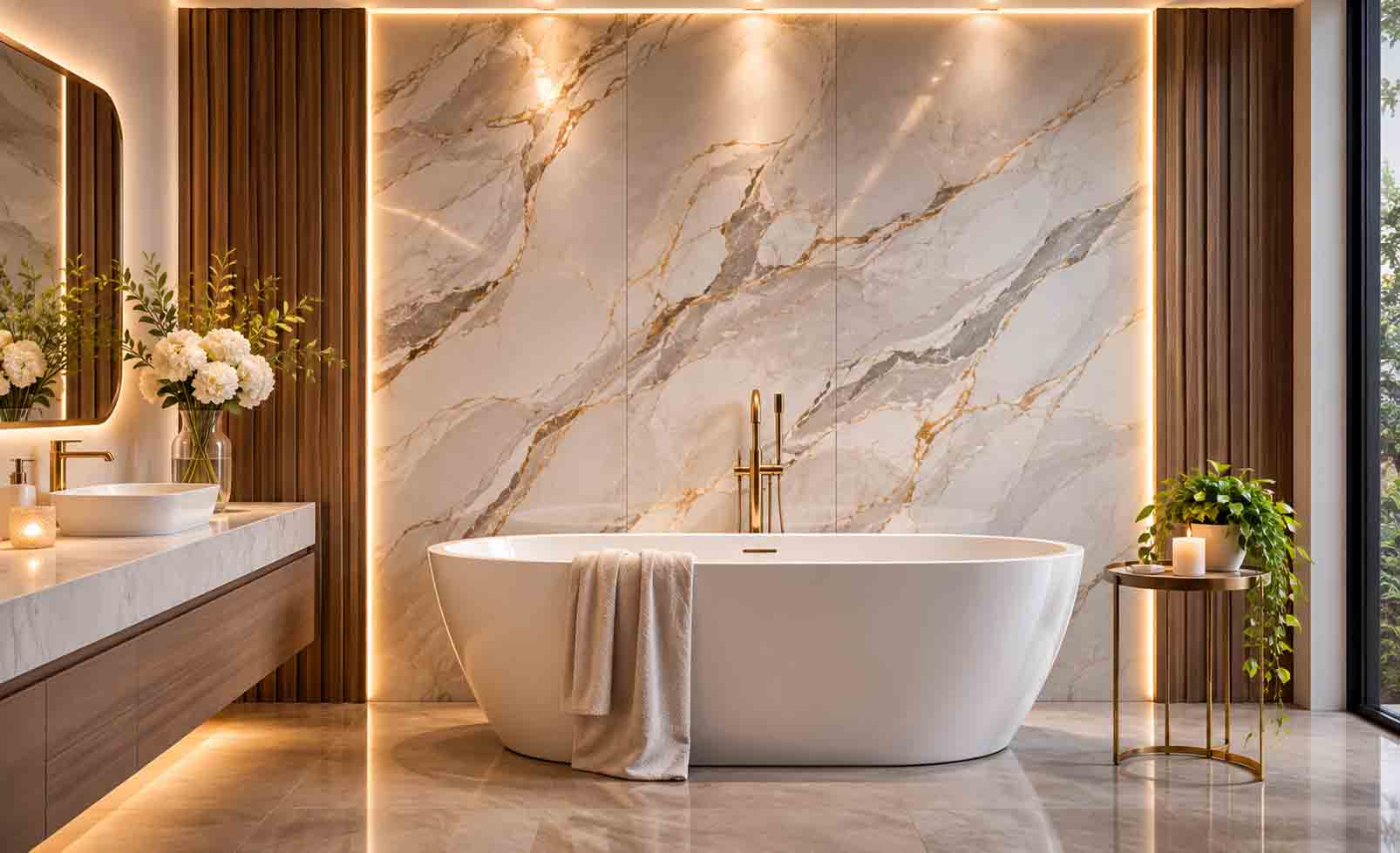
With so many colours, patterns, and materials available, selecting the right bathtub wall tiles can feel overwhelming. We recommend evaluating the practical requirements of the bathroom alongside your preferred interior design style.
The dimensions of your bathroom influence how different tile styles will look. Large-format tiles and lighter colours can help create a more spacious visual effect, while smaller decorative tiles can introduce detail without requiring extensive wall coverage.
Consider the placement of the bathtub, shower fixtures, windows, and storage areas before choosing a tile layout. A well-planned arrangement can create a balanced appearance while reducing unnecessary cuts and awkward transitions.
Bathtub surrounds are regularly exposed to splashing water, humidity, and cleaning products. Porcelain and ceramic tiles are common choices because they are available in a wide range of designs and can provide suitable performance when correctly specified and installed.
However, tiles alone do not make a wall waterproof. A properly designed wet-area system should include an appropriate waterproofing membrane, compatible installation materials, sealed joints where required, and correctly detailed transitions around plumbing fixtures and the bathtub.
Your bathtub wall tiles should complement the bathroom’s other design elements. Consider the colour of your bathtub, vanity, flooring, countertops, taps, and lighting when selecting a finish.
For a cohesive interior, choose a dominant colour and introduce one or two complementary tones. This creates visual continuity while allowing decorative details to enhance the overall design.
Visual continuity helps a bathroom feel organised, spacious, and professionally designed. Rather than treating the bathtub surround as an isolated feature, consider how its materials and colours connect with the rest of the room.
One effective approach is to repeat a particular finish in more than one location. For example, marble-look bathtub tiles can be complemented by a matching vanity backsplash, while wood-look accents can coordinate with bathroom cabinetry.
Decorative finishes can also contribute to this design strategy. At Panneli Interiors, we offer a range of luxury wall panels with wood-inspired, marble-inspired, metallic, and leather-effect finishes that can complement carefully planned interior spaces. For bathroom projects, these decorative solutions should be considered for suitable areas outside direct water exposure unless the specific product has been approved for wet-area use.
For additional inspiration, explore our collection of design wall ideas to discover ways to coordinate decorative surfaces, textures, and modern interior finishes.
Even the most attractive bathtub tile design needs proper installation and maintenance to retain its appearance. Since the surrounding walls experience frequent moisture, paying attention to waterproofing and cleaning is essential.
Waterproofing should be completed before installing the tiles. The substrate, membrane, corners, penetrations, and bathtub connections must be prepared according to the applicable building requirements and the waterproofing manufacturer’s instructions.
Properly installed grout and sealant help protect joints and connections, but they should not replace the primary waterproofing membrane. Professional installation helps reduce the risk of water penetration, mould growth, and damage behind the tiled surface.
Regular cleaning helps prevent soap residue, mineral deposits, and mould from affecting your bathtub surround. Use cleaning products appropriate for the tile material and grout, avoiding harsh chemicals that may damage delicate finishes.
Some tile finishes require more frequent cleaning than others. Highly textured surfaces and intricate mosaic arrangements may collect more soap residue, while smoother glazed tiles are generally easier to wipe down.
When selecting your bathtub wall tiles, consider your cleaning preferences as well as their appearance. A practical finish that suits your lifestyle can help maintain an attractive bathroom with less effort over time.
Luxury wall panels can complement bathtub tile designs by introducing additional textures, colours, and decorative finishes into the bathroom. They are particularly useful for creating visual interest on suitable feature walls, vanity areas, and other interior surfaces away from direct water exposure.
For example, wood-inspired panels can add warmth to a neutral bathroom, while marble-inspired finishes can reinforce a sophisticated interior theme. Metallic and leather-effect finishes can also introduce distinctive decorative details when used thoughtfully.
At Panneli Interiors, we specialise in decorative wall solutions designed to bring character and individuality to residential and commercial interiors. We encourage homeowners and designers to consider the intended application, product specifications, and moisture exposure before selecting any decorative wall treatment for a bathroom project.
The best bathtub tile wall designs combine visual appeal, practical performance, and long-term maintenance considerations. From classic subway tiles and elegant marble effects to bold geometric patterns and natural wood-look finishes, there are countless ways to create a bathtub surround that reflects your preferred interior style.
At Panneli Interiors, we believe that thoughtful material selection and attention to detail are essential to creating beautiful interior spaces. Whether you are planning a complete bathroom renovation or updating a single feature wall, explore our luxury decorative wall panel collections for more design inspiration. Have a question about incorporating decorative wall finishes into your next interior project? Contact our Panneli Interiors team to discuss your ideas and explore suitable design possibilities.
Porcelain and ceramic tiles are popular choices for bathtub walls because they offer a wide range of colours, patterns, and finishes. The selected tiles should be suitable for wet-area wall applications and installed over a properly waterproofed substrate.
Yes. Large-format tiles can create a seamless and contemporary appearance with fewer grout joints. However, they require suitable wall preparation, compatible adhesives, and careful professional installation.
Use a suitable waterproofing membrane behind the tiled surface, correctly seal relevant joints and connections, and ensure proper installation around plumbing fixtures. Regularly inspect grout and sealant for damage and maintain adequate bathroom ventilation.
White, cream, beige, and light grey tiles can help create a brighter and more spacious visual effect. Large-format tiles, consistent colour schemes, and minimal contrasting grout lines can also make a small bathroom feel more open.
Yes. Luxury wall panels can complement bathtub tile designs by adding decorative textures and finishes to suitable bathroom surfaces. However, they should only be installed in wet areas when the specific product is approved for that application and installed according to its manufacturer’s requirements.