

Peel and stick wall panels for bathrooms offer a practical way to refresh a bathroom without committing to a full wall renovation. Available in a range of colours, textures, and decorative finishes, these panels can create a more finished look while reducing the visual impact of dated or plain walls.
However, bathrooms have different requirements from bedrooms, living rooms and other interior spaces. Moisture, humidity, condensation, cleaning products, and surface preparation all need to be considered before choosing an adhesive wall panel. The right material and installation method can make a significant difference to how well the finished wall performs over time.
If you are considering peel and stick wall panels for bathroom, the following ideas can help you compare styles and understand the practical considerations involved.
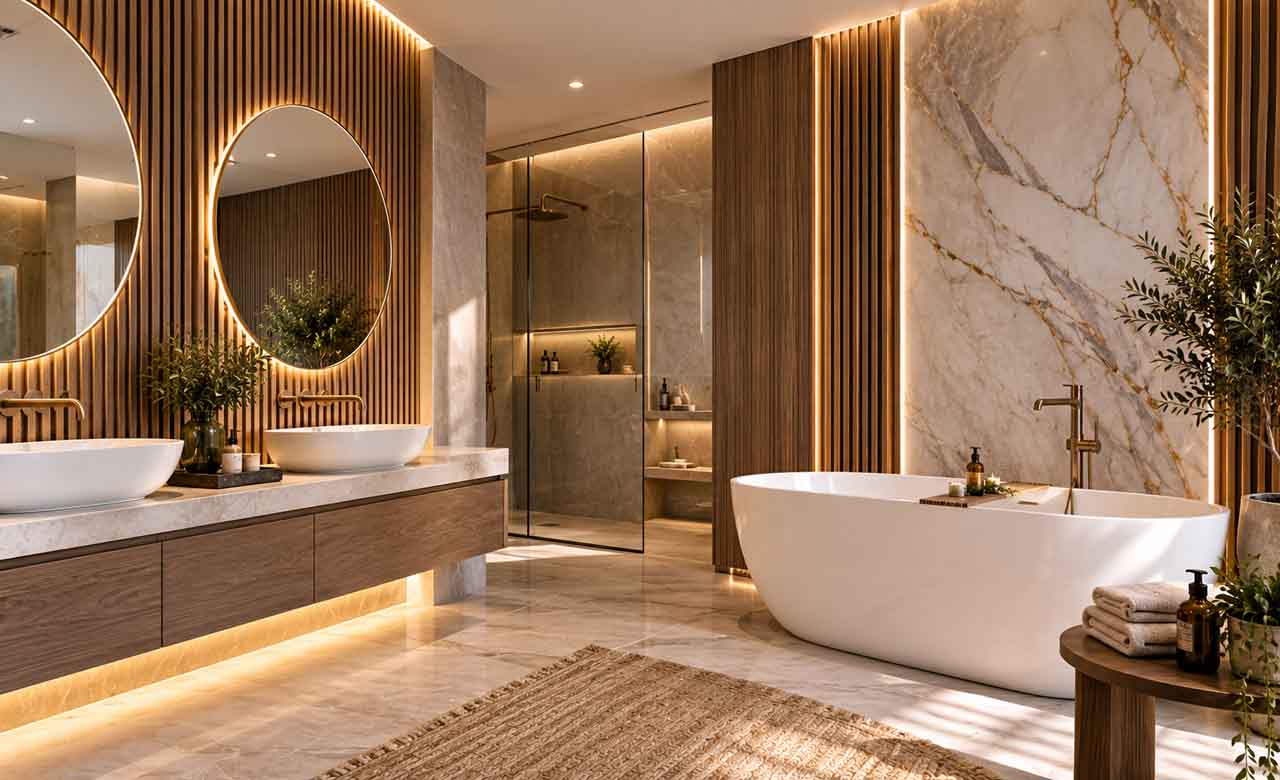
Marble-inspired panels can introduce a refined appearance to bathroom walls without the weight, cost, or installation complexity associated with natural stone. White marble effects with subtle grey veining work particularly well with contemporary bathrooms, creating a clean and sophisticated backdrop.
This style can be used behind a vanity, around a feature wall or as part of a coordinated bathroom design. When selecting a marble-look panel, consider how the pattern will align between adjoining pieces for a more continuous appearance.
Wood-look panels can make a bathroom feel warmer and more inviting. Vertical timber-inspired patterns can also create the visual impression of greater wall height, while darker wood effects can provide contrast against white fixtures and lighter flooring.
Because genuine wood requires careful consideration in humid environments, a decorative panel designed for the intended application can provide a more practical way to introduce a timber-inspired aesthetic. Always check the manufacturer’s specifications for moisture resistance and bathroom suitability before installation.
Geometric patterns are useful when you want a bathroom wall to become a design feature rather than simply a background surface. Repeating lines, panels, squares, and three-dimensional effects can add visual depth to otherwise plain walls.
For smaller bathrooms, consider using a geometric design on one feature wall rather than covering every surface. This creates a focal point while keeping the overall room visually balanced.
Textured panels can add dimension without requiring complicated architectural changes. Ribbed, fluted and embossed designs can create shadows across the wall, giving the bathroom a more layered interior design.
Texture is particularly effective behind bathroom vanities or mirrors where lighting can emphasise the pattern. Before installation, make sure the wall is sufficiently flat so that the adhesive-backed panel can make consistent contact with the surface.
Stone-inspired finishes can work well in bathrooms because they complement common materials such as ceramic, porcelain, glass, and metal. Beige, taupe, grey and soft white tones can create a neutral foundation that remains flexible when bathroom accessories or décor are changed.
A neutral wall panel can also help connect different finishes within the room. For example, a grey stone appearance may coordinate with chrome fixtures, dark cabinetry, and light flooring without competing with other design elements.
Dark wall panels can create a dramatic bathroom feature, particularly when paired with lighter sanitaryware and carefully positioned lighting. Charcoal, deep grey, and dark wood-inspired finishes can provide contrast and make a vanity or mirror area more visually prominent.
In a compact bathroom, however, covering every wall with a very dark finish may make the space feel enclosed. Using the darker panel selectively can provide the desired contrast while maintaining a sense of openness.
Light-coloured wall panels can help small bathrooms feel brighter and more spacious. White, cream, light grey and soft neutral finishes reflect more light and can create a visually continuous surface.
Large-format patterns can also reduce the number of visible transitions across a wall. This can help produce a cleaner appearance, especially where the goal is to create a simple contemporary bathroom.
The wall behind a vanity is one of the most effective locations for a decorative bathroom panel. It naturally attracts attention and provides an opportunity to introduce texture, colour or pattern without covering the entire room.
A panelled vanity wall can be coordinated with the basin, cabinetry, mirror and lighting. Vertical designs can emphasise height, while horizontal or stone-inspired patterns can create a broader visual effect.
Installing a decorative panel behind a bathroom mirror can create a defined focal area. The panel provides a visual frame around the mirror and can make a simple vanity arrangement appear more intentional.
Consider the size and shape of the mirror when selecting the panel pattern. A highly detailed design may work best with a simple mirror, while a more understated panel can balance a statement mirror or decorative lighting.
Minimalist bathrooms benefit from wall panels with subtle textures, restrained patterns and neutral colours. Instead of competing with fixtures and fittings, the wall finish becomes part of a cohesive design system.
This approach can be particularly useful for modern residential interiors and luxury bathroom projects where clean lines and carefully selected materials are important. Simple panel designs can also provide greater flexibility if the bathroom décor changes in the future.
For a more sophisticated bathroom makeover, consider a statement wall panel that combines distinctive texture, colour or a premium decorative finish. Metallic effects, refined stone patterns and high-contrast designs can establish a stronger focal point.
Statement panels are often most effective when used selectively. A single feature wall can provide enough visual interest without overwhelming the room, particularly when the remaining surfaces and fixtures use complementary neutral finishes.
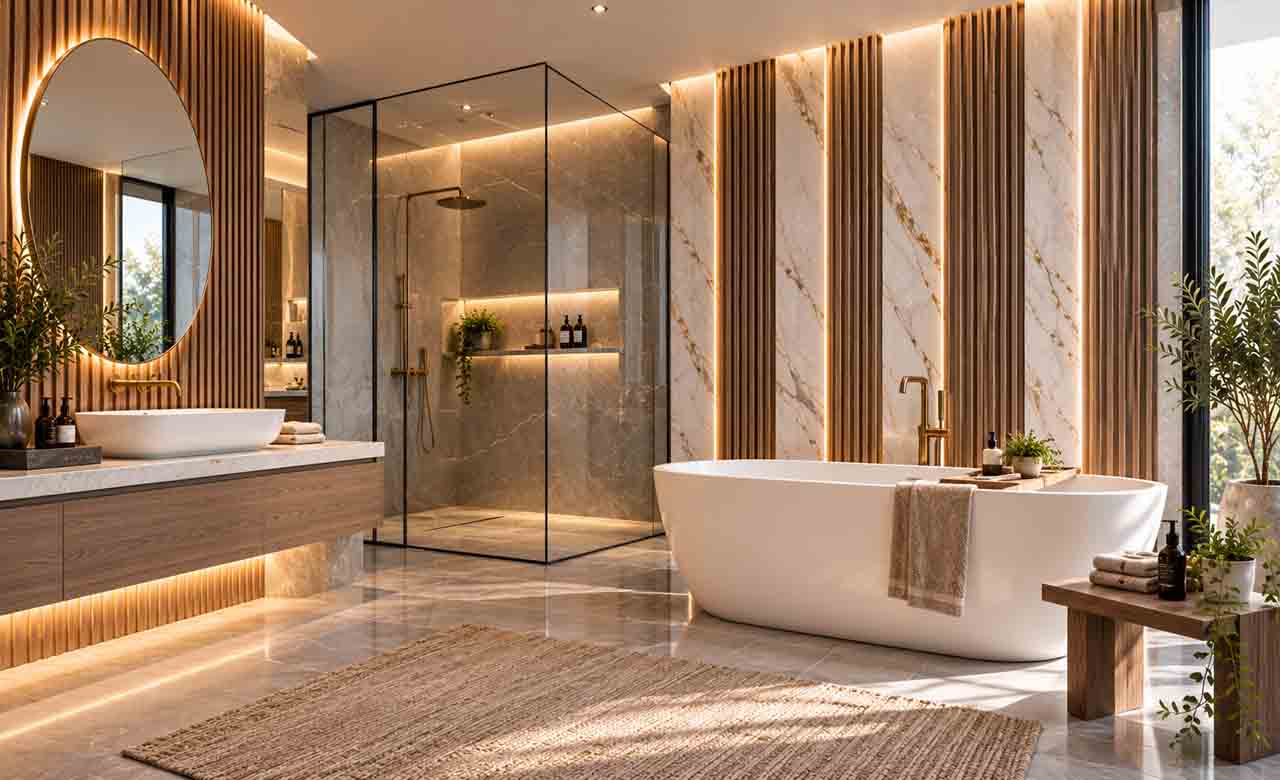
Choosing a design is only one part of a successful bathroom wall panel installation. The wall condition, moisture exposure, panel material, and adhesive performance should all be evaluated before installation begins.
Not every peel and stick wall panel is waterproof, and the terms waterproof, water-resistant, and moisture-resistant should not be treated as interchangeable. A panel may tolerate humidity or occasional moisture without being suitable for direct and continuous water exposure.
For bathroom applications, check the manufacturer’s product specifications before installation. Areas directly exposed to shower spray or standing water may require a purpose-designed waterproof wall system rather than a standard decorative adhesive panel.
Adhesive panels depend heavily on the condition of the surface beneath them. Dust, grease, moisture, peeling paint, and uneven areas can reduce adhesion and may cause lifting, bubbling, or movement after installation.
Before applying panels, inspect the wall carefully and follow the preparation requirements specified for the product. Proper preparation is particularly important in bathrooms because humidity can place additional demands on adhesive performance.
For more information about bathroom applications, review this guide to installing wall panels and consider the requirements of your specific wall surface before beginning the project.
The best design depends on the size of the bathroom, existing finishes, lighting, and the overall interior style. A small contemporary bathroom may benefit from a light stone or minimalist finish, while a larger luxury bathroom may have enough space for a darker textured feature wall.
It is also useful to consider how the panel will interact with fixed elements such as cabinetry, mirrors, shower screens, taps and lighting. Coordinating these elements can create a more intentional result than choosing the wall finish independently.
Maintenance requirements depend on the panel’s material and surface finish. In general, bathroom wall panels should be cleaned using methods and products recommended by the manufacturer rather than abrasive cleaners or aggressive chemicals that could damage the decorative surface.
Regularly inspect seams, corners, and edges for signs of lifting or moisture penetration. Addressing small issues early can help prevent a minor installation problem from becoming a larger wall or panel issue.
Some peel and stick wall panels are suitable for bathroom environments, but suitability depends on the panel material, adhesive system, and level of moisture exposure. Always check the manufacturer’s specifications before installation.
Not all peel and stick wall panels are waterproof. Some are designed to resist moisture or humidity, while others may be unsuitable for areas exposed directly to water. Product specifications should be checked before use.
Wood-look decorative panels can be used in some bathroom applications when the product is specifically designed for the environment. Genuine wood and decorative wood-effect products have different moisture requirements, so the manufacturer’s guidance should be followed.
Bathroom wall panels should generally be cleaned according to the manufacturer’s care instructions. Avoid abrasive cleaning products or methods that could damage the panel surface, and regularly inspect seams and edges for signs of lifting or moisture issues.
Yes, suitable panels can be used in small bathrooms, and light colours, subtle textures and carefully selected patterns can help maintain an open appearance. Using a panel on one feature wall can also create visual interest without making the room feel crowded.
For a bathroom makeover in Lakewood, New Jersey, or elsewhere, explore Panneli Interiors’ wall panel options to find a finish that suits your space, style, and installation requirements.