

A bedroom should feel comfortable, refined, and personal. The right wall treatment can transform an ordinary room into a sophisticated retreat, and wood panels for bedroom walls are an effective way to introduce warmth, texture, and visual depth without overwhelming the space.
From subtle vertical slats to rich wood-inspired finishes, bedroom wall panels can complement modern, contemporary and luxury interiors. Whether you want to create a statement behind the bed or add texture to an entire feature wall, the right panel design can help define the character of the room.
Explore these 11 wood panel ideas to find inspiration for a bedroom that feels warm, balanced, and thoughtfully designed.
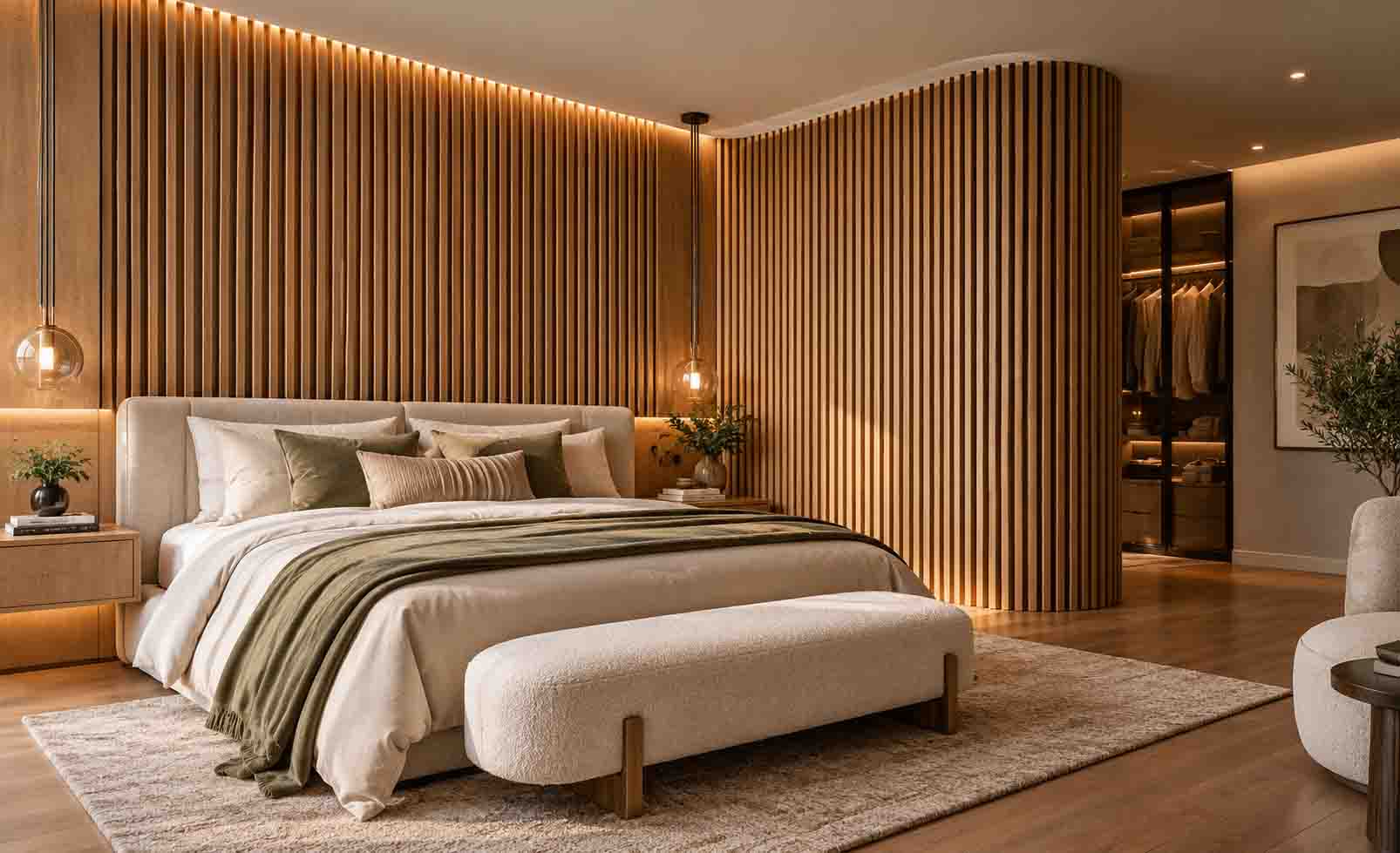
Vertical wood slat panels are a popular choice for creating a clean and contemporary bedroom feature wall. The repeated vertical lines draw the eye upward, helping the room feel taller while adding subtle architectural texture.
This style works particularly well behind a bed, where the panels can create a structured backdrop without competing with furniture, artwork, or decorative lighting.
A full feature wall can create a strong focal point while giving the bedroom a cohesive appearance. Installing wood panels across the wall behind the bed helps visually anchor the furniture and creates a natural transition between the bed and surrounding décor.
For a more luxurious result, consider combining a warm wood tone with soft textiles, layered lighting, and understated furniture. You can also explore luxury wall panels for finishes that add a more sophisticated character to the room.
Dark wood-inspired panels can create an intimate and dramatic atmosphere, making them particularly suitable for larger bedrooms or rooms with plenty of natural light. Deep brown, walnut-inspired, and charcoal-toned finishes can add depth while maintaining an elegant appearance.
To prevent a dark feature wall from making the bedroom feel heavy, balance it with lighter bedding, neutral flooring, and carefully positioned lighting. The contrast can create a polished luxury interior without excessive decoration.
Light wood panels can create a softer and more relaxed visual effect. Pale oak-inspired, natural wood and warm neutral finishes work well with minimalist bedrooms where the goal is to create a bright and calming environment.
This approach is especially useful in smaller bedrooms because lighter colours can help maintain an open visual feel. Pairing light panels with cream, beige, white, or soft grey furnishings can create a balanced and timeless design.
Geometric wood wall panel designs introduce pattern and structure while maintaining the warmth associated with wood. Repeated lines, angled forms, and framed sections can turn a plain bedroom wall into an architectural feature.
Geometric designs are particularly effective when the rest of the bedroom has a simple aesthetic. Keeping furniture and accessories relatively understated allows the wall treatment to remain the main visual element.
Combining wood panels with upholstered sections can create a layered and comfortable bedroom feature wall. Wood provides structure and texture, while fabric introduces softness around the sleeping area.
This combination can be used to frame the headboard or create symmetrical sections on either side of the bed. It is a practical design approach for bedrooms where warmth and visual comfort are equally important.
Horizontal panels create a different visual rhythm from traditional vertical panelling. The horizontal lines can make a wall appear wider, making this style useful for bedrooms where the goal is to emphasise the room’s width.
Horizontal wood wall treatments can work particularly well behind a wide bed or across a long feature wall. Choose a finish that complements the flooring and furniture rather than matching every wood element exactly.
Two-tone wood panel designs combine contrasting shades or finishes to create additional depth. For example, a darker central section can be surrounded by lighter panels to visually frame the bed.
This technique allows homeowners to create a custom-looking feature without relying on excessive accessories. The contrast should remain controlled so that the bedroom maintains a cohesive appearance.
Minimalist wood accent walls use simple forms, restrained colours, and clean lines to add character without making the room feel busy. This approach is ideal for contemporary bedrooms where the architecture and materials are intended to do most of the visual work.
A carefully selected accent wall can provide enough texture to make a bedroom feel finished while leaving plenty of negative space around furniture and décor.
Lighting can significantly change how wood panels appear throughout the day. LED strips, wall sconces, or concealed lighting can highlight the texture and create a softer atmosphere in the evening.
Integrated lighting is particularly effective behind a bed because it can provide ambient illumination without relying entirely on ceiling fixtures. The placement of the lighting should be considered during the design stage so the panel layout and electrical requirements work together.
Custom wall panels allow homeowners to select dimensions, patterns, colours and finishes that suit the proportions of the bedroom. This can be useful when working with unusually shaped walls, built-in furniture or a specific interior design concept.
Wood-inspired finishes can also provide the visual warmth of timber while offering greater flexibility for contemporary decorative applications. For a broader selection of panel styles and applications, explore wood panels designed for different interior spaces.
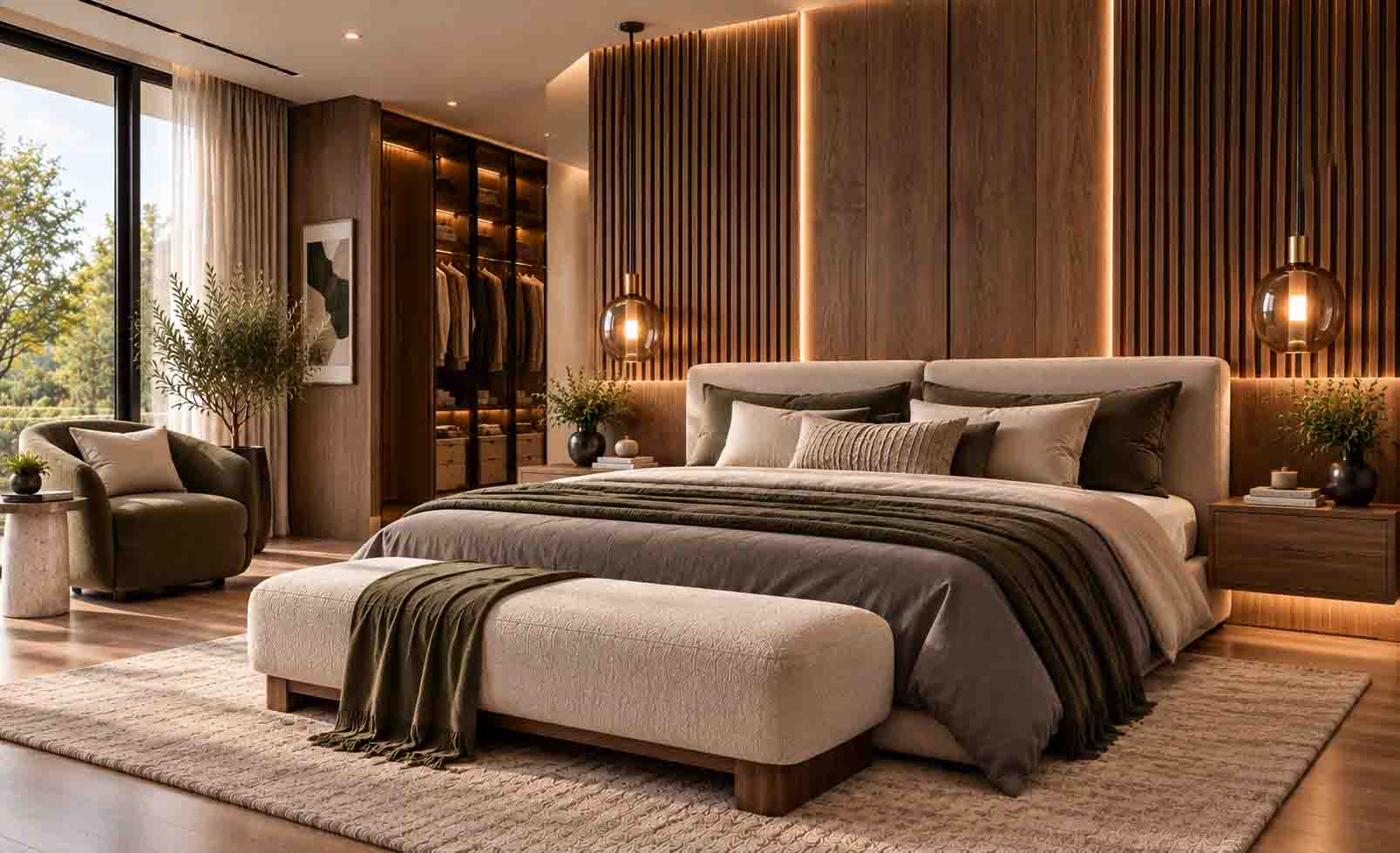
The best bedroom wall treatment depends on the room’s size, lighting, furniture, and overall design direction. Before selecting a panel, consider whether you want the wall to act as a subtle background or become the main focal point.
The wall behind the bed is one of the most effective locations because it naturally functions as the bedroom’s focal area. A panelled headboard wall can visually frame the sleeping space and establish a consistent design theme.
However, bedroom wall panels do not have to be limited to the headboard wall. They can also be used on dressing areas, feature sections, reading nooks or selected architectural areas where additional texture is needed.
For homeowners exploring different approaches to bedroom interiors, bedroom wall panelling ideas can provide additional inspiration for combining materials, patterns and layouts.
Wood panels can suit a wide range of interior styles because the finish, colour and layout can change the overall character of the room. Natural-inspired finishes can create a relaxed atmosphere, while darker tones, metallic accents or structured patterns can produce a more luxurious appearance.
In residential interiors, the objective is often to create a bedroom that feels comfortable while still looking considered and distinctive. In luxury interior projects, panel selection can become part of a broader material palette involving flooring, lighting, furniture, and architectural details.
For projects in Lakewood, NJ, and throughout New Jersey, the same design principles can be adapted to different bedroom sizes and architectural styles. Customisation can help ensure that the wall treatment feels intentional rather than simply added to an existing room.
Yes, wood panels can work effectively in smaller bedrooms when the design is carefully proportioned. Light finishes, narrow vertical profiles and selective feature-wall applications can introduce texture without visually overwhelming the room.
Using panels on one primary wall rather than every surface can also create a focal point while preserving visual openness. Mirrors, light-coloured furnishings and appropriate lighting can further support the sense of space.
Maintenance requirements depend on the specific material and finish, but most decorative interior panels benefit from regular dusting and gentle cleaning. Avoid abrasive products or excessive moisture unless the manufacturer’s care instructions specifically allow them.
It is also useful to periodically inspect panel joints, edges, and areas around lighting or furniture. Addressing minor issues early can help preserve the appearance of the wall treatment over time.
Yes. Wood panels are suitable for bedroom walls and can add warmth, texture, and visual interest. They are commonly used as feature walls behind beds or on selected sections of a bedroom.
Durability depends on the panel material, construction, and finish. Proper installation and routine care can help decorative wall panels maintain their appearance over time.
Many wall panel systems can be customised in terms of dimensions, layouts, colours and finishes. Customisation can be useful when a bedroom has unusual wall proportions or a specific design concept.
Yes. Light-coloured finishes, simple patterns and selective wall applications can work well in small bedrooms. Vertical profiles can also help emphasise the height of a room.
Regular dusting and gentle cleaning are generally suitable for maintaining decorative wall panels. The exact cleaning method should follow the care instructions for the specific panel material and finish.
Ready to create a more refined bedroom retreat? Explore Panneli Interiors’ wood panel options and discover a wall treatment that complements your space, style, and interior design vision.