

Exterior walls play an important role in defining the character of a property. The right exterior wall tile design can add texture, depth, and visual interest while creating a stronger connection between the architecture and its surroundings.
From natural stone-inspired surfaces and marble-look finishes to wood textures and contemporary geometric patterns, modern exterior wall treatments offer a wide range of design possibilities. Whether you are updating a residential façade or planning a commercial project, thoughtful material selection can make the exterior feel more refined and cohesive.
For projects in Lakewood, NJ, and throughout New Jersey, exterior finishes should balance appearance with practical considerations such as durability, maintenance, and compatibility with the building design. Here are 19 exterior wall tile design ideas to inspire modern architectural projects.
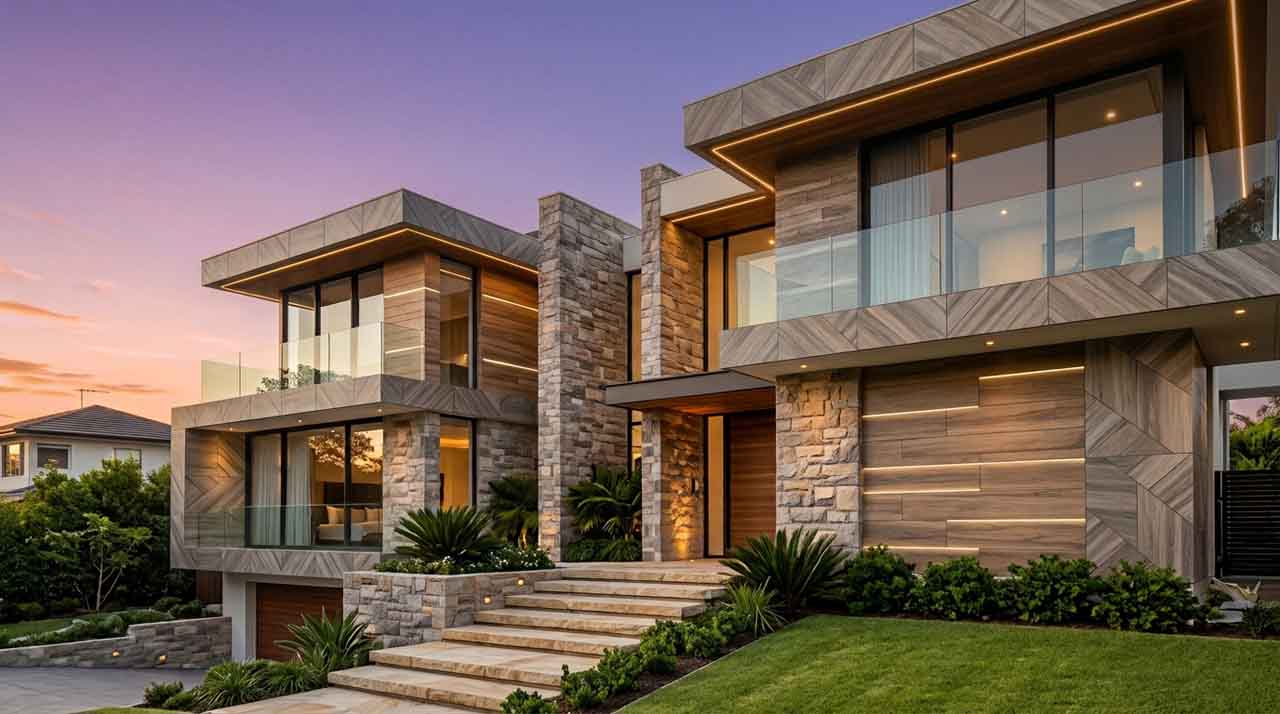
Stone-inspired finishes create a timeless architectural appearance without making the exterior feel overly traditional. Natural variations in colour and texture can give a façade greater depth while complementing contemporary building forms.
Stone-look surfaces work particularly well around entryways, feature walls, and architectural sections that need additional visual definition. For broader inspiration, explore different stone wall panels and their potential applications.
Marble-inspired finishes can bring a sophisticated appearance to exterior feature areas. Subtle veining provides visual movement and can create a high-end architectural statement when used selectively.
For modern homes, marble-look surfaces can work particularly well around entrances, covered outdoor areas, and façade sections where a polished appearance is desired.
Wood-look finishes introduce warmth to contemporary architecture while maintaining a structured and modern appearance. They can soften concrete, glass, and metal elements and create a more balanced façade.
Vertical wood-look arrangements can also make a building appear taller, while horizontal layouts can emphasise width and create a broader visual profile.
Texture can transform a plain exterior wall into an architectural feature. Ribbed, grooved, linear, and three-dimensional surfaces create shadows that change throughout the day as natural light moves across the façade.
Textured finishes are especially useful when you want visual interest without relying on bold colours or complicated decorative elements.
Large-format tiles can create a cleaner appearance by reducing the number of visible joints across a wall. Their expansive surface can complement minimalist architecture and contemporary façade designs.
This approach works particularly well when the goal is to create a calm, uninterrupted exterior surface.
Geometric patterns can introduce a stronger sense of structure to modern architecture. Repeating lines, angles, and panels can be arranged to create a distinctive façade without overwhelming the overall design.
Geometric treatments are often most effective when paired with a restrained colour palette and simple architectural forms.
Dark grey and charcoal finishes can give contemporary properties a dramatic architectural presence. They pair naturally with timber, glass, concrete and metallic details.
A darker feature wall can also provide contrast against lighter exterior surfaces, landscaping or surrounding architectural elements.
Neutral colours such as beige, cream, warm grey and soft white create a versatile foundation for exterior architecture. They can make a property feel bright and contemporary while remaining adaptable to changing design trends.
Light neutral finishes are particularly useful for residential projects where the exterior needs to coordinate with landscaping and neighbouring structures.
Concrete-inspired finishes suit industrial and minimalist architectural styles. Their understated appearance can provide a strong backdrop for glass, timber, black metal and greenery.
Rather than leaving a façade visually flat, combining concrete-look surfaces with contrasting textures can add subtle architectural depth.
Vertical installation can change the perceived proportions of a building. Tall linear patterns naturally draw the eye upward and can make lower structures appear more vertical.
This approach can be used across an entire façade or limited to entrance columns, feature walls and architectural recesses.
Horizontal patterns create a different visual effect by emphasising the width of a structure. They are well suited to contemporary homes with low rooflines and strong horizontal architectural elements.
Horizontal lines can also help create visual continuity between different sections of a façade.
Combining two or more finishes can create a more layered exterior design. For example, stone-inspired surfaces can be paired with wood-look elements, while textured panels can contrast with smooth architectural materials.
The key is to establish a clear relationship between the materials so the façade feels intentionally designed rather than visually fragmented.
A feature wall can highlight a particular architectural area such as a front entrance, outdoor entertaining zone or commercial reception façade. It provides an opportunity to introduce a distinctive finish without covering every exterior surface.
Feature walls are also a practical way to experiment with stronger textures, patterns or colours while keeping the overall design balanced.
The front wall is one of the first elements visitors see, making it an important part of residential curb appeal. A carefully selected tile or panel finish can create a stronger connection between the entrance, landscaping, and main building.
For additional inspiration, explore these modern front wall tile design approaches for contemporary properties.
Layering different depths and textures can give an exterior wall greater dimensionality. Raised elements, recessed sections, and contrasting surfaces can work together to create shadow lines and architectural definition.
This approach is particularly effective for modern façades that rely on clean geometry rather than ornate decoration. Explore exterior wall panels for more ideas on architectural exterior treatments.
Metallic-inspired finishes can introduce a contemporary industrial character to selected exterior areas. Subtle bronze, graphite, silver, and other metallic effects can complement modern architectural materials.
Because metallic surfaces naturally attract attention, they are generally most effective when used as accents rather than across every exterior wall.
A monochrome exterior uses variations of one colour family to create a sophisticated and cohesive appearance. Different textures can provide contrast while maintaining a restrained palette.
This style is well suited to minimalist architecture where clean lines, proportion and material texture are the primary visual elements.
Natural-looking textures can make contemporary architecture feel more connected to its environment. Stone grain, timber texture and subtle mineral patterns can introduce organic character without compromising a modern aesthetic.
Natural textures can also work particularly well alongside planting, timber landscaping elements and outdoor lighting.
Combining complementary panel finishes allows designers to create a customised exterior composition. Smooth surfaces can be placed beside textured materials, while wood-inspired finishes can balance stone or marble-inspired elements.
For projects requiring a coordinated design direction, custom panel profiles can help create a more consistent relationship between different architectural areas.
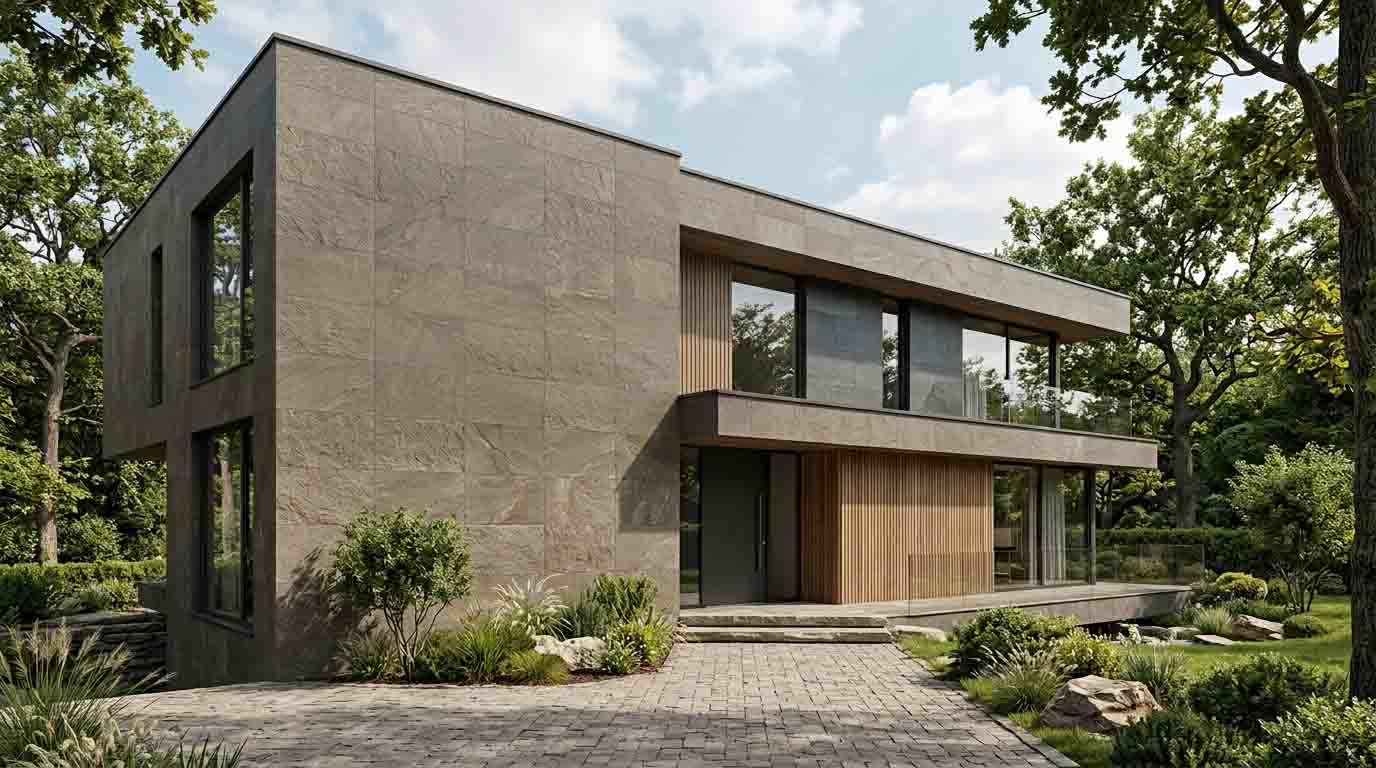
The best exterior wall treatment depends on more than appearance. Consider the architectural style, surrounding materials, exposure to the elements, maintenance requirements, and the visual effect you want to achieve.
Exterior wall tiles and architectural panels can both contribute to a sophisticated façade, but their appearance, installation requirements, and available design options can differ. Tiles may be particularly suitable when a traditional tiled appearance is desired, while larger architectural panels can create cleaner lines and broader uninterrupted surfaces.
The right option depends on the project, substrate, installation conditions, and desired finish. For modern architectural projects, comparing material scale, texture, joints and maintenance requirements can help determine the most appropriate solution.
Exterior finishes can be adapted to a wide range of residential and commercial applications. Homes may use decorative exterior walls to enhance entrances, garages, patios, and façades, while commercial properties can use feature surfaces to establish a more distinctive architectural identity.
In New Jersey projects, material selection should also take the local environment and intended application into consideration. A well-planned exterior finish should complement the architecture while remaining practical for the conditions in which it will be installed.
A successful exterior is rarely based on one material alone. The strongest designs usually consider the relationship between wall finishes, roofing, windows, doors, lighting, landscaping and other architectural elements.
Before selecting a finish, consider how it will look from different distances and under different lighting conditions. A texture that appears subtle indoors may become much more prominent on a large exterior façade.
For more inspiration, explore these wall design ideas and consider how different textures, patterns, and materials can be adapted to your architectural project.
The best design depends on the architecture and desired appearance. Stone-inspired, wood-look, marble-look, textured, and minimalist neutral finishes are all popular options for modern homes.
Durability depends on the specific material, product specifications, installation method and exposure conditions. Exterior products should be selected specifically for their intended outdoor application.
Yes, some architectural wall panel systems can be customised through different profiles, textures, finishes, dimensions and design combinations. The available options depend on the specific panel system.
Yes. Exterior wall finishes can be used for commercial façades, entrances, feature walls and other architectural areas when the selected material is suitable for the intended application.
Maintenance depends on the material and finish. In general, exterior surfaces should be cleaned according to the manufacturer’s recommendations, with attention given to dirt, moisture, and other environmental exposure.
Ready to explore exterior wall solutions for your project? Contact Panneli Interiors to discuss your design requirements and discover suitable decorative and architectural panel options.