

Choosing the right wall treatment can completely change how an office looks and feels. The best wall paneling ideas for office spaces can add texture, depth, visual interest, and a polished architectural character without making the environment feel overly decorated.
From sophisticated reception areas to executive offices, meeting rooms, corridors, and collaborative spaces, wall panels offer a practical way to create distinctive commercial interiors. Whether you prefer warm wood tones, contemporary textures, or refined luxury finishes, the right panel design can complement your brand and the overall character of your workplace.
For offices in Lakewood, NJ and throughout New Jersey, carefully selected wall panels can also help create a more cohesive interior across professional and commercial environments. Below are 20 stylish ideas to consider when planning an office wall transformation.
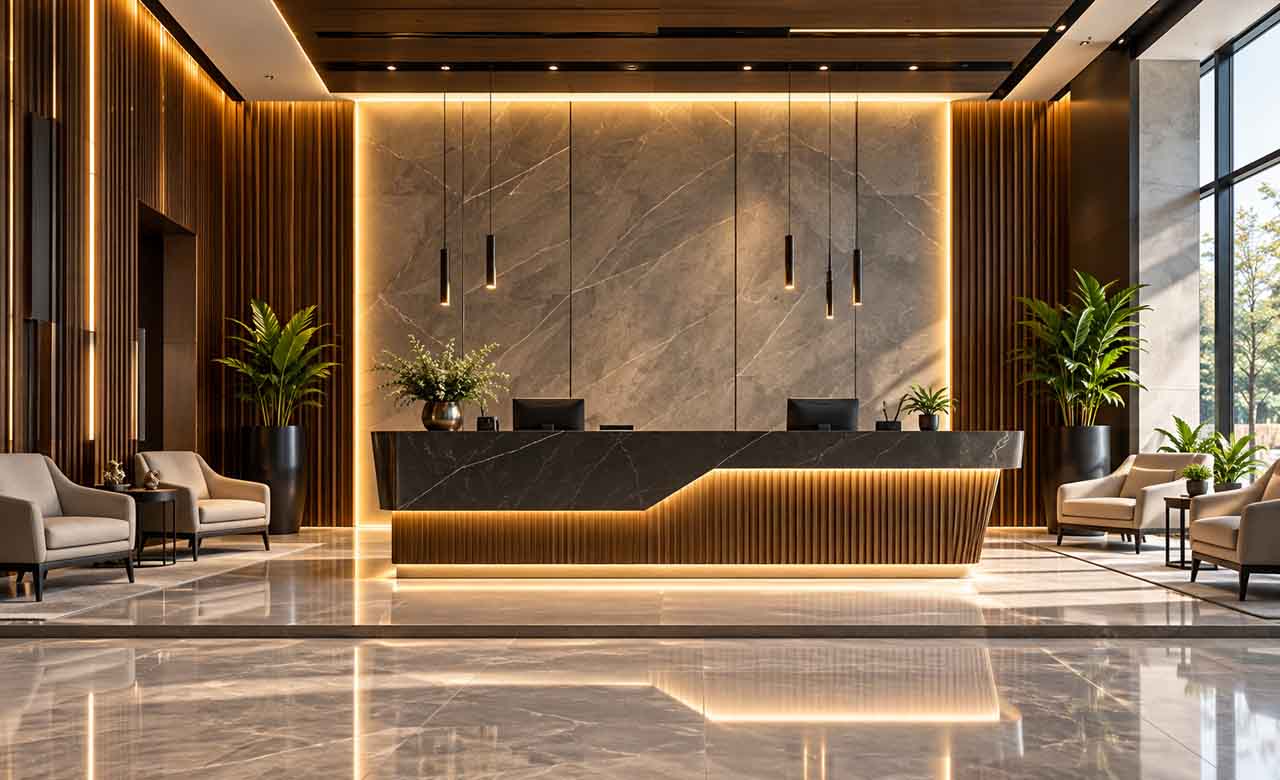
The reception area is often the first part of an office visitors experience, making it an ideal location for a feature wall. Floor-to-ceiling panels can establish a strong visual focal point behind the reception desk while adding architectural depth.
Wood-inspired finishes, marble effects, textured surfaces, or sophisticated metallic details can be selected to complement the company’s branding and interior palette.
Wooden wall panels can make an office feel warmer and more inviting while maintaining a professional appearance. Natural-looking grains work particularly well in reception areas, executive offices, conference rooms, and waiting spaces.
Vertical wood panel designs can also visually emphasise ceiling height, while horizontal arrangements can create a broader appearance across a wall.
An executive office can benefit from a refined feature wall behind a desk or seating area. Dark wood tones, leather-effect finishes, or understated textured panels can create a sophisticated backdrop without overwhelming the room.
The goal is to balance visual character with the practical requirements of a professional workspace.
A meeting room television does not have to look like a separate piece of equipment attached to an otherwise plain wall. TV feature wall panels can integrate the screen into the room’s overall design.
Consider positioning the television within a symmetrical panel arrangement, with concealed cable management and complementary lighting to create a cleaner presentation area.
Vertical panel arrangements are one of the most versatile wall paneling ideas for office interiors. Their linear appearance can make walls feel taller while adding rhythm and texture.
This approach can work particularly well behind reception counters, in corridors, and on narrow feature walls where a strong vertical design can enhance the proportions of the space.
Combining wood-look panels with neutral wall surfaces can create a balanced and contemporary office interior. The contrast helps define architectural zones without requiring excessive decorative elements.
For example, warm wood tones can be paired with white, beige, grey, or charcoal finishes to create a sophisticated commercial palette.
A reception feature wall can incorporate the company’s logo or brand colours while allowing the wall treatment to remain elegant. Textured or wood-inspired panels can provide a dimensional background that makes signage more visually prominent.
This approach is particularly useful for businesses that want their reception area to communicate a clear sense of identity from the moment visitors arrive.
Dark wall panels can introduce depth and contrast into larger offices. Charcoal, deep brown, black, or dark wood-inspired finishes can create a more intimate and sophisticated environment when balanced with appropriate lighting.
Dark finishes are especially effective on selected feature walls rather than every surface, allowing the room to retain visual balance.
Textured decorative panels can transform an otherwise simple reception backdrop into an architectural focal point. Subtle three-dimensional patterns can catch light throughout the day and create depth without relying on bold colours.
This is a practical option for offices seeking a modern appearance while maintaining a restrained professional aesthetic.
Marble-inspired wall panels can bring a refined appearance to reception areas, conference rooms, executive spaces, and hospitality-inspired office interiors. They can provide the visual character of stone while fitting into a broader decorative wall system.
Pairing marble-inspired surfaces with understated furniture and warm lighting can help create a sophisticated commercial environment.
Conference rooms are ideal spaces for introducing a distinctive wall treatment. A feature wall behind a presentation screen, conference table, or video-conferencing system can give the room a more finished appearance.
When planning the design, consider screen placement, lighting, acoustics, furniture positioning, and cable management before finalising the panel layout.
Open-plan offices can use wall panels to visually separate collaborative zones without constructing permanent walls. A decorative panel feature can help distinguish lounge areas, brainstorming spaces, or informal meeting points.
This technique allows the interior design to communicate how different parts of the workplace are intended to be used.
Corridors are often overlooked when planning office interiors, yet they can provide valuable opportunities for architectural detailing. Partial-height or full-height wall panels can add continuity between rooms and create a more intentional design.
For a consistent commercial interior, consider using the same finish or complementary materials throughout reception areas, corridors, and selected meeting spaces.
Open shelving can look more integrated when installed against a decorative wall panel. The panel provides a textured or coloured backdrop while helping display books, awards, artwork, and other office accessories.
Wood wall panel designs are particularly effective for this application because they introduce warmth while maintaining a structured appearance.
Office lounges and client waiting areas can benefit from a more residential-inspired approach to commercial interior design. Luxury wall panels can introduce texture and sophistication while helping the space feel comfortable and considered.
Soft furnishings, accent lighting, greenery, and carefully selected panel finishes can work together to create a welcoming environment.
Geometric patterns can give contemporary offices a stronger visual identity. Repeating lines, rectangular sections, or structured decorative forms can create an architectural feature without requiring additional artwork.
When using geometric designs, keeping the surrounding furniture and colour palette relatively simple can prevent the space from appearing visually crowded.
Different panel profiles can be combined to create contrast and visual hierarchy. For example, a smooth surface can be placed beside a linear textured panel to distinguish one part of a feature wall from another.
Custom wall panels can also be planned around doors, screens, shelving, lighting, and other architectural features to achieve a more integrated result.
Wall paneling does not always need to cover an entire wall. A partial feature can be used behind a desk, seating area, reception counter, or display unit while leaving adjacent surfaces visually lighter.
This approach is particularly useful in smaller offices where full-wall treatment could make the room feel too enclosed.
One of the most effective wall paneling ideas for office spaces is to repeat selected finishes throughout key areas. Using complementary panels in reception areas, conference rooms, executive offices, and shared spaces can create a cohesive visual language.
For businesses managing larger commercial interiors, a consistent panel strategy can make different rooms feel connected while still allowing each space to have its own character.
For a truly distinctive office interior, consider combining multiple design elements into a custom feature wall. The composition can incorporate wood-inspired textures, metallic accents, marble-inspired surfaces, lighting, signage, or integrated screens.
Customisation is especially valuable when the wall needs to accommodate specific architectural dimensions or support a particular visual identity. A well-planned feature can become the defining design element of a reception area, boardroom, executive office, or client-facing space.
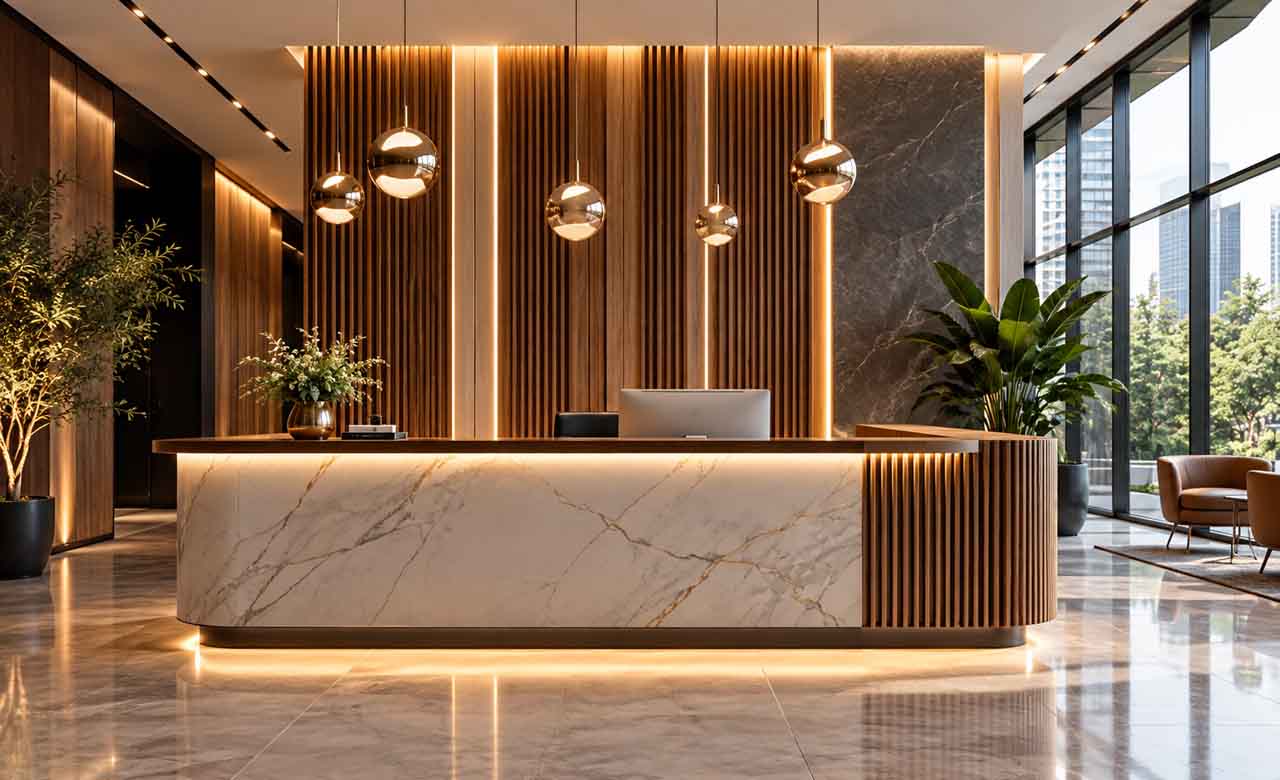
The best wall treatment depends on more than appearance. Before selecting a panel design, consider the room’s purpose, available wall area, lighting conditions, furniture, brand identity, maintenance requirements, and the overall atmosphere you want to create.
For example, warm wood finishes may suit collaborative and hospitality-inspired areas, while darker textured surfaces may work well in executive spaces. High-impact decorative finishes can be reserved for reception areas and meeting rooms where visitors are most likely to notice them.
It is also useful to consider how the proposed design connects with other areas of the property. Coordinating different finishes through paneling for walls can help create a cohesive interior rather than treating each room as a completely separate design.
Although office wall paneling is primarily associated with commercial interiors, many of the same design principles can be applied to residential projects. Feature walls, entertainment areas, home offices, dining spaces, and entryways can all benefit from carefully selected decorative surfaces.
For larger commercial projects, commercial wall panels can be incorporated into reception areas, hospitality environments, corporate offices, retail spaces, and other professional interiors.
Wall panels provide a flexible design solution because they can add texture and architectural interest without relying exclusively on paint, artwork, or furniture. They can also help establish visual zones within open-plan environments.
Modern panel systems are available in a range of profiles and finishes, making it possible to develop designs that feel warm, minimalist, dramatic, luxurious, or contemporary depending on the project’s requirements.
For projects seeking a more refined aesthetic, luxury wall panels can provide an elevated finish for important client-facing areas while maintaining a cohesive relationship with the rest of the interior.
Office wall panels are decorative or architectural surfaces installed over existing walls to add texture, depth, pattern, or visual interest. They can be used in reception areas, meeting rooms, executive offices, corridors, and shared spaces.
Yes. Wooden decorative panels can be used in offices to introduce warmth, texture, and a natural visual element. They are suitable for areas such as reception spaces, conference rooms, executive offices, and collaborative areas when the finish is selected according to the project’s requirements.
Many wall panel systems can be customised through different profiles, dimensions, patterns, and finishes. Customisation can help accommodate architectural features, branding requirements, screens, lighting, and specific interior design concepts.
Yes. Decorative wall panels can be used in commercial environments including offices, reception areas, meeting rooms, retail spaces, hospitality venues, and other professional interiors. The appropriate panel should be selected based on the intended application, maintenance requirements, and interior conditions.
Maintenance depends on the panel material and finish. In general, surfaces should be cleaned according to the manufacturer’s care recommendations and protected from unsuitable cleaning products or excessive moisture.
Ready to explore wall paneling ideas for office walls and create a more distinctive commercial interior? Explore luxury wall panel solutions from Panneli Interiors to find a finish that suits your project.