

The living room is often the centre of a home, so the walls deserve more than a simple coat of paint. At Panneli Interiors, we use wall paneling to transform ordinary surfaces into architectural features that add texture, depth, warmth and visual character.
From natural-looking wood textures and contemporary geometric profiles to sophisticated luxury finishes, the right wall panels can completely change how a living room feels. Whether you are designing a modern apartment, a traditional home or a high-end residential interior in New Jersey, these 21 wall paneling ideas can help you create a more considered space.
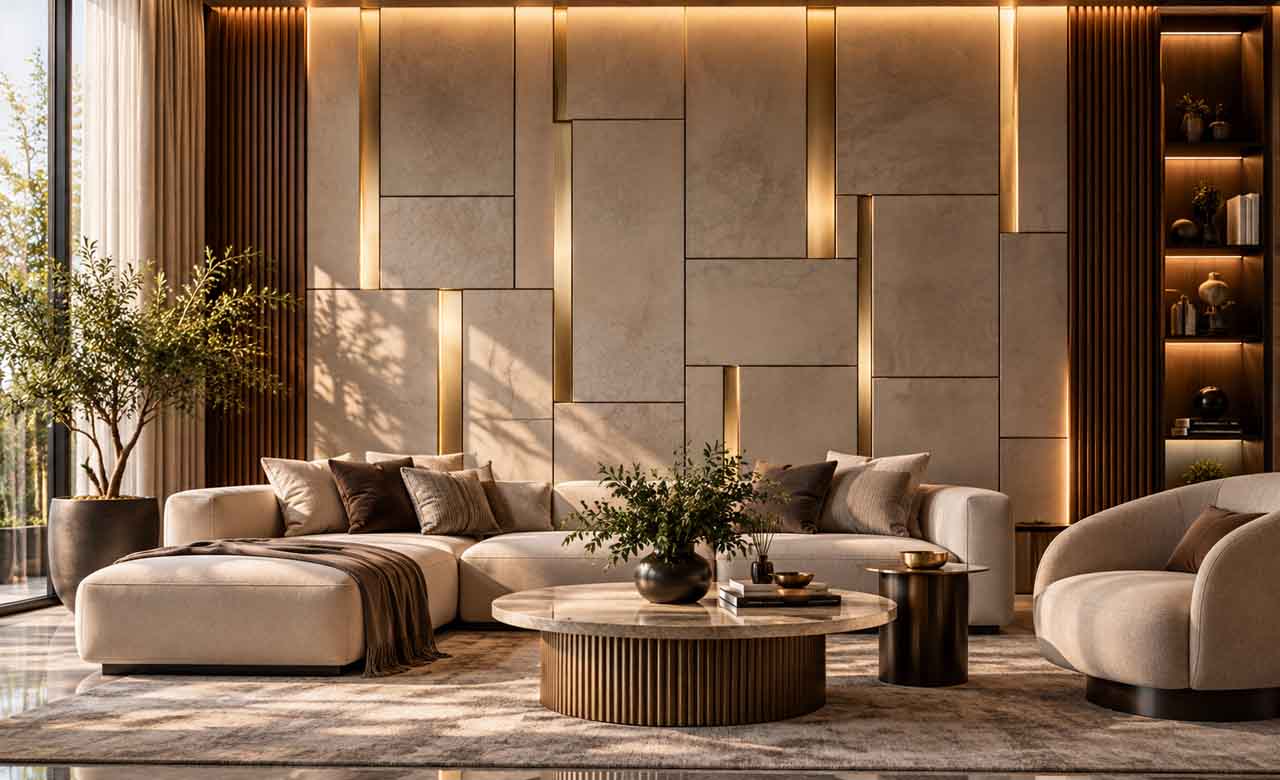
A television wall can become one of the strongest focal points in a living room when it is designed as part of the overall interior rather than treated as a separate screen. Use decorative panels behind the television to create a structured backdrop while visually integrating the entertainment area with the rest of the room.
Vertical profiles, wood-inspired finishes and subtle textures can frame the television without making the wall feel overwhelming. At Panneli Interiors, we consider the surrounding furniture, lighting and architectural proportions when developing a feature wall concept.
Wood-inspired wall panels are an effective way to introduce warmth into contemporary living rooms. Their natural visual character can soften modern furniture, neutral colour schemes, and minimalist architectural details.
Decorative wooden panels can also be used to create continuity between different areas of an open-plan home. A consistent finish across selected walls can make the interior feel more cohesive without covering every surface.
Vertical paneling can draw the eye upward and make a living room feel taller. This approach works particularly well in rooms with lower ceilings or spaces where the goal is to create a stronger sense of architectural height.
Vertical profiles can be installed behind a sofa, television or artwork to create a refined feature without relying on bold colours. The result is often understated but visually distinctive.
A feature wall can give a living room a more luxurious identity by introducing texture and dimension. Instead of relying solely on paint or wallpaper, decorative wall panels create a physical layer across the wall surface.
Luxury wall panels can incorporate wood-inspired, leather-effect, metallic, marble-inspired, and other contemporary finishes. The best choice depends on the existing materials, furniture, and lighting within the room.
A fireplace naturally attracts attention, making the surrounding wall an ideal location for decorative paneling. Panels can visually frame the fireplace and create a more intentional transition between the architectural feature and the rest of the room.
For a contemporary interior, consider subtle textures or clean geometric profiles. In warmer interiors, wood-inspired finishes can complement natural furniture and flooring.
Lighting can dramatically change the appearance of wall paneling. LED strips, concealed lighting and carefully positioned spotlights can emphasise grooves, textures and architectural profiles.
When planning a panelled living room, we recommend considering lighting at the same time as the wall design. Light directed across a textured surface can create shadows and depth that are difficult to achieve with a flat wall.
Geometric profiles can give a living room a distinctly contemporary appearance. Repeating lines, rectangles, squares or angled forms can create rhythm across an otherwise plain wall.
The key is to keep the pattern proportional to the room. A complex geometric design may work beautifully on a large feature wall, while a simpler arrangement can be more appropriate for a compact living space.
Extending wall panels from floor to ceiling can produce a strong architectural effect. Full-height paneling eliminates visual breaks and can make the wall appear more substantial and cohesive.
This approach is especially effective behind a television, fireplace or large artwork. It can also help define a particular zone within an open-plan living and dining area.
Neutral living rooms can sometimes feel visually flat when every surface has the same finish. Introducing wood-inspired panels adds variation while maintaining a calm and sophisticated palette.
Light wood tones can support bright Scandinavian-inspired interiors, while deeper tones can create a richer appearance in luxury or contemporary spaces. The surrounding flooring and furniture should be considered when selecting the panel finish.
Wall paneling does not always need to be bold. Minimalist interiors can benefit from simple profiles, subtle textures and carefully spaced architectural lines.
This approach allows the wall to have depth without competing with furniture, artwork, or other decorative elements. It is particularly useful when creating modern residential interiors where simplicity is an important part of the design.
A media wall can combine a television, storage, lighting, and decorative surfaces into one cohesive composition. Paneling helps establish a visual background that connects these individual elements.
Instead of placing a television against an empty painted wall, consider using TV feature wall panels to create a dedicated architectural zone. The panel finish can then be coordinated with cabinetry, flooring and furniture.
Texture is an important part of comfortable living room design. Pairing textured wall panels with sofas, rugs, curtains and cushions can create contrast without relying on excessive colour.
A textured wall behind a soft upholstered sofa can create an especially balanced composition. The hard architectural surface provides structure while the furnishings introduce softness.
Marble-inspired finishes can bring a sophisticated appearance to living room walls without requiring natural stone across an entire surface. They can work particularly well around media areas, fireplaces or feature walls.
For a balanced interior, combine a statement marble-inspired panel with understated furniture and complementary finishes. This keeps the wall visually interesting without allowing it to dominate the entire room.
Metallic finishes can introduce subtle visual interest into modern living rooms. Depending on the finish and lighting, metallic panels can reflect light and create a more dynamic appearance throughout the day.
They work particularly well as accents rather than being used excessively. A selected feature wall or architectural section can provide enough contrast to elevate a contemporary interior.
Open-plan living areas benefit from visual zoning. Wall paneling can identify the living room as a distinct area without requiring a physical wall or partition.
For example, a panelled wall behind the sofa or television can visually separate the living area from the dining or kitchen zone. This creates structure while preserving the openness of the overall layout.
Darker wall panel finishes can create a sophisticated atmosphere when balanced with appropriate lighting and furniture. Deep wood tones, darker textures, and carefully positioned illumination can make a living room feel intimate and refined.
The success of a darker design depends on proportion. In smaller rooms, using a dark panel finish on one focal wall rather than every surface can provide the desired character without making the space feel enclosed.
Light-coloured wall panels can support a bright and contemporary living room. Pale wood-inspired finishes, soft neutrals and subtle textures can provide dimension while maintaining an open visual appearance.
This approach works well when combined with natural light, neutral furniture and simple decorative accessories. The panels add architectural interest without requiring strong contrast.
The wall behind the sofa is one of the most practical locations for a feature treatment. It creates an immediate backdrop for the main seating area and can replace the need for multiple pieces of wall decoration.
Vertical profiles, timber-inspired designs or contemporary decorative panels can establish a strong visual anchor. Artwork, wall lighting or shelving can then be incorporated into the design where appropriate.
Combining materials can make a panelled living room more visually sophisticated. Wood-inspired panels can be paired with stone-like finishes, glass, metal, upholstery or painted surfaces to create contrast.
The important consideration is balance. We recommend selecting one dominant material and using secondary finishes as accents so the room maintains a clear design direction.
Not every living room follows standard dimensions or design requirements. Custom wall panels can provide greater flexibility when working around televisions, fireplaces, windows, doors, shelving or unusual architectural features.
Custom profiles can also help homeowners and designers achieve a specific visual language instead of choosing a generic wall treatment. At Panneli Interiors, we specialise in developing panel solutions around individual aesthetic preferences and project requirements.
The strongest wall paneling designs consider the entire room rather than treating the wall as an isolated feature. Panel profile, material, lighting, furniture, flooring, ceiling height and architectural details should work together.
Our luxury wall panels can be incorporated into residential interiors as part of a wider design concept, from elegant television walls to sophisticated feature surfaces. For inspiration, our residential projects show how considered wall treatments can support different interior styles.
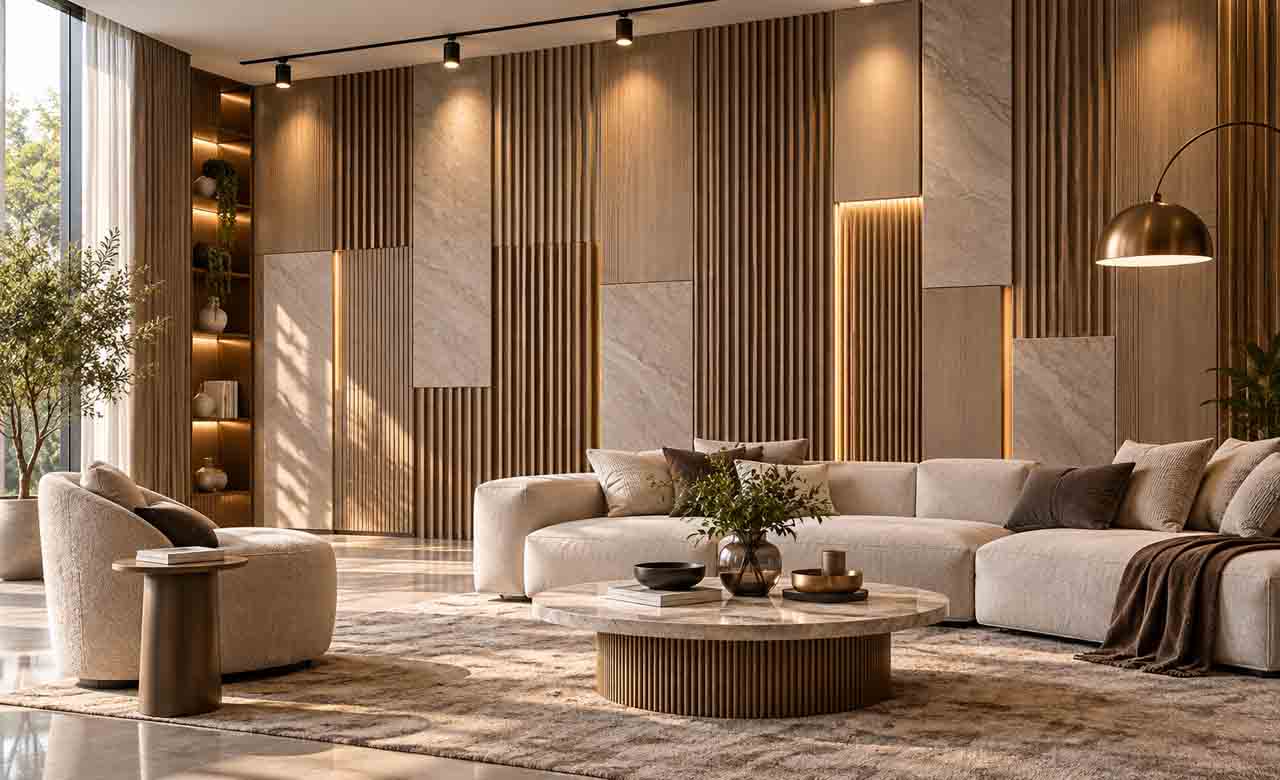
The right wall panel depends on the room’s architecture, desired atmosphere and practical requirements. Before selecting a finish, consider whether the wall is intended to become a focal point, provide a background for a television, define a seating area or simply introduce additional texture.
Living room wall paneling can work across a wide range of residential interiors in New Jersey. From modern homes in Lakewood to more expansive luxury residences, decorative panels can be adapted to different architectural styles and personal preferences.
The most successful designs usually begin with the room itself. Understanding the proportions, natural light, existing finishes and intended use of the space helps determine whether wood-inspired, textured, geometric, metallic or other decorative finishes are appropriate.
Luxury interiors require more than expensive materials. They depend on proportion, consistency and attention to detail. A well-designed panelled wall should feel like an intentional part of the architecture rather than an element added after the rest of the room has been completed.
For this reason, we consider the relationship between panel profiles, lighting, furniture and surrounding finishes. This approach allows decorative wall panels to support the overall interior rather than compete with it.
At Panneli Interiors, we believe wall design should reflect the character of the space and the people using it. Our approach combines decorative possibilities with practical considerations so that the finished wall feels both visually refined and appropriate for everyday living.
From television wall panels and decorative wooden wall panels to custom profiles and contemporary finishes, we can explore different approaches according to the design direction of a project. Our aim is to create interior wall solutions that provide lasting visual interest without relying on unnecessary decoration.
Television wall panels are decorative or architectural panels installed behind or around a TV to create a defined media feature. They can add texture, depth and visual structure while helping the television integrate with the overall living room design.
Quality wooden decorative panels can provide a durable wall finish when properly selected, installed and maintained. Their suitability depends on the panel material, installation environment and manufacturer’s care recommendations.
Yes, wall panel designs can be customised in terms of profiles, finishes, dimensions and overall arrangement, depending on the product and project requirements. Customisation is particularly useful when working around televisions, fireplaces, shelving or unusual wall dimensions.
Yes, decorative wall panels can be used in commercial interiors as feature walls, reception areas, hospitality spaces, offices and other applications. The appropriate panel should be selected according to the project’s design, durability and maintenance requirements.
Yes, TV wall panels can work effectively in smaller living rooms when the profile, colour and scale are carefully selected. A simple vertical design or restrained finish can create a focal point without visually overwhelming the space.
Ready to explore a wall panel concept for your living room? Contact Panneli Interiors to discuss your project and discover a wall design suited to your space.