

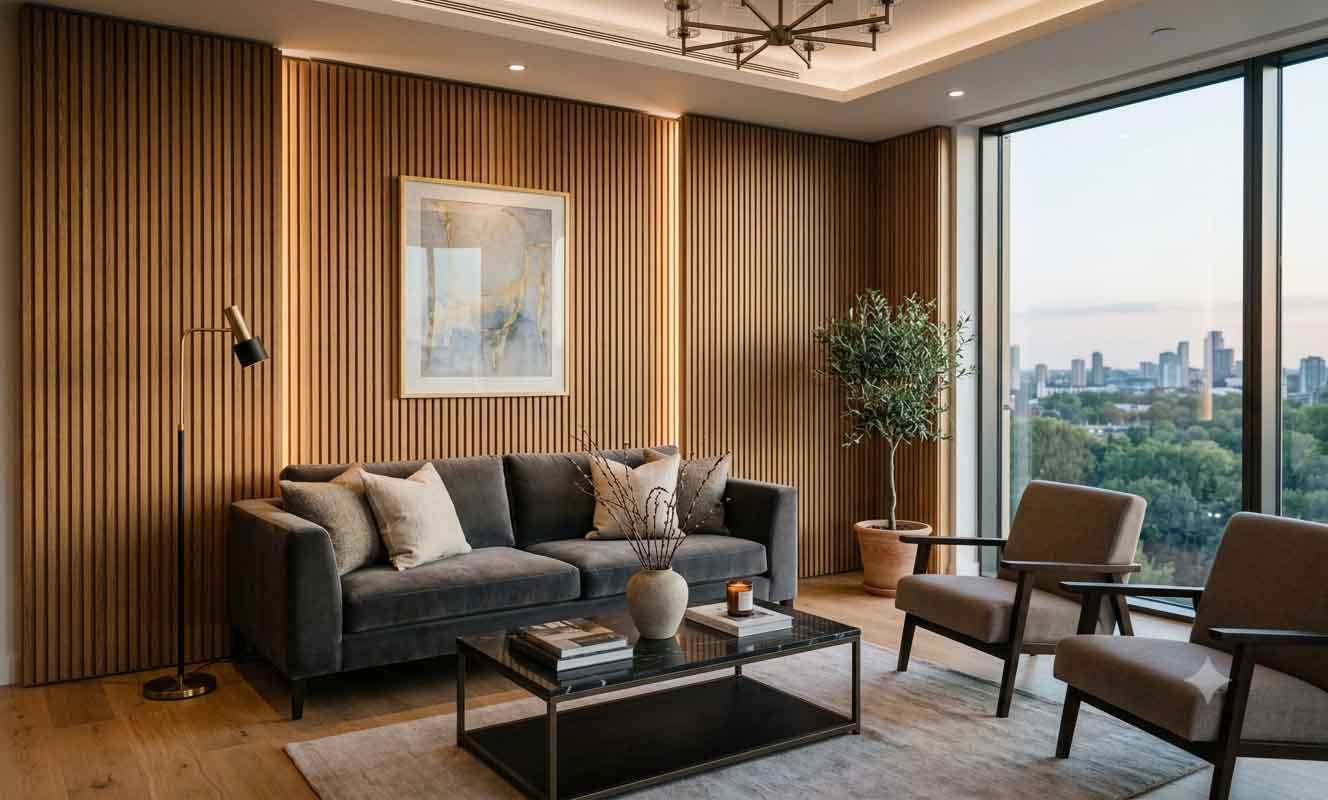
Living room modern wall paneling is an effective way to add depth, warmth, and architectural character to an interior. Whether used behind a television, across a feature wall, or as a subtle backdrop for furniture, modern wall paneling can create a more refined atmosphere while complementing the overall design of the room.
For homeowners and designers planning luxury residential interiors, the right wall treatment can help define the visual identity of the living space. From linear textures and wood-inspired finishes to sleek contemporary surfaces, living room wall panels offer flexible design possibilities for both classic and modern interiors.
Walls often provide the largest uninterrupted surfaces in a living room, making them an important part of the overall interior design. Modern wall paneling introduces texture and dimension that painted walls may not provide, helping create a stronger visual connection between architectural elements, furniture, lighting, and decorative features.
Paneling can also be used to create a clear focal point without overwhelming the room. A carefully selected finish can add warmth to minimalist interiors, bring structure to open-plan spaces, or provide an elegant backdrop for artwork and entertainment areas.
A television wall is often one of the most visually prominent areas in a contemporary living room. Instead of allowing the screen to dominate the space, a well-designed feature wall can integrate the television into the wider interior scheme.
TV wall panels can frame the screen, add visual balance, and create a more cohesive entertainment area. Consider combining textured surfaces with concealed storage, integrated lighting, or complementary cabinetry for a clean and sophisticated result.
For a refined finish, explore luxury wall panel designs that complement the room’s furniture, flooring, and lighting scheme.
Linear wall paneling is a popular choice for modern living rooms because its repeated vertical or horizontal lines create a sense of structure. The direction and spacing of the lines can also influence how the room feels visually.
Vertical linear panels may help draw attention upward and emphasise ceiling height, while horizontal patterns can create a broader visual impression. This makes linear designs suitable for both compact living rooms and larger open-plan interiors.
When selecting a linear treatment, consider how the panel pattern interacts with windows, doors, furniture placement, and lighting. Browse linear wall panels for design approaches that can bring rhythm and texture to a contemporary interior.
Wood-inspired wall paneling can bring warmth and natural character into a modern living room without requiring traditional wood detailing throughout the space. Rich tones can create a cosy atmosphere, while lighter finishes can support a brighter and more minimalist aesthetic.
Wood-inspired surfaces work particularly well behind sofas, fireplaces, media units, and dining transitions in open-plan layouts. The key is to select a finish that complements existing flooring and furniture rather than competing with them.
For larger living rooms, covering an entire feature wall with decorative panels can establish a strong architectural statement. This approach works especially well when the wall is positioned opposite the main seating area or serves as the visual anchor of the room.
A full feature wall does not necessarily need to be bold. Subtle textures, muted colours, and refined patterns can create an elegant backdrop while maintaining a calm and sophisticated atmosphere.
In open-plan homes, wall paneling can help visually separate functional zones without building additional walls. A panelled section can identify the living room area while maintaining a sense of openness between the lounge, dining, and kitchen spaces.
This technique can be particularly effective when the same material or complementary finish is repeated elsewhere in the interior. Consistency in colour, texture, or detailing helps create a unified design throughout the space.
The best living room modern wall paneling should support the room’s existing architecture and design direction. Before choosing a material or pattern, consider the size of the space, natural light levels, furniture style, ceiling height, and the visual effect you want to achieve.
| Panel Style | Design Effect | Best Application |
|---|---|---|
| Linear panels | Add rhythm and vertical or horizontal structure | TV walls, feature walls, contemporary interiors |
| Wood-inspired panels | Introduce warmth and natural character | Living rooms, media walls, open-plan spaces |
| Luxury decorative panels | Create a refined and visually distinctive finish | High-end residential and statement interiors |
| Laminate wall panels | Offer versatile decorative surface options | Modern residential and selected commercial applications |
Material selection should also take practical considerations into account. If you are looking for a versatile surface solution, consider laminate wall panels as one option for achieving a modern decorative finish.
Wall paneling can work effectively in smaller living rooms when the design is carefully proportioned. Instead of covering every wall, consider using panels on one focal surface to create depth without making the room feel visually crowded.
Lighter finishes, subtle textures, and vertical patterns can help maintain an open appearance. Integrating the television or storage into the panelled wall can also reduce visual clutter and create a more streamlined environment.
Larger spaces provide more freedom to experiment with scale, texture, and material combinations. A substantial feature wall can help anchor a generous seating arrangement and prevent the room from feeling visually empty.
In luxury residential interiors, paneling can be paired with statement lighting, artwork, fireplaces, and custom furniture to create a layered design. The goal is to balance visual impact with cohesion so the wall treatment feels integrated rather than added as an afterthought.

Lighting plays an important role in how wall paneling is perceived. Directional lighting can highlight textures and create shadows, while concealed LED lighting can emphasise architectural lines and produce a softer evening atmosphere.
When planning a panelled feature wall, consider natural daylight as well as artificial lighting. The same material may appear different throughout the day depending on the direction and intensity of light entering the room.
For residential interiors in Lakewood, NJ, and throughout New Jersey, modern wall paneling can provide a practical way to personalise living spaces while creating a sophisticated architectural finish. Design choices can range from warm wood-inspired surfaces for comfortable family rooms to refined decorative panels for more formal entertaining spaces.
Wall panels can also be incorporated into luxury interior projects where consistency across multiple rooms is important. Coordinating panel finishes between the living room, hallway, media area, or other spaces can help establish a cohesive interior design language.
Before installation, identify the primary purpose of the panelled wall. Decide whether it will function as a television backdrop, architectural feature, decorative focal point, or a combination of these roles.
Next, consider the relationship between the panels and the rest of the room. The most successful designs typically coordinate panel texture, colour, scale, and finish with flooring, furniture, lighting, and architectural details.
Living room modern wall paneling refers to decorative or architectural panels used to enhance the appearance and texture of living room walls. Designs can include linear patterns, wood-inspired finishes, luxury decorative surfaces, and other contemporary styles.
Yes. Modern wall panels can be used to create a dedicated television feature wall that integrates the screen into the overall interior design. The panel layout should account for the television, electrical connections, mounting requirements, and any surrounding cabinetry.
Wall paneling can influence the perceived proportions of a small living room when the design is carefully selected. Light finishes and vertical patterns may help create a sense of height, while using panels on a single focal wall can add depth without overwhelming the space.
The best style depends on the room’s architecture, lighting, furniture, and desired atmosphere. Linear panels can provide a structured contemporary appearance, while wood-inspired and luxury decorative finishes can introduce warmth, texture, and visual sophistication.
Maintenance depends on the specific panel material and finish. In general, regular dusting and gentle cleaning with products recommended for the surface can help maintain its appearance, while abrasive cleaners should be avoided unless the manufacturer specifically approves them.
Ready to create a more sophisticated living room with modern wall paneling? Explore Panneli Interiors’ luxury wall panel designs and find a finish that brings your vision to life.
f the panel. Generally, surfaces should be kept free from dust and cleaned using methods recommended by the manufacturer, while harsh or unsuitable cleaning products should be avoided.