

Linear wall panels are a versatile way to introduce texture, depth, and architectural character into contemporary interiors. With their clean lines and structured appearance, linear wall paneling can transform an ordinary surface into a refined focal point while complementing a wide range of interior styles.
From residential living spaces to sophisticated commercial interiors, modern wall panels offer a practical design solution for creating visual interest without overwhelming the room. Whether used across an entire feature wall or as a carefully selected accent, decorative wall panels can help define the atmosphere and identity of an interior.
Linear wall panels are decorative interior wall systems designed around repeated vertical or horizontal lines. This linear pattern creates a sense of rhythm across the surface, adding dimension and architectural detail to otherwise flat walls.
Depending on the desired aesthetic, linear wall paneling can create anything from a subtle contemporary backdrop to a bold statement feature. The structured appearance works particularly well in modern interiors where clean forms, balanced proportions, and carefully selected textures are central to the design.
One of the main advantages of linear wall panels is their ability to add visual depth while maintaining a clean and organised appearance. The repeated lines naturally draw the eye across the wall, creating texture and movement without relying on overly complex patterns.
Modern wall panels can also help establish a strong focal point within a room. When thoughtfully positioned, they can frame important architectural or functional features while giving the overall interior a more considered and finished appearance.
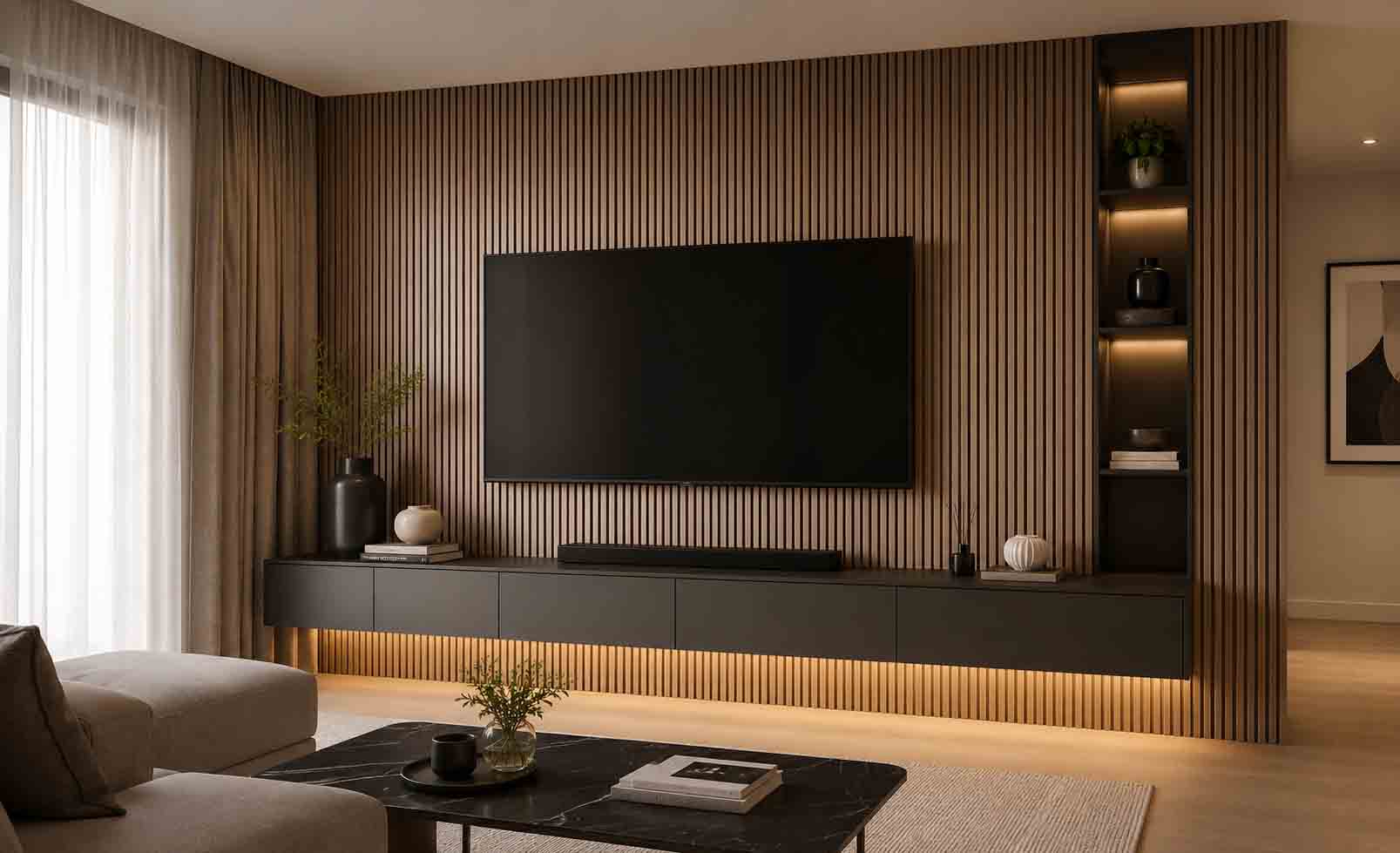
The living room is one of the most effective spaces for incorporating linear wall paneling. A carefully designed feature wall can create a sophisticated backdrop for furniture, artwork, lighting, or a television while helping the room feel more visually balanced.
For a contemporary living space, consider using linear panels behind the main seating area or across a television wall. Combining the panels with complementary materials and subtle lighting can enhance the texture and create a layered interior design scheme.
For more inspiration, linear wall panels can be incorporated into living room modern wall paneling concepts where texture, proportion, and material selection work together to create a cohesive space.
A feature wall gives linear wall panels an opportunity to become the visual centre of an interior. Rather than covering every surface, designers can use decorative wall panels selectively to highlight a specific area and create a stronger sense of hierarchy within the room.
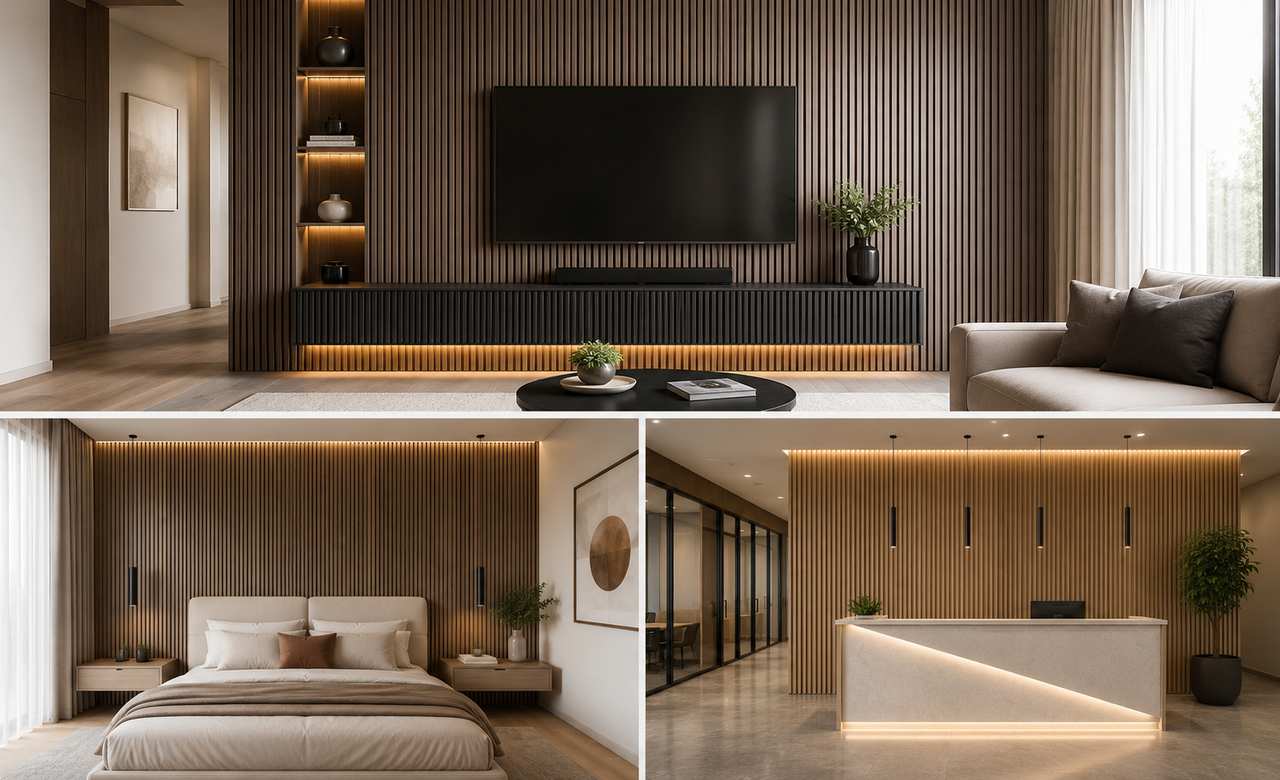
The ideal location depends on the layout and purpose of the space. A linear feature wall can work behind a sofa, bed, reception desk, dining area, or television, allowing the wall treatment to reinforce the room’s primary focal point.
When designing a feature wall, consider the relationship between the panel direction, ceiling height, furniture placement, and lighting. Vertical lines may help emphasise height, while horizontal arrangements can contribute to a broader visual impression.
Television areas often benefit from a structured backdrop that visually anchors the screen within the room. Linear wall panels can provide this architectural framework while adding texture and interest around an otherwise functional installation.
For a polished result, the panel design should complement the television, furniture, lighting, and surrounding finishes. Cable management, screen positioning, and access for maintenance should also be considered during the planning stage.
Linear wall paneling can be paired with other interior finishes to create contrast and depth. Materials such as wood-inspired surfaces, laminate finishes, stone-inspired textures, and luxury wall cladding can each contribute a different visual character to the overall design.
The key is to maintain balance. Combining too many competing textures may make a space feel visually busy, while carefully selected complementary finishes can create a more sophisticated and cohesive interior.
For projects that require a more layered approach to wall design, luxury wall cladding can be considered alongside linear decorative elements to introduce additional texture and material contrast.
The finish of a wall panel has a significant influence on how the completed interior looks and feels. A natural wood-inspired appearance can bring warmth, while darker or more dramatic finishes may create a stronger contemporary statement.
When selecting a finish, consider the existing colour palette, natural and artificial lighting, furniture, flooring, and the intended atmosphere of the room. The goal is to create a surface that supports the wider interior concept rather than competing with it.
Material selection should also reflect how the space will be used. Residential interiors may prioritise warmth and comfort, while commercial interiors may require finishes that align with a specific brand identity or design concept.
Linear wall panels can add architectural character to commercial environments such as offices, hospitality spaces, retail interiors, reception areas, and other professional settings. Their structured appearance can help create a polished environment while reinforcing the visual identity of the space.
In a commercial project, panel selection should be considered alongside traffic levels, maintenance requirements, lighting, acoustics, and the overall interior specification. A well-planned wall treatment can contribute to a consistent design language throughout the property.
For commercial projects in New Jersey and beyond, decorative wall panels can be incorporated into reception areas, meeting spaces, corridors, and customer-facing environments where the interior needs to make a strong first impression.
In residential interiors, linear wall paneling can be used to add personality and sophistication to bedrooms, living rooms, dining areas, hallways, and entertainment spaces. The design can be subtle and understated or used as a prominent architectural feature.
For luxury interior projects in Lakewood, NJ, and throughout New Jersey, the right combination of panel pattern, finish, scale, and lighting can help create an interior that feels distinctive while remaining cohesive with the home’s wider design.
Linear wall panels are particularly effective when the design calls for repetition, rhythm, and clean architectural lines. Other decorative wall panels may be better suited to projects that require different textures, patterns, or material effects.
The right option ultimately depends on the intended visual result, room application, installation requirements, and surrounding materials. For example, laminate wall panels may be considered when a project calls for a specific decorative surface and finish selection.
Successful linear wall paneling begins with careful planning. Before installation, the wall dimensions, panel orientation, feature placement, electrical requirements, lighting, and surrounding architectural details should be reviewed.
It is also important to consider how the panel pattern will align with doors, windows, furniture, and other fixed elements. Thoughtful planning helps create a more balanced finished result and reduces the likelihood of visual interruptions across the feature surface.
Maintenance requirements depend on the panel material and finish. In general, decorative wall panels should be kept free from excessive dust and cleaned according to the manufacturer’s recommended care instructions.
Avoid using harsh cleaning products unless they are specifically approved for the chosen finish. Regular, appropriate maintenance can help preserve the appearance of the panels and keep the interior looking well cared for over time.
Linear wall panels offer a flexible way to bring structure, texture, and architectural interest into modern interiors. Their clean visual rhythm makes them suitable for both residential interiors and commercial interiors, from living rooms and television areas to reception spaces and luxury interior projects.
The most successful designs begin with a clear understanding of the room, the desired atmosphere, and how the wall treatment will interact with the rest of the interior. By carefully considering panel orientation, finish, scale, lighting, and material combinations, linear wall paneling can become an integral part of a sophisticated design concept.
If you are planning a luxury interior project and want to explore custom linear wall panels and decorative wall solutions, contact Panneli Interiors to discuss your design requirements and find the right approach for your space.
Linear wall panels are decorative wall systems featuring repeated lines or grooves that create texture, depth, and architectural character. They can be used on feature walls and other interior surfaces in residential and commercial spaces.
Linear wall paneling can be used in living rooms, bedrooms, dining areas, television walls, reception spaces, offices, hospitality environments, and other interior applications where added texture and visual structure are desired.
Depending on the manufacturer and product specification, linear wall panels may be customised through different profiles, dimensions, orientations, and finish selections. The available options should be confirmed for each specific project.
Yes. Linear wall panels can be used in commercial interiors such as offices, reception areas, retail spaces, hospitality environments, and other professional settings. Material selection should take the intended use, maintenance requirements, and project specifications into account.
Maintenance depends on the material and finish of the panel. Generally, surfaces should be kept free from dust and cleaned using methods recommended by the manufacturer, while harsh or unsuitable cleaning products should be avoided.