

Wall panels can transform an ordinary wall into a refined architectural feature, but achieving a high-quality finish depends on more than choosing the right design. Accurate measurements, wall preparation, cutting, alignment, adhesive selection, and installation technique all influence the final result. For homeowners considering luxury wall panels, one of the most important decisions is whether to handle the project themselves or hire a professional wall panel installer.
DIY installation can be practical for a simple project, particularly when the wall is flat, accessible, and requires minimal cutting. Professional installation, however, can be a better choice for large-format panels, custom designs, complex layouts, full-height walls, or projects where precision is essential.
This guide compares DIY and professional wall panel installation so you can make an informed decision based on your panel type, project complexity, available tools, experience, budget, and desired finish.
The right installation method depends largely on the complexity of the project. A homeowner with practical skills and suitable tools may successfully install straightforward modern wall panels, while a complex luxury feature wall may require significantly more planning and specialist experience.
DIY installation can reduce labour costs, but it also places responsibility for measuring, cutting, surface preparation, alignment, and installation entirely on the homeowner. Professional installation adds labour costs but can reduce the risk of material waste and installation problems.
| Consideration | DIY Installation | Professional Installation |
|---|---|---|
| Initial labour cost | Lower | Higher |
| Installation experience | Homeowner’s responsibility | Handled by an experienced installer |
| Complex layouts | More challenging | Better suited |
| Large-format panels | May require additional assistance | Generally easier to manage |
| Precision cutting | Requires suitable tools and skill | Handled as part of the installation process |
| Risk of installation mistakes | Higher for inexperienced installers | Generally lower with experienced professionals |
| Time required | Can take longer for first-time installers | Typically more efficient |
DIY installation is not necessarily the wrong choice. For the right project, it can be a practical way to update an interior while saving on professional labour. The key is understanding whether the wall and panel design are within your skill level.
A homeowner may be able to handle a DIY project when the installation involves a relatively small, flat wall with straightforward panels and limited cutting. A simple decorative feature wall is generally less demanding than a floor-to-ceiling custom installation with several architectural obstacles.
If you are considering wall design ideas for a small project, begin by assessing the wall rather than immediately purchasing materials. Check whether the surface is clean, dry, stable, reasonably smooth, and suitable for the manufacturer’s recommended installation method.
DIY may also make sense if you already have the necessary tools and are comfortable with accurate measuring and cutting. Patience is particularly important because rushing the first few panels can create alignment problems that become increasingly visible as the installation progresses.
Even for a simple project, it is important to follow the panel manufacturer’s installation recommendations. Different materials can require different adhesives, fixing methods, cutting techniques, and surface preparation.
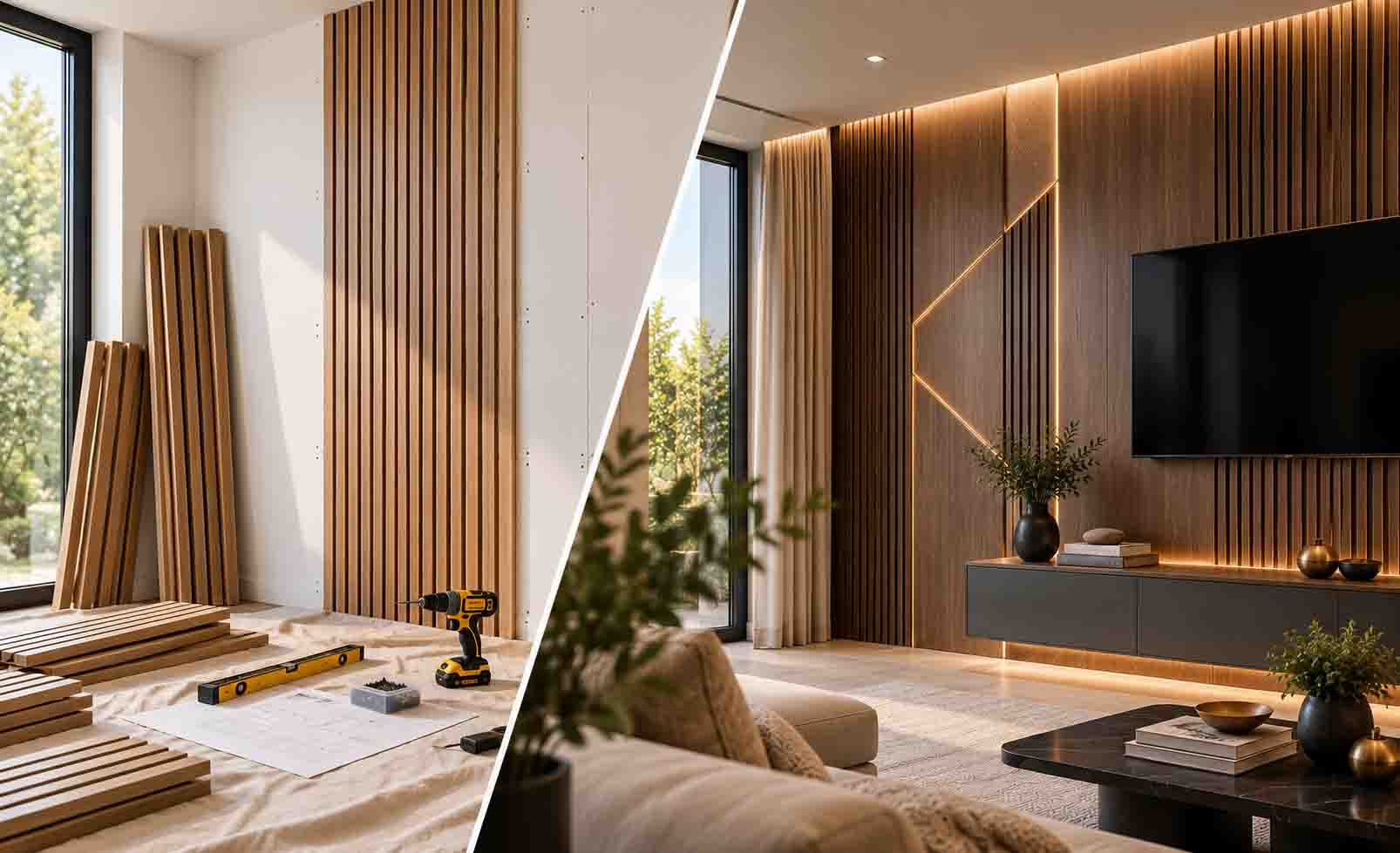
Professional installation becomes more valuable as the complexity and visibility of the project increase. A premium feature wall may look simple once completed, but the installation can involve considerable planning behind the scenes.
Projects involving luxury wall panels often require a high degree of precision because patterns, textures, seams, and proportions can become prominent visual elements. An inaccurate cut or poorly aligned panel can be difficult to hide.
Professional installation is particularly worth considering when the project includes custom dimensions, large-format panels, multiple corners, floor-to-ceiling coverage, unusual wall shapes, or integrated lighting. These details can make installation significantly more demanding than attaching standard panels to a straightforward wall.
For example, custom media wall designs often involve several elements that need to work together, including the television, storage, wall panels, lighting, electrical components, and surrounding architecture. Professional planning can help ensure that these elements are coordinated rather than treated as separate installation tasks.
Measurement is one of the most important stages of any wall panel installation. Walls are not always perfectly square, and dimensions can vary between the top, middle, and bottom of a wall.
Measuring only once and immediately cutting panels can create problems later. A small error may initially appear insignificant, but it can become increasingly noticeable as panels are installed across the wall.
Before cutting, measure the wall in several locations and identify all obstacles. Electrical outlets, switches, doors, windows, skirting boards, corners, and architectural features should be considered when developing the panel layout.
It is also useful to plan where the installation will begin and how the panel seams will appear across the finished wall. With patterned or decorative wooden panels, for example, the relationship between neighbouring panels can have a major impact on the overall appearance.
Many installation problems occur because the project is treated as simpler than it actually is. Wall panels may appear straightforward to install, but premium finishes can expose small errors that would be less noticeable with ordinary wall coverings.
Panels generally need a clean, dry, stable, and suitably prepared surface. Dust, loose paint, moisture, major uneven areas, or unstable surfaces can affect how panels sit or bond to the wall.
Wall preparation should therefore be completed before installation begins. Correcting a surface problem after panels have been installed can be considerably more difficult.
Incorrect measurements can lead to unnecessary material waste and visible gaps. This becomes especially important when working with custom or premium panels where replacement pieces may be difficult or expensive to obtain.
Cutting around outlets, switches, doors, windows, and corners requires careful planning. Once a premium panel has been cut incorrectly, it may no longer be suitable for the intended location.
Seam alignment can make or break the appearance of a feature wall. Patterns, textures, wood-inspired grain, marble effects, and geometric designs can make inconsistencies particularly obvious.
Not every panel material should be installed in exactly the same way. The correct adhesive, fixing method, preparation process, and cutting technique can depend on the panel and wall surface, so manufacturer instructions should always be followed.
Taking shortcuts during installation can create problems that are difficult to correct later. Dry-fitting panels, checking the level, confirming measurements, and reviewing the complete layout before making permanent cuts can help reduce avoidable errors.
A homeowner considering DIY installation should assess both their tools and their practical skills before starting. Having the correct equipment is important, but knowing how to use it accurately is equally valuable.
Depending on the panel material and manufacturer’s instructions, a project may require a reliable tape measure, level or laser level, straightedge, pencil, appropriate cutting equipment, drill, safety equipment, and the recommended adhesive or fixing system.
Basic carpentry or finish-work experience can also be helpful. The installer needs to make accurate measurements, transfer dimensions correctly, create clean cuts, maintain alignment, and understand how the panels will interact with the wall and surrounding features.
Large panels can introduce another challenge because they may require two people to safely position and secure them. Homeowners should never underestimate the difficulty of handling a large panel while simultaneously trying to keep it level and correctly aligned.
The primary advantage of professional installation is not simply speed. Experienced installers understand how to plan the installation sequence, anticipate potential problems, and maintain consistency across the finished wall.
This is particularly important with high-end interior wall panels where the installation itself contributes to the architectural appearance. Consistent seams, accurate corners, clean transitions, and appropriate panel positioning can help the design appear intentional rather than simply applied to the wall.
A professional can also identify potential problems before permanent cuts are made. Walls that are slightly out of square, unusual corners, obstacles, and difficult transitions can be accounted for during planning.
This can be especially valuable for wooden decorative panels, where grain direction, spacing, repetition, and visual continuity can influence how the finished wall looks.
DIY installation can reduce the immediate labour cost, but that does not always mean it will be the least expensive option overall. The total cost should include tools, materials, wasted panels, additional adhesive, time, repairs, and potential reinstallation.
A homeowner completing a simple project with tools already available may achieve meaningful savings. However, someone starting without the necessary equipment may need to purchase cutting and installation tools before work can begin.
The cost of mistakes should also be considered. An incorrectly cut premium panel may need to be replaced, while an alignment problem discovered several panels later can require significant rework.
There is also a time consideration. An experienced professional has likely completed similar installation tasks before, whereas a first-time DIY installer may need considerably longer to plan, measure, cut, position, and correct mistakes.
Panel complexity is one of the clearest indicators of whether professional installation is appropriate. A straightforward panel layout is very different from a custom architectural wall with multiple design elements.
Large-format panels require careful handling and positioning. Patterned panels require planning to maintain visual continuity. Walls with several corners or architectural features require accurate measurements and detailed cuts.
Floor-to-ceiling installations can also be more difficult because small inconsistencies become more visible across a larger vertical surface. The longer the installation continues, the more important it becomes to maintain a consistent reference level and alignment.
Integrated LED lighting introduces another level of coordination. The panel layout needs to work with lighting positions, wiring, access points, and the surrounding architecture. Electrical components should be handled by appropriately qualified professionals.
The decision between DIY and professional installation can also depend on the type of property. A homeowner may have greater flexibility to work gradually on a small residential feature wall, while a commercial project may require a more controlled installation schedule.
In residential interiors, luxury wall panels can be used for living rooms, bedrooms, entertainment areas, dining spaces, hallways, and other feature walls. The installation approach should reflect the scale and visibility of the design.
Commercial interiors can involve larger surfaces and more demanding requirements. Consistency across multiple rooms or areas becomes particularly important when wall panels are part of a broader interior design concept.
For luxury interior projects in Lakewood, NJ, and throughout New Jersey, the installation should be planned around the property’s existing architecture, intended use, and desired visual outcome rather than focusing only on the initial labour cost.
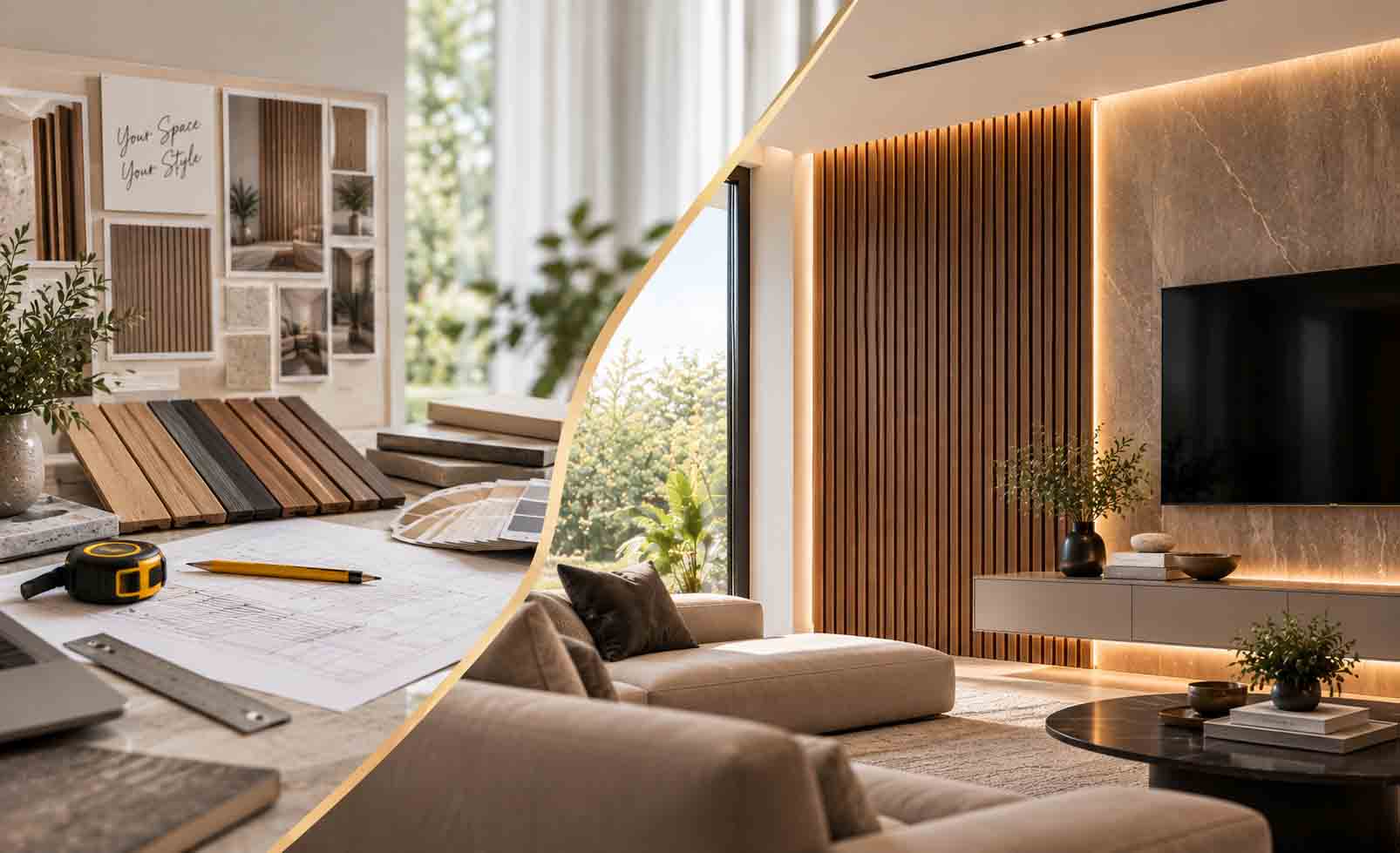
If you decide that professional installation is the right approach, do not choose an installer based on price alone. Experience with the specific type of wall panel and project complexity is an important consideration.
Ask to see examples of completed work, particularly projects that are comparable to your own. Look closely at seams, corners, pattern continuity, transitions, edges, and the overall finish.
It is also useful to ask how the installer handles wall preparation and measurements. A professional should be able to explain how they will assess the wall, plan the panel layout, deal with obstacles, and approach difficult areas before installation begins.
For custom or high-end projects, ask whether the installer has experience with large-format panels, custom cuts, media walls, floor-to-ceiling installations, patterned finishes, and other details relevant to your design.
There is no universal answer because every wall panel project is different. The best choice depends on the complexity of the design, the condition of the wall, the panel material, your tools and experience, the project size, and how important the final finish is to you.
DIY may be appropriate when the project is small, straightforward, and within your existing skill set. Professional installation is generally more suitable when the panels are expensive, custom-made, large-format, highly detailed, or being installed in a visually prominent area.
Before choosing DIY, consider four basic questions: Do you have the right tools? Can you make accurate measurements and clean cuts? Is the wall properly prepared? And are you confident that you can maintain alignment throughout the entire installation?
If the answer to any of these questions is uncertain, obtaining professional advice before making permanent cuts can help protect your materials and your overall design investment.
DIY wall panel installation can be a sensible option for confident homeowners working on simple projects. It can reduce labour costs and provide the satisfaction of completing the project yourself, provided you have the necessary preparation, tools, patience, and practical skills.
Professional wall panel installation becomes increasingly valuable as the project becomes more complex. Large-format panels, custom layouts, intricate patterns, multiple corners, floor-to-ceiling walls, media walls, and integrated lighting all increase the importance of precise planning and installation.
For luxury wall panels, the objective is not simply to attach a panel to a wall. The finished result should look balanced, seamless, and intentional, with the panel design working naturally with the architecture of the room.
Ultimately, the smartest choice is the one that matches your project complexity, experience, budget, and expectations. If you are investing in a high-end interior and want expert guidance on achieving a precise result, professional wall panel installation can help you approach the project with greater confidence.
Simple wall panel installations can sometimes be handled as a DIY project when the wall is flat, accessible, and the panels require straightforward cutting and installation. A confident homeowner with the appropriate tools and preparation may be able to complete a small feature wall successfully.
Complex projects involving large-format or custom panels, intricate patterns, multiple corners, full-height walls, or integrated lighting are generally better suited to an experienced professional.
Common mistakes include inaccurate measurements, inadequate wall preparation, incorrect cutting, poor seam alignment, using an unsuitable adhesive or fixing method, and rushing the installation. Errors around outlets, switches, doors, windows, and corners can be particularly difficult to correct.
Planning the complete layout before cutting and following the manufacturer’s installation recommendations can help reduce these risks.
DIY installation generally requires accurate measuring and cutting skills, along with tools such as a tape measure, level or laser level, straightedge, suitable cutting equipment, drill, safety equipment, and the recommended adhesive or fixing system.
The exact requirements depend on the panel material and design. Large-format, custom, patterned, or technically complex installations require additional care and may be better handled by professionals.
DIY can reduce labour costs for straightforward projects, particularly when the homeowner already has the necessary tools and skills. However, the potential cost of wasted panels, additional tools, repairs, reinstallation, and the homeowner’s time should also be considered.
For expensive or custom wall panels, professional installation can help reduce the risk of costly mistakes and protect the overall investment.
Professional installation is generally recommended for large-format or custom panels, complex patterns, floor-to-ceiling walls, multiple corners, unusual wall shapes, detailed media walls, and installations involving integrated lighting or other technical elements.
It is also a sensible choice when achieving a precise, seamless finish is a high priority or when you are not confident in your measuring, cutting, wall preparation, or installation skills.
Ready to plan your luxury wall panel project with the right installation approach? Contact Panneli Interiors to discuss your project and explore professional wall panel installation options.