

Choosing the right kitchen wall tiles can transform an ordinary cooking space into a stylish and inviting part of your home. The latest kitchen wall tiles design trends combine attractive patterns, practical finishes, and timeless materials to create kitchens that look beautiful while remaining easy to maintain.
At Panneli Interiors, we believe that great kitchen design starts with the right balance of texture, colour, and functionality. From marble-inspired surfaces to geometric patterns and full-height backsplashes, there are plenty of ways to create a kitchen that reflects your personal style. In this guide, we explore 21 stylish ideas to inspire your next kitchen renovation.
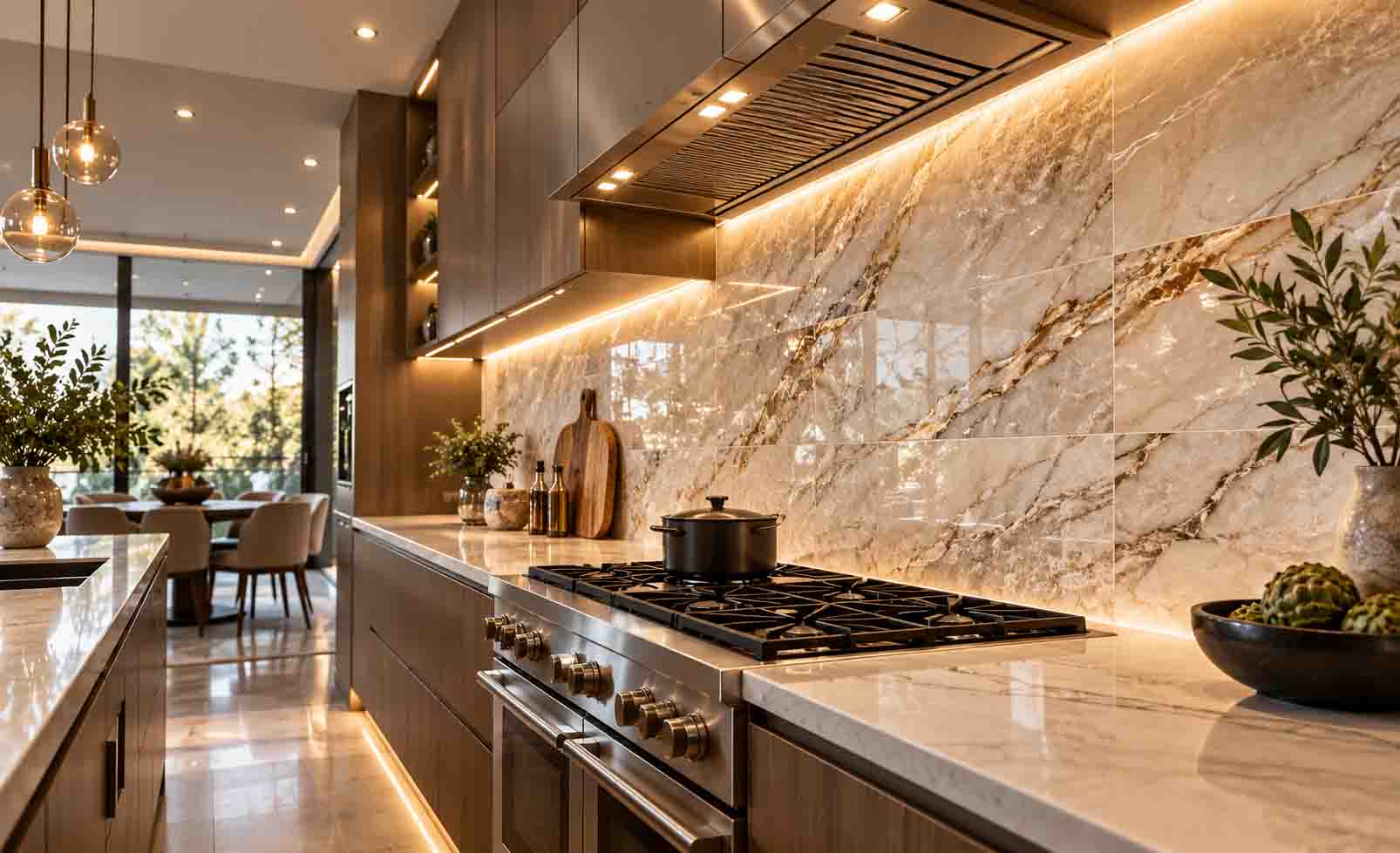
Marble-look tiles bring elegance and sophistication to modern kitchens. Their natural-looking veins and polished finishes create a luxurious appearance without requiring the same level of care as natural marble.
Pair white marble-look tiles with dark cabinets for contrast, or combine beige and cream finishes with timber cabinetry for a warmer interior. This design works particularly well in contemporary kitchens that favour clean lines and premium-looking surfaces.
White subway tiles remain a popular choice because they create a clean, bright, and timeless kitchen appearance. Their rectangular shape suits traditional, transitional, and modern interiors.
Use contrasting grout to highlight the tile pattern, or choose white grout for a seamless look. These tiles are particularly effective behind stovetops and sinks, where a smooth, wipeable surface is useful.
Extending a backsplash from the countertop to the ceiling creates a striking visual feature. It can make the kitchen feel taller while providing additional protection for walls exposed to splashes and cooking residue.
Large-format tiles can reduce the number of visible grout lines, creating a cleaner appearance. This approach works well behind a cooking range, around a sink, or across an entire kitchen feature wall.
Geometric tiles introduce structure and personality through hexagons, diamonds, triangles, and repeating linear patterns. They are ideal for homeowners who want something more distinctive than conventional square or rectangular tiles.
Keep the surrounding cabinetry and worktops relatively simple so the pattern remains the focal point. Neutral geometric designs offer subtle interest, while contrasting colours create a bolder statement.
Beige, sand, and warm taupe tiles create a welcoming atmosphere that complements natural materials. These shades work particularly well with oak cabinets, cream countertops, and brushed metal fixtures.
For a sophisticated finish, combine matte beige tiles with subtle stone textures. This palette is especially suitable for kitchens inspired by contemporary, organic, and understated luxury interiors.
Textured tiles add depth through raised patterns, ribbed surfaces, and tactile finishes. They can make a simple kitchen feel more considered without relying on bright colours or elaborate patterns.
Use textured tiles on a carefully selected feature wall or backsplash. Consider how lighting will fall across the surface, as directional lighting can highlight the texture and create attractive shadows.
Large-format porcelain tiles offer a modern appearance with fewer grout lines than smaller tiles. They are available in stone, concrete, marble, and other decorative finishes, making them suitable for a wide range of kitchen styles.
Their suitability depends on the wall substrate, tile weight, and installation requirements. Proper preparation and professional installation help create a neat, durable finish.
Green tiles introduce a natural element that pairs beautifully with wood, stone, and neutral cabinetry. Sage green creates a soft, relaxed appearance, while deep emerald or forest green can make a kitchen feel more dramatic.
Consider glossy green tiles for a reflective backsplash or matte finishes for a more understated effect. Brass-coloured hardware can complement deeper green tones, while black fixtures create a contemporary look.
Black tiles provide a bold contrast against white countertops, light cabinetry, and metallic accents. They are especially effective in contemporary kitchens with minimalist layouts.
Glossy black surfaces can reflect light, while matte finishes offer a softer appearance. Keep in mind that water spots, grease, and dust may be more visible on some dark finishes, so choose a surface that suits your cleaning routine.
The herringbone pattern arranges rectangular tiles in a distinctive zigzag formation. It adds movement and visual interest without requiring multiple colours or elaborate decorative elements.
White, grey, and beige tiles are versatile choices for this pattern. For a more dramatic backsplash, consider contrasting grout or tiles with subtle stone-inspired variations.
Terracotta-inspired tiles bring warmth and character to kitchens influenced by Mediterranean, rustic, and farmhouse design. Their earthy shades complement natural wood, cream cabinetry, and textured materials.
For a practical kitchen backsplash, select a suitable glazed tile or a product specifically designed for the intended wall application. This can provide the desired earthy appearance while making routine cleaning easier.
Blue tiles offer a refreshing alternative to neutral finishes. Pale blue creates a light, airy atmosphere, while navy and deep teal add richness and contrast.
Combine blue backsplash tiles with white cabinets for a crisp appearance, or pair them with warm wood to balance the cooler colour. The result can feel both modern and inviting.
Metallic-effect tiles introduce a contemporary accent through bronze, copper, silver, or brushed-steel-inspired finishes. They work particularly well in kitchens that feature modern appliances and streamlined cabinetry.
Use metallic finishes selectively to prevent the design from feeling overwhelming. A small backsplash or feature section can provide enough visual impact without competing with other materials.
Mosaic tiles use small individual pieces to create detailed patterns, subtle colour variations, or decorative borders. They are suitable for adding interest to compact backsplash areas and selected kitchen features.
Because mosaics contain more grout joints, consider how much cleaning they will require. Choose grout that is appropriate for the tile material and the demands of the kitchen environment.
Concrete-look tiles suit industrial, minimalist, and contemporary interiors. Their understated grey tones and subtle surface variations provide a neutral backdrop for bold cabinetry, timber accents, or black fixtures.
Use them with simple cabinet profiles and uncluttered worktops for a cohesive design. They can also complement other modern architectural finishes throughout an open-plan living space.
Terrazzo-effect tiles feature decorative flecks and chips that introduce colour and texture. They can add personality to a kitchen without requiring a separate decorative feature.
Choose a restrained colour palette for a sophisticated look, or select multicoloured patterns for a playful interior. Coordinate the tile colours with cabinetry or countertop details to keep the overall design balanced.
Glass tiles and glass-inspired finishes can help reflect available light, making a kitchen feel brighter. They are especially useful in smaller kitchens or spaces with limited natural light.
Select products suitable for kitchen walls and follow the manufacturer’s installation recommendations. Consider how reflections will interact with under-cabinet lighting and nearby windows before finalising the design.
Wood-look tiles offer the visual warmth of timber with the practical characteristics of the selected tile material. They can complement neutral cabinetry and create a connection between the kitchen and other living areas.
Use them as a backsplash accent or on a carefully planned feature wall. For a coordinated interior, explore our luxury wall panels for additional wood-inspired decorative surface ideas beyond conventional tile designs.
Patterned tiles inspired by encaustic cement designs can make a kitchen feel individual and expressive. Floral motifs, symmetrical shapes, and vintage-inspired patterns work particularly well in eclectic and traditional interiors.
To maintain visual balance, use patterned tiles in a defined backsplash area and keep the surrounding surfaces relatively simple. Check the product specifications to ensure the chosen finish is suitable for kitchen use and straightforward maintenance.
Grey tiles provide a versatile foundation for modern kitchens. Light grey creates a subtle, airy effect, while charcoal and slate-inspired shades introduce greater contrast.
Combine grey tiles with white cabinetry for a crisp appearance or warm timber for a more inviting result. Mixing different textures within the same colour family can also add depth without making the design feel busy.
Combining complementary materials creates a distinctive kitchen design with greater visual depth. For example, a tiled backsplash can sit alongside wood-inspired decorative panels or other architectural finishes in a separate feature area.
The key is to define the purpose of each material. Tiles are commonly selected for splash-prone areas, while decorative wall panels may be more suitable for dry feature walls, depending on their specifications. At Panneli Interiors, we explore how premium wall surfaces can complement modern interior design and create a consistent visual style across different spaces.
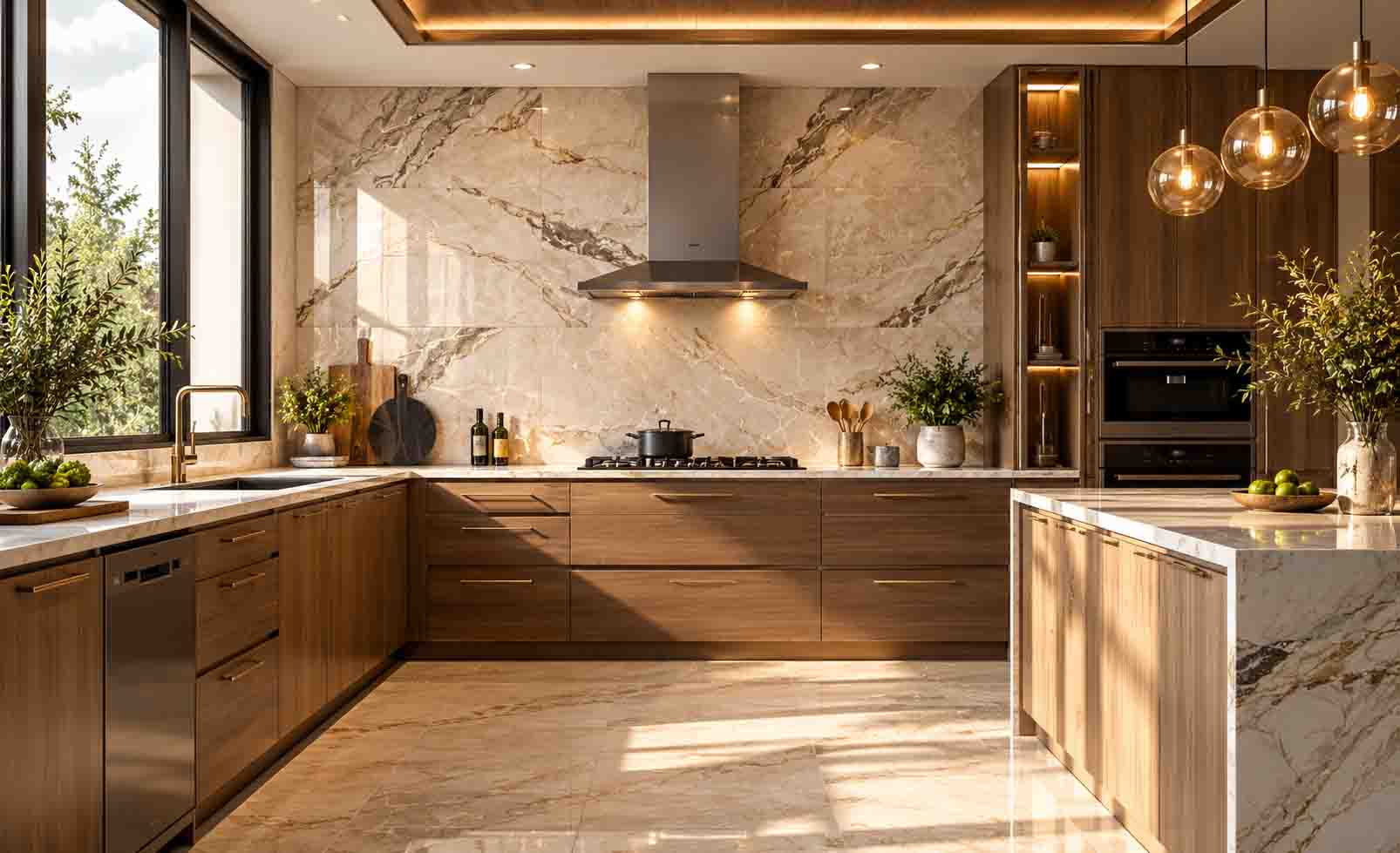
The best kitchen wall tiles should suit your interior style, cooking habits, cleaning preferences, and budget. Before choosing a design, consider how the tiles will work with your cabinets, countertops, flooring, lighting, and appliances.
Light-coloured tiles and reflective finishes can help smaller kitchens feel brighter. Larger tiles may also reduce the number of visible grout lines, although the final effect depends on the layout and proportions of the room.
In larger kitchens, darker colours, decorative patterns, and full-height backsplashes can create attractive focal points. Always consider the overall balance of the space rather than choosing tiles based on appearance alone.
Porcelain and ceramic tiles are common choices for kitchen walls because many products are durable and relatively easy to clean. Natural stone, glass, and specialty decorative finishes offer different visual characteristics and may require specific care.
Check the manufacturer’s guidance for water exposure, cleaning products, heat conditions, installation methods, and maintenance. The right material should deliver the appearance you want while meeting the practical requirements of its location.
Your backsplash does not need to match every surface in the kitchen. Instead, select colours and textures that complement the cabinets, countertops, flooring, and hardware.
For a calm, sophisticated interior, use a restrained palette with subtle variations in texture. If you prefer a more expressive design, introduce a bold tile pattern while keeping the other major surfaces relatively simple.
Tile layout affects the appearance of the finished kitchen. Straight layouts feel clean and orderly, while herringbone and geometric arrangements create more movement.
Measure the wall carefully and account for electrical outlets, cabinets, corners, and appliance positions. A professional installer can help determine tile placement, grout width, substrate preparation, and finishing details before work begins.
Kitchen tiles and decorative wall panels can both contribute to a premium interior, but they serve different purposes. Tiles are frequently used behind sinks and cooking areas because suitable products can provide a cleanable surface for everyday splashes.
Decorative wall panels offer another way to introduce wood-inspired textures, marble-like patterns, metallic effects, and contemporary finishes. Their suitability depends on the specific product, installation requirements, and exposure to moisture or heat.
At Panneli Interiors, we focus on luxury wall panels and decorative surfaces that complement modern residential and commercial interiors. When planning a kitchen renovation, use appropriate tiles in splash-prone zones and complementary decorative finishes elsewhere, where product specifications allow.
Regular maintenance helps preserve the appearance of kitchen wall tiles and keeps surfaces looking fresh. The exact cleaning method depends on the material, finish, and grout type.
Follow these practical maintenance tips:
Consistent cleaning is usually easier than removing heavily accumulated grease. Choosing suitable materials and finishes from the beginning can also make routine kitchen maintenance more manageable.
The latest kitchen wall tiles design trends offer options for every style, from timeless white subway tiles to bold geometric patterns, marble-inspired surfaces, warm earthy colours, and contemporary feature walls. The best choice is one that complements your kitchen layout while meeting your practical needs for cleaning, durability, and everyday use.
At Panneli Interiors, we believe that thoughtful material selection and coordinated finishes can help create more cohesive, sophisticated interiors. If you are exploring premium wall finishes for your next project, visit our gallery for design inspiration or contact our team to discuss your interior design ideas.
Popular trends include marble-look tiles, full-height backsplashes, geometric patterns, large-format porcelain, textured finishes, and warm neutral colours. The best option depends on your kitchen layout, preferred style, and maintenance requirements.
Ceramic and porcelain tiles are common choices because many options offer durable, easy-to-clean surfaces. The appropriate product depends on its intended application, finish, installation requirements, and exposure to heat or moisture.
Yes, large-format tiles can work in small kitchens and may create a more continuous appearance by reducing visible grout lines. Light colours and a carefully planned layout can help maintain a bright, open feel.
Wipe away splashes promptly, clean the surface with a suitable non-abrasive product, and maintain grout lines regularly. Always follow the manufacturer’s cleaning instructions, particularly for natural stone and specialty finishes.
Yes, decorative wall panels can complement tiles by introducing wood-inspired textures, marble-like patterns, or other architectural finishes. Choose panels specifically rated for their intended location and keep products that are not designed for heat or moisture away from unsuitable areas.