

Laminate wall panels offer a practical way to transform plain surfaces into visually striking interior features. With a wide range of colours, textures, patterns, and finishes available, they can complement everything from contemporary residential spaces to sophisticated commercial interiors.
Whether used as a full wall treatment, a statement feature, or an accent behind furniture, laminate wall panels combine decorative appeal with everyday practicality. This guide explores the benefits, design possibilities, applications, and key considerations for choosing the right laminate wall panels for your interior.
Laminate wall panels are decorative wall coverings designed to create a finished, consistent appearance across interior surfaces. They are available in various visual styles, allowing designers and property owners to achieve the look of wood, stone, fabric, or other contemporary finishes without relying on traditional wall treatments.
As a type of decorative wall panel, laminate surfaces can be used to introduce colour, texture, and visual depth into an interior. Their versatility makes them suitable for feature walls, reception areas, entertainment spaces, offices, hospitality environments, and selected residential applications.
One of the main advantages of laminate wall panels is their design flexibility. They can help create a cohesive interior by coordinating wall finishes with furniture, flooring, lighting, and architectural details.
For projects that require a more elevated architectural aesthetic, laminate panels can also be considered alongside other luxury wall cladding solutions. Comparing different surface treatments can help determine which material best suits the project’s style, function, and overall design direction.

Walls play an important role in defining the atmosphere of an interior. A carefully selected wall finish can make a room feel warmer, more sophisticated, more contemporary, or more visually dynamic.
Laminate wall panels provide designers with an opportunity to treat walls as an active part of the overall design rather than simply as background surfaces. Depending on the chosen finish and layout, panels can create a subtle backdrop or become the focal point of the room.
In luxury residential interiors, laminate panels can be incorporated into living rooms, bedrooms, dining areas, entryways, and entertainment spaces. In commercial interiors, they can help establish a refined visual identity in reception areas, meeting rooms, offices, retail environments, and hospitality settings.
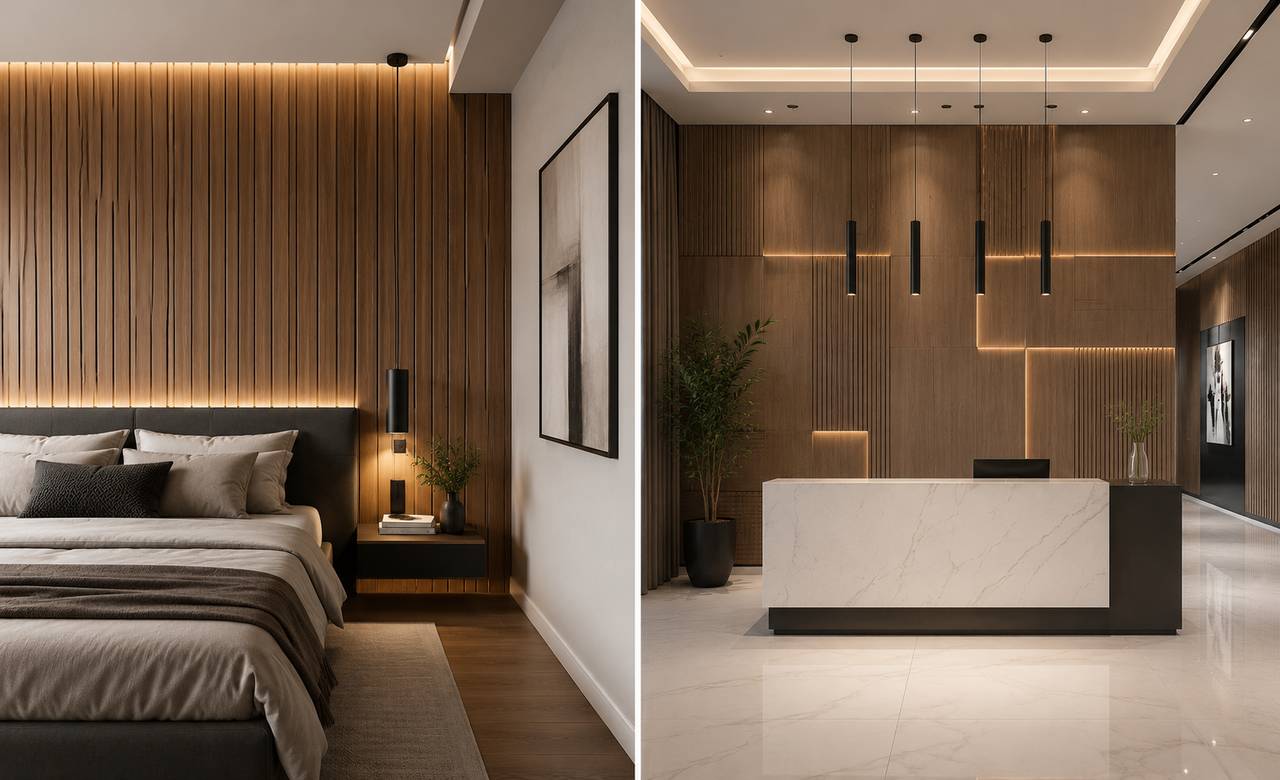
Wood-inspired laminate finishes can introduce warmth and natural character into contemporary interiors. They work particularly well when a project requires an organic visual element that complements modern furniture, neutral colours, or minimalist architecture.
Depending on the design, wood-effect panels can be used to cover an entire wall or strategically placed to create a focal point. They can also be combined with lighting and architectural details to add depth and dimension.
For contemporary spaces, decorative laminate panels can introduce geometric patterns, subtle textures, and refined surface details. These designs are useful when the objective is to create visual interest without overwhelming the room.
Modern wall treatments can also be layered with other interior elements to create a balanced composition. Furniture placement, lighting direction, and panel orientation should all be considered when developing the final design.
Laminate panels can also contribute to a luxury interior concept when selected in sophisticated colours, textures, or material-inspired finishes. The goal is to create a refined surface that supports the architectural character of the space.
For projects requiring a more distinctive decorative approach, designers can explore a broader range of luxury wall panel designs to compare patterns, finishes, and visual treatments that complement the intended interior style.
Linear wall treatments can create a strong sense of direction and rhythm. Depending on how the panels are positioned, vertical lines may emphasise ceiling height, while horizontal arrangements can influence the perceived proportions of a wall.
Designers considering this approach can also explore linear wall panels for interiors where repetition, texture, and architectural detail are important parts of the overall concept.
The versatility of laminate wall panels allows them to work across many interior environments. The most suitable application depends on the room’s purpose, expected level of use, design concept, and the characteristics of the selected panel.
Selecting the right laminate wall panels involves more than choosing a colour or pattern. The panels should support the function of the room while fitting naturally into the broader architectural and interior design concept.
Start by identifying the visual direction of the project. Minimalist interiors may benefit from subtle textures and understated finishes, while more expressive spaces can accommodate stronger patterns or material-inspired designs.
Consider how the space will be used and how much activity the wall surface is likely to experience. Residential and commercial interiors may have different practical requirements, so the selected panel should be appropriate for the environment.
Colour and texture have a significant effect on how a room feels. Darker finishes can create a dramatic atmosphere, while lighter surfaces may contribute to an open and spacious appearance. Textured panels can add depth, particularly when combined with carefully positioned lighting.
Not every wall needs to be covered. A carefully positioned feature wall can often create greater impact than applying the same treatment throughout an entire room. Consider focal points such as fireplaces, entertainment areas, reception desks, headboards, or architectural niches.
In residential interiors, wall panels can help homeowners create spaces that feel personalised and thoughtfully designed. They can be used to define individual zones within an open-plan layout or to create a visual focal point in a specific room.
For example, a laminate feature wall behind a television can provide a structured backdrop for the entertainment area. In bedrooms, panels can frame the bed and introduce texture, while in entryways, a carefully selected finish can establish the design language for the rest of the home.
In New Jersey residential interiors, the right wall treatment can help balance architectural character with contemporary design preferences. The result is a finished space where the walls contribute meaningfully to the overall aesthetic rather than functioning as blank surfaces.
Commercial interiors often require wall finishes that support both visual identity and practical use. Offices, retail spaces, hospitality venues, and reception areas can use decorative wall panels to establish a consistent environment that reflects the character of the business.
In commercial projects across Lakewood, NJ, and wider New Jersey, panel selection should consider the intended atmosphere, traffic levels, maintenance requirements, and the relationship between the wall finish and other architectural materials.
A well-planned panel installation can help create a more cohesive environment while giving designers greater control over texture, colour, and visual hierarchy.
Maintenance requirements depend on the specific laminate product and manufacturer recommendations. In general, keeping panel surfaces clean and addressing marks promptly can help preserve their appearance over time.
Proper care can help maintain the visual quality of decorative wall panels and ensure that the finished interior continues to look cohesive and well maintained.
Laminate wall panels can be an effective choice when a project requires a combination of decorative flexibility and a finished architectural appearance. Their broad range of visual options makes them suitable for many design directions, from understated contemporary interiors to more distinctive luxury spaces.
The best solution depends on the project’s location, room function, desired aesthetic, installation requirements, and overall material palette. Reviewing samples and considering the panels alongside lighting, furniture, flooring, and other finishes can help ensure a cohesive result.
Laminate wall panels are decorative wall coverings designed to create finished interior surfaces in a range of colours, textures, patterns, and material-inspired appearances. They can be used for feature walls and broader interior wall applications.
Yes. Laminate wall panels can be used in residential spaces such as living rooms, bedrooms, dining areas, entryways, and entertainment areas. The appropriate panel should be selected based on the room’s function and the manufacturer’s specifications.
Customisation options depend on the manufacturer and product range. Available choices may include different colours, textures, patterns, dimensions, and finishes to suit a particular interior design concept.
Laminate wall panels can be used in selected commercial environments, including offices, reception areas, retail spaces, and hospitality interiors. The panel should be chosen according to the specific performance and maintenance requirements of the application.
Maintenance depends on the specific laminate finish and manufacturer instructions. Regular cleaning with suitable products and prompt attention to spills or marks can help maintain the appearance of the panels.
Ready to elevate your next residential or commercial interior with a refined wall treatment? Explore Panneli Interiors’ luxury wall cladding solutions and find the right direction for your project.