

15 Accent Wall Wood Designs for Modern Interiors. Wood can bring warmth, texture, and sophistication to almost any interior. The right accent wall panel wood designs can transform a plain surface into a striking architectural feature, whether you are updating a living room, creating a relaxing bedroom, or adding character to a professional office.
At Panneli Interiors, we believe that a well-designed accent wall should complement the room’s overall style rather than overpower it. From subtle wooden details to dramatic floor-to-ceiling installations, these 15 ideas explore how wood can elevate modern interiors while maintaining a balanced, luxurious appearance.
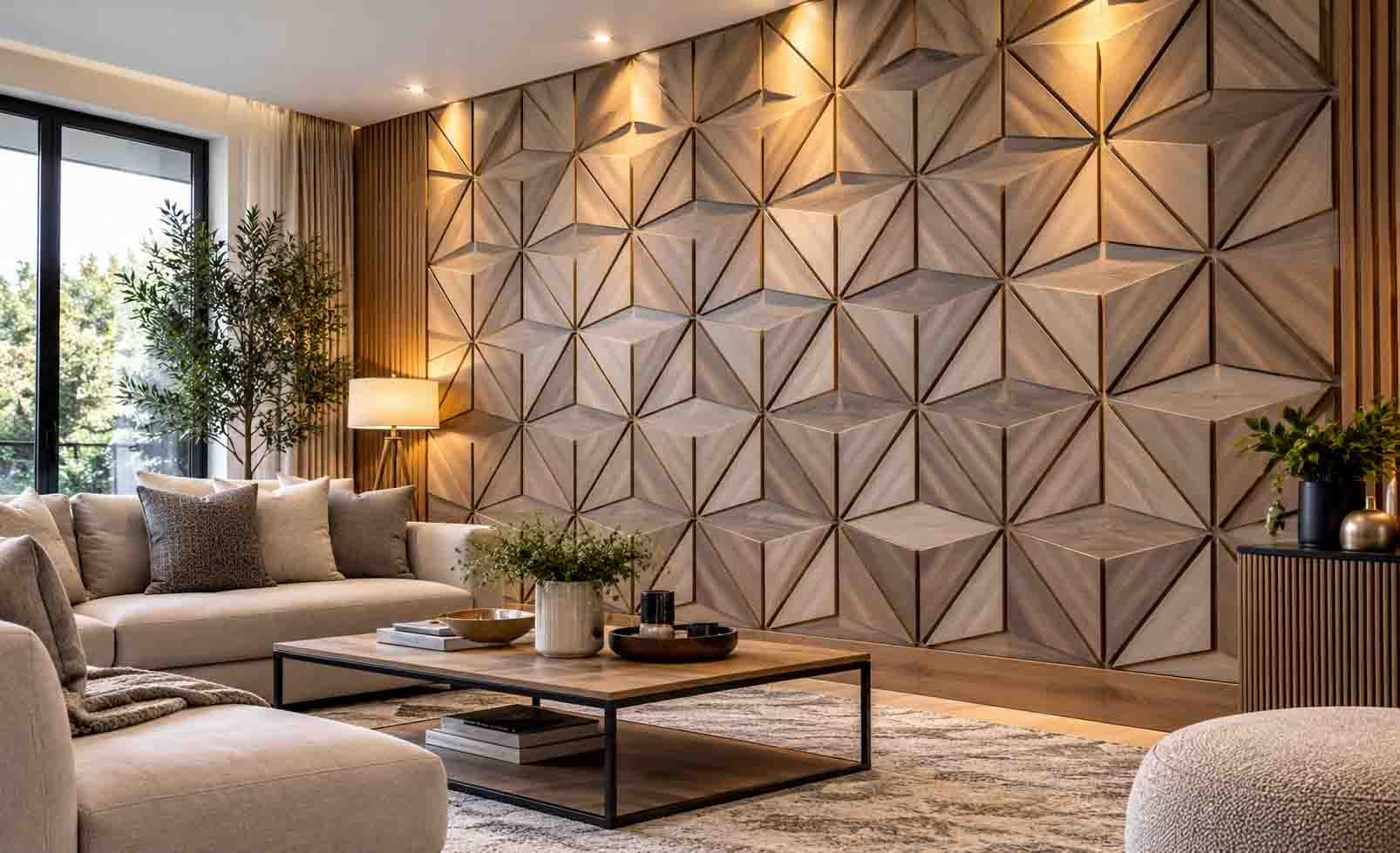
Vertical wood slats create a clean, architectural appearance that works particularly well in contemporary homes. Their upward lines can make ceilings feel taller, while the natural variation in wood tones adds depth without requiring elaborate decoration.
Consider using this design behind a sofa, along an entryway wall, or as a backdrop for a media console. Pair the slats with neutral furnishings, soft lighting, and simple decorative accessories for a refined finish.
Dark walnut introduces richness and contrast into modern interiors. Its deep brown tones work beautifully with cream upholstery, warm metallic accents, stone surfaces, and muted wall colours.
For a sophisticated living room, use walnut panels behind a television or across the wall behind a seating area. Balance the darker finish with layered lighting and lighter furnishings to keep the space from feeling enclosed.
Light oak is an excellent choice for interiors that prioritise brightness, simplicity, and natural textures. Its pale golden tones complement Scandinavian, minimalist, coastal, and contemporary design styles.
Install light oak panels behind a bed, along a dining area, or in a home office. Pairing the finish with white walls, natural fabrics, and greenery creates a welcoming atmosphere without excessive visual weight.
Geometric wood panels introduce movement through repeating lines, angular patterns, and carefully arranged shapes. They can turn an otherwise ordinary wall into a decorative focal point while maintaining a modern architectural character.
Use geometric patterns behind a console table or in a formal living room where the wall can serve as a central design feature. Keep nearby decorations relatively simple so the pattern remains the main attraction.
Horizontal wood paneling creates a wide, grounded appearance that can complement long living rooms and contemporary entertainment spaces. Depending on the panel width and finish, it can feel rustic, understated, or distinctly luxurious.
Choose a consistent wood tone for a seamless appearance, or introduce subtle variations to add texture. Horizontal panels work particularly well behind low-profile furniture and along walls with clean, uninterrupted lines.
A wooden television wall combines decorative appeal with a practical purpose. It defines an entertainment zone and provides a cohesive background for the screen, shelving, and media furniture.
At Panneli Interiors, we recognise that the best television wall designs balance visual impact with everyday functionality. Explore our luxury wall panels for inspiration on creating a refined focal point that complements your interior style.
Fluted wood panels feature narrow, repeated grooves that create a distinctive play of light and shadow. This dimensional finish adds interest without relying on bold colours or complicated decorative patterns.
Use fluted panels behind a bedroom headboard, around an entryway, or along a living room feature wall. Natural oak creates a softer look, while darker finishes offer a more dramatic and formal effect.
Two-tone designs combine contrasting wood colours to create visual interest and a more personalised finish. Pairing light oak with walnut, for example, can introduce depth while maintaining the warmth associated with natural materials.
The key is to establish a clear pattern or division between the two finishes. Use the darker tone to frame a specific area or highlight an architectural feature, allowing the lighter finish to maintain an open, balanced appearance.
Integrated LED lighting can emphasise the texture of wooden panels and make an accent wall more visually engaging after sunset. Concealed lighting along panel edges, behind floating shelves, or within architectural recesses creates a soft, layered effect.
This approach works especially well in entertainment rooms, bedrooms, and contemporary lounges. Choose warm lighting for a welcoming atmosphere and plan electrical access before installation to keep the final design clean.
Reclaimed wood offers a character-rich alternative to perfectly uniform panel finishes. Weathered textures, visible grain, and variations in colour create a lived-in appearance that complements industrial, farmhouse, and transitional interiors.
Use reclaimed wood behind a dining table or in a living room with leather furniture and natural textiles. Before installation, ensure the material has been appropriately prepared and is suitable for the intended indoor environment.
Chevron and herringbone arrangements bring a sense of movement and craftsmanship to an accent wall. Although both use repeating wood elements, chevron patterns meet at consistent angles, while herringbone uses staggered rectangular pieces.
These designs work well in entryways, dining rooms, and sophisticated living spaces where a decorative wall can make a strong first impression. A restrained finish allows the pattern to provide interest without overwhelming the room.
Combining wood with marble-inspired surfaces creates a contrast between organic warmth and the refined appearance of stone. The result can suit luxury living rooms, upscale offices, and contemporary reception areas.
Consider placing a marble-look centre panel between vertical wood slats or using wood framing around a stone-effect feature. Keep the colour palette coordinated so that both materials contribute to a unified design.
A wood accent wall does not need to cover an entire surface to make an impact. A carefully positioned panel behind a desk, beside a bed, or above a console can introduce texture while preserving a minimalist aesthetic.
Choose clean edges, restrained colours, and simple proportions that relate to the furniture below. This approach is particularly useful in compact rooms where a full-wall treatment may feel visually heavy.
Curved wood details soften the straight lines commonly found in modern architecture. Rounded panel edges, arched wall features, and curved decorative elements can introduce a more fluid appearance into otherwise angular interiors.
Use these details in an entryway, a lounge, or a reception area to create a distinctive focal point. Work with a designer or qualified installer to determine the appropriate materials and construction method for the desired curves.
For a more dramatic transformation, consider extending wood panels across the entire wall from floor to ceiling. This approach creates a cohesive architectural backdrop and can visually connect furniture, lighting, shelving, and other interior features.
Custom detailing makes it possible to coordinate panel dimensions, finish colours, and transitions with the room’s layout. For residential and commercial interiors alike, careful planning helps the installation feel intentional rather than simply decorative.
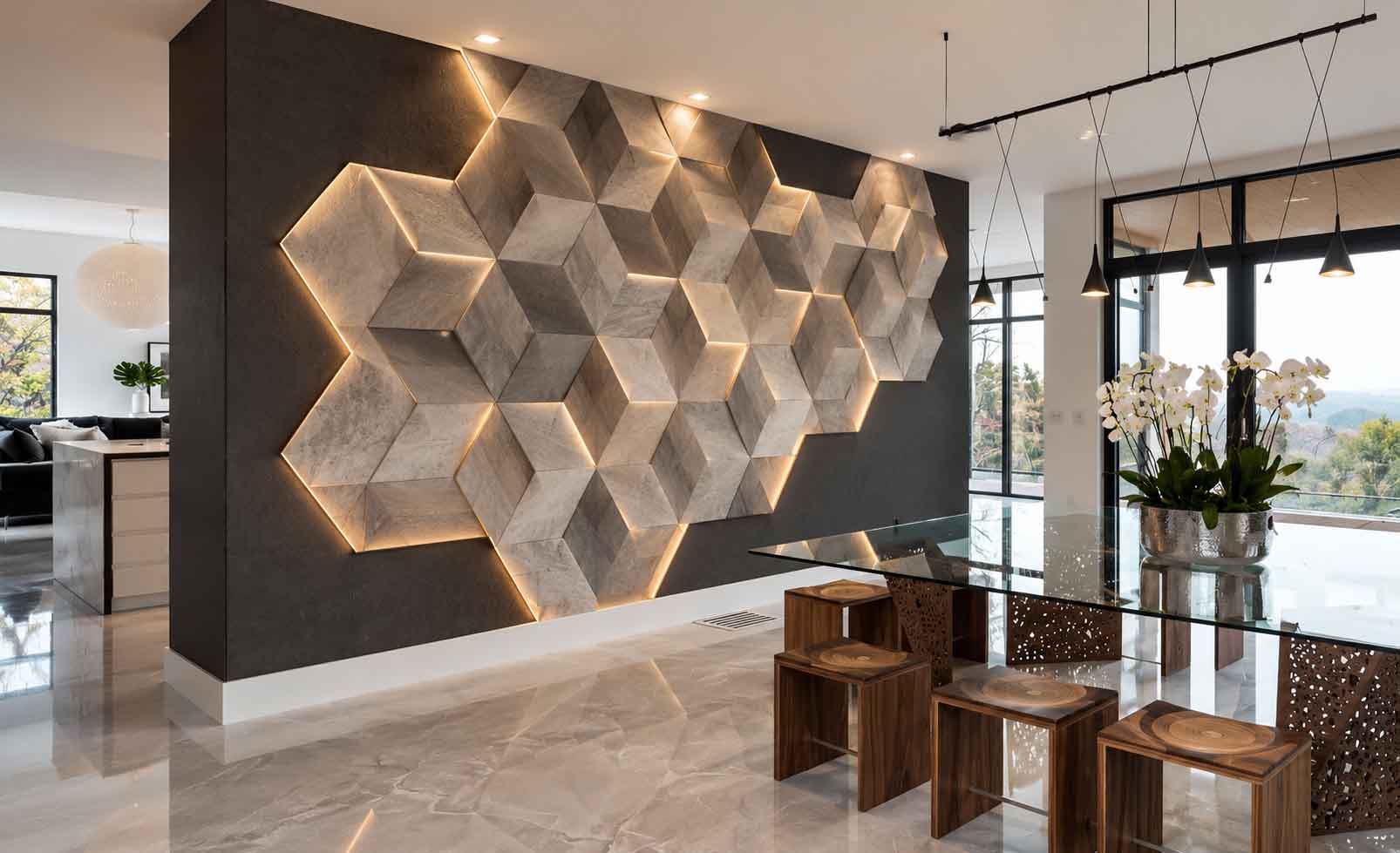
Choosing between a small wooden feature and a full-wall installation depends on your room’s proportions, lighting, and overall design goals. Both approaches can deliver an attractive result, but they create different visual effects.
Before choosing a design, consider how natural and artificial light will affect the finish. Darker wood can add depth, while lighter finishes may help a room feel brighter; the final effect will also depend on ceiling height, furnishings, and surrounding colours.
Start by identifying the wall that deserves the most attention. A wall behind a sofa, bed, television, or reception desk often provides a natural focal point, while an uninterrupted hallway wall may benefit from a simpler treatment.
Next, consider the relationship between material, maintenance, and budget. Natural wood, wood veneer, engineered panels, and wood-look decorative surfaces differ in appearance, durability, installation requirements, and care needs. Select a product appropriate for the wall’s location and expected use.
Lighting and panel proportions are equally important. Narrow vertical slats can create a sense of height, broad horizontal panels can emphasise width, and patterned surfaces can add visual complexity. Request material samples when possible to assess how colours and textures look in the actual room.
For projects in Lakewood, New Jersey, and beyond, we recommend considering the full interior scheme before finalising a feature wall. Coordinating the wall treatment with flooring, furniture, lighting, and adjacent finishes helps produce a polished result across residential and commercial spaces.
Wood introduces natural-looking texture and warmth into spaces dominated by smooth walls, glass, metal, or stone. Its versatility allows it to complement a wide range of styles, from understated contemporary rooms to bold luxury interiors.
A well-planned accent wall can also help establish a room’s visual hierarchy. It draws attention to a particular area, provides a backdrop for furniture, and creates opportunities to integrate lighting or decorative elements without adding unnecessary clutter.
The most successful designs balance appearance with practical considerations, including cleaning, installation, material suitability, and long-term maintenance. Choosing the right finish and panel configuration helps ensure the wall remains appropriate for the room’s intended use.
Popular options include vertical wood slats, fluted panels, light oak finishes, dark walnut walls, geometric patterns, and wood panels with integrated lighting. The best choice depends on the room’s size, lighting, furniture, and overall design style.
Yes. Light-coloured wood, narrow vertical slats, and carefully positioned accent panels can add texture without overwhelming a small room. Limiting the treatment to one wall may help preserve a balanced appearance.
Wood accent panels cover a selected portion of a wall, while full-wall installations extend across most or all of the available surface. Partial treatments provide a restrained focal point, whereas full-wall designs create a more immersive architectural feature.
Regularly remove dust with a soft cloth or suitable vacuum attachment. Follow the manufacturer’s cleaning instructions, avoid excessive moisture unless the material is designed to tolerate it, and use cleaning products appropriate for the specific finish.
Yes. Panel dimensions, patterns, colours, finishes, and layouts can often be tailored to suit living rooms, bedrooms, offices, reception areas, and other interiors. Material selection should reflect the project’s design requirements, expected use, and maintenance needs.
Explore the possibilities for your next interior project by visiting the Panneli Interiors gallery and discovering wall panel designs that suit your space and style.