

Commercial kitchens need wall surfaces that can handle heat, moisture, food preparation, frequent cleaning, and everyday wear. Choosing the right wall finish can significantly affect hygiene, maintenance, durability, and the overall appearance of a professional kitchen.
At Panneli Interiors, we understand that commercial environments require practical wall solutions without compromising on design. PVC wall panels for commercial kitchen spaces offer a functional alternative to traditional wall finishes, especially where easy cleaning and moisture resistance are essential.
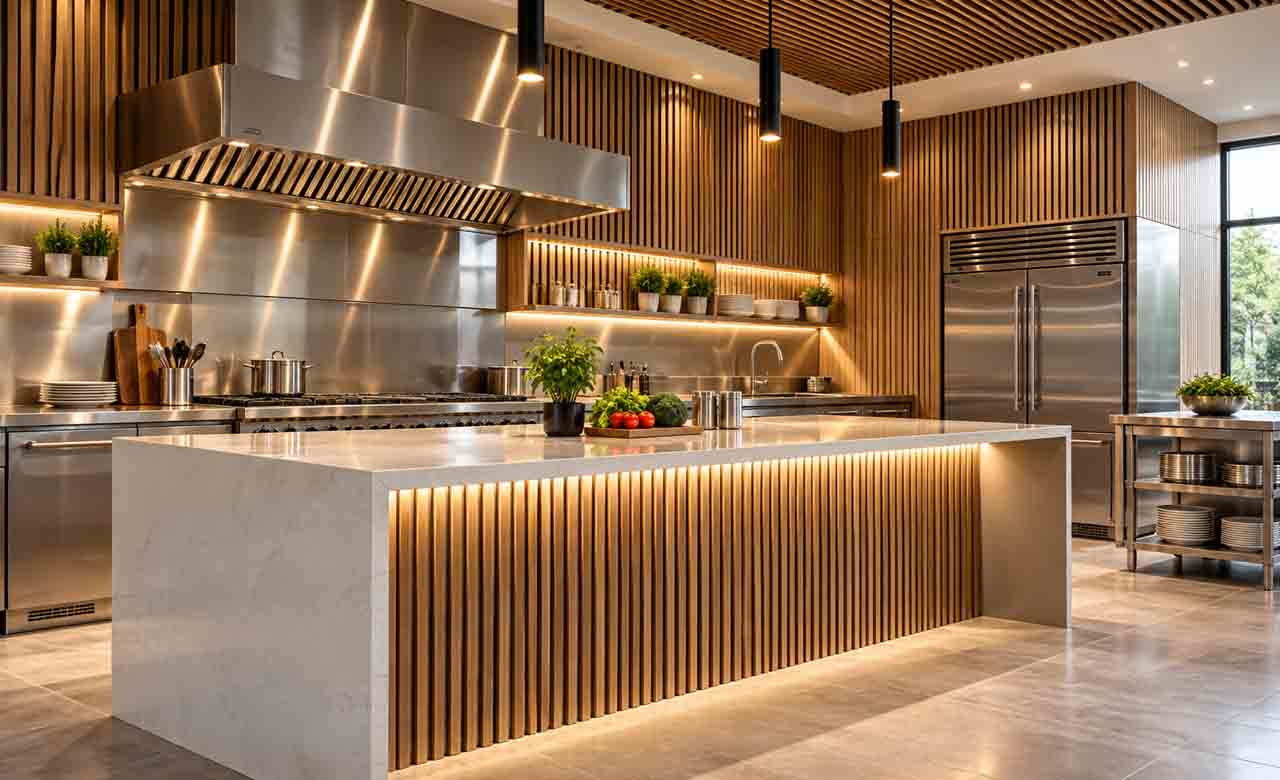
PVC wall panels are manufactured wall cladding products made from polyvinyl chloride. They are designed to create a protective and finished surface over walls and can be used in areas exposed to moisture, spills, stains, and regular cleaning.
In commercial kitchens, these panels can be considered for food preparation areas, service areas, storage spaces, utility zones, and other environments where wall protection and easy maintenance are priorities. Depending on the product specification and installation method, they can also complement other commercial wall panels used throughout a commercial property.
Commercial kitchens require frequent cleaning to remove food residue, grease, splashes, and other contaminants from surfaces. PVC wall panels generally provide a smooth surface that can be easier to wipe and maintain than some porous wall finishes.
This makes them particularly useful in areas where cleaning needs to be carried out regularly throughout the working day.
Steam, water, and humidity are common in commercial kitchen environments. Moisture-resistant wall cladding can help protect the underlying wall surface from everyday exposure to water and splashes.
This can be especially useful around sinks, preparation areas, wash zones, and other parts of a kitchen where water is frequently present.
Kitchen walls can experience impact from equipment, carts, containers, cleaning activities, and daily staff movement. A suitable wall panel system can provide an additional protective layer over the underlying wall.
For areas requiring additional protection from everyday activity, businesses can also consider dedicated wall protection panels based on the demands of the space.
Maintaining clean wall surfaces is an important part of commercial kitchen operations. Smooth, properly installed surfaces can make routine cleaning more straightforward and reduce areas where dirt and residue can accumulate.
However, the overall hygiene performance depends on the specific panel product, installation quality, joints, edges, and the cleaning procedures used by the facility.
Commercial kitchens are busy working environments where walls are exposed to constant activity. Staff, equipment, deliveries, cleaning, and food preparation can all contribute to surface wear.
Choosing an appropriate commercial-grade wall covering can help create a more durable finish for spaces that experience frequent daily use.
Wall finishes that are simple to clean can help reduce the time required for routine maintenance. PVC panels can provide a practical surface that can be wiped down as part of an established cleaning programme.
Regular inspection is still important, particularly around joints, corners, penetrations, and areas exposed to repeated impact or moisture.
Function is essential in a commercial kitchen, but appearance also matters. A well-planned wall panel system can create a clean and consistent visual finish across different areas of the kitchen.
For businesses with customer-facing preparation or service areas, coordinated wall finishes can help connect the practical kitchen environment with the wider interior design.
Commercial wall surfaces do not always need to look purely industrial. Depending on the product range, PVC wall panels can be available in different colours, patterns, textures, and finishes.
This allows designers and business owners to consider practical wall protection alongside the broader visual direction of a commercial interior.
PVC panels do not necessarily need to be used throughout an entire property. They can be incorporated into selected areas where moisture, cleaning, or wall protection requirements are greater.
For example, a commercial project may combine functional PVC cladding in kitchen areas with decorative finishes elsewhere, including panel wall PVC solutions for complementary interior applications.
When upgrading an existing commercial kitchen, the wall finish needs to work within the practical limitations of the space. A panel-based solution may provide a straightforward way to create a refreshed wall surface while addressing specific maintenance and protection requirements.
The suitability of any panel depends on the existing wall condition, installation requirements, environmental exposure, and applicable commercial building or food-service standards.
The appearance and condition of a commercial kitchen can influence how the space is perceived by employees, customers, inspectors, and business partners. Clean, well-maintained wall surfaces contribute to an organised and professional environment.
Combining practical wall protection with an appropriate design can help commercial kitchens achieve a balance between operational needs and interior presentation.
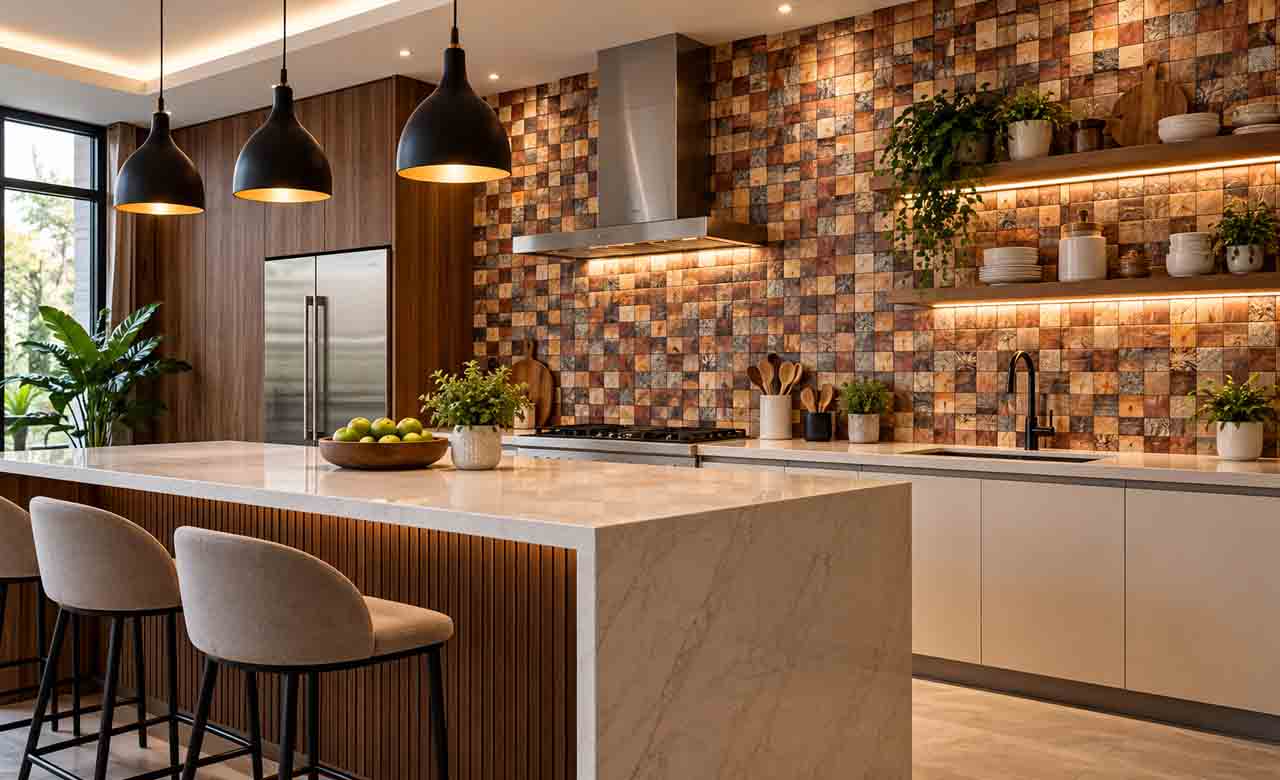
The right application depends on the panel specifications and the conditions of the individual project. In general, commercial PVC wall cladding may be considered for several areas where durable and easy-to-maintain wall surfaces are required.
Before installation, businesses should confirm that the selected product is appropriate for the intended environment, particularly where food preparation, heat, moisture, cleaning chemicals, or other demanding conditions are involved.
Traditional kitchen wall finishes can include painted surfaces, ceramic tiles, stainless steel, and other specialised materials. Each option has different characteristics in terms of cost, appearance, cleaning requirements, installation, durability, and maintenance.
PVC wall panels can be attractive for projects where businesses want a practical wall surface with a clean appearance and straightforward maintenance. However, the best material depends on the specific kitchen environment and the performance requirements of the project.
| Consideration | PVC Wall Panels | Traditional Wall Finishes |
|---|---|---|
| Cleaning | Generally designed for straightforward surface cleaning | Varies by material and surface finish |
| Moisture | Many PVC products provide moisture-resistant characteristics | Performance varies significantly by material |
| Appearance | Available in a range of designs and finishes | Wide range depending on the selected material |
| Maintenance | Can be relatively simple when correctly installed | Depends on the material, joints, grout, coatings, and surface condition |
Not every PVC wall panel is designed for every commercial kitchen application. Before selecting a product, consider the level of heat, moisture, cleaning chemicals, physical impact, and daily traffic the wall will experience.
Installation is equally important. Panels should be installed according to the manufacturer’s specifications, with particular attention to joints, corners, edges, penetrations, and areas where water or food residue could otherwise enter behind the wall system.
Commercial kitchen projects should also account for applicable building, fire, food safety, sanitation, and local requirements. Product specifications should be reviewed carefully before making a final material decision.
A commercial kitchen is primarily a functional workspace, but its interior design still has an important role. A clean and coordinated environment can support a professional brand image while creating a more organised working atmosphere.
For businesses planning a broader renovation, PVC kitchen wall panels can form part of a larger commercial interior strategy that combines practical wall protection with decorative finishes in customer-facing and staff areas.
Routine maintenance should follow the manufacturer’s recommendations for the specific panel system. Regular cleaning can help prevent the buildup of grease, food residue, dust, and other contaminants.
Consistent inspection and cleaning can help identify minor issues before they become larger maintenance problems.
Commercial properties across New Jersey have different operational and design requirements, from restaurants and food-service businesses to hospitality and other high-use environments. Wall finishes need to be selected according to the conditions of each individual project.
At Panneli Interiors in Lakewood, NJ, we focus on wall solutions that bring together practical performance and considered interior design. Our experience with decorative and architectural wall applications allows us to approach commercial interiors with both functionality and visual consistency in mind.
PVC wall panels can be suitable for commercial kitchens when the selected product is specifically designed for the intended environment. The panel’s moisture resistance, durability, cleaning requirements, temperature limitations, and installation specifications should be reviewed before use.
Many PVC wall panels have smooth surfaces that can be wiped and cleaned as part of a regular maintenance routine. The appropriate cleaning products and methods depend on the manufacturer’s recommendations for the specific panel.
PVC wall panels can provide an additional protective surface over walls exposed to moisture, splashes, cleaning, and everyday activity. Their level of protection depends on the product specification and quality of installation.
Yes. PVC panels can be incorporated into selected areas of a commercial project while other wall finishes are used elsewhere. This approach can help address different performance and design requirements within the same interior.
Consider moisture, heat, cleaning requirements, physical impact, installation conditions, panel specifications, and applicable building and food-service requirements. The product should be appropriate for the specific conditions of the kitchen.
If you are planning a commercial kitchen or interior upgrade in New Jersey, explore Panneli Interiors’ wall panel solutions and contact our team to discuss the right option for your project.